Encouragement in Distress: Finding Strength in God
"And David was greatly distressed; for the people spake of stoning him, because the soul of all the people was grieved, every man for his sons and for his daughters: but David encouraged himself in the LORD his God." - 1 Samuel 30:6
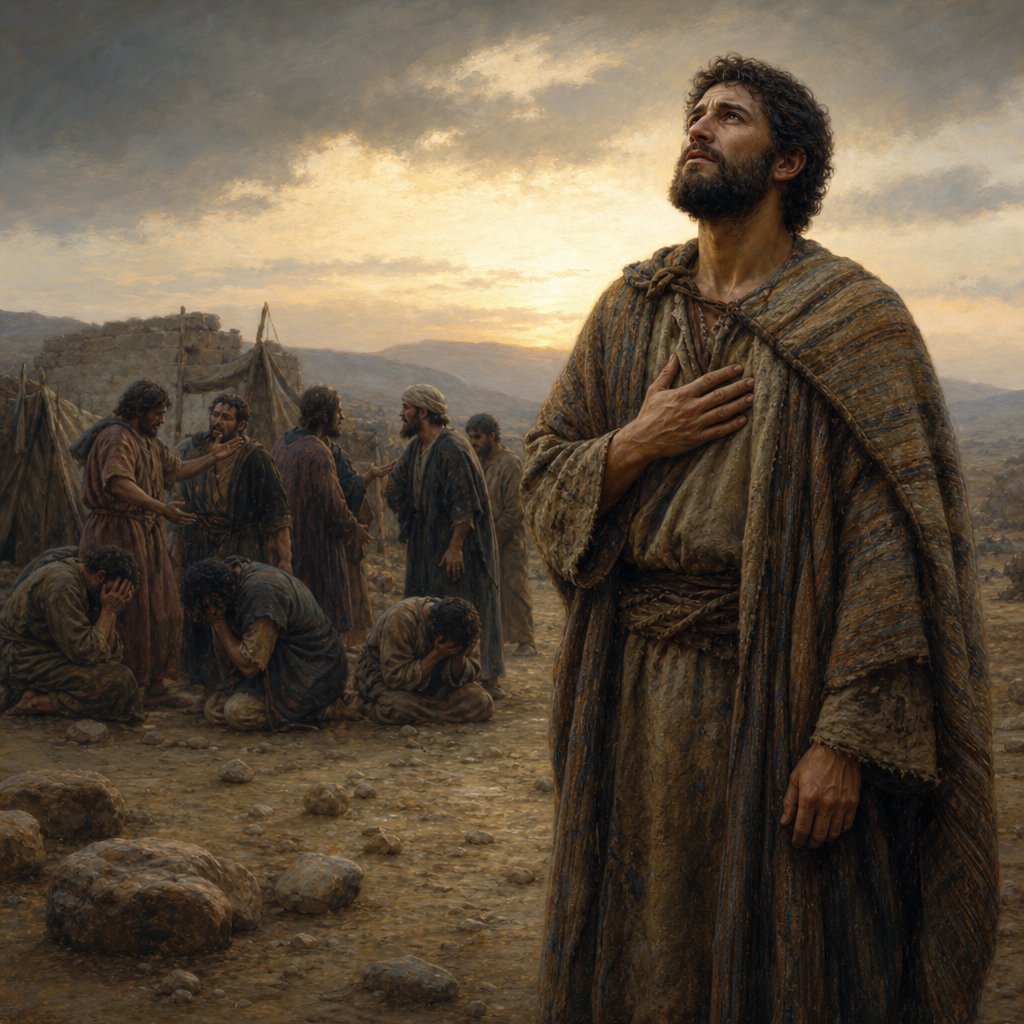
1 Samuel 30:6 presents us with a poignant picture of distress and despair. The verse reads: "And David was greatly distressed; for the people spake of stoning him, because the soul of all the people was grieved, every man for his sons and for his daughters: but David encouraged himself in the LORD his God." This scripture takes us into a moment in David’s life marked by peril, where he faced immense personal and communal turmoil. To profoundly understand the implications of this verse, we must explore the layers of grief, leadership, and the extraordinary ability to find solace in God amidst turmoil.
David finds himself in a dire situation. The backdrop of this narrative is the aftermath of a gruesome attack on Ziklag, where the Amalekites had raided David's camp, taken the women and children captive, and left devastation in their wake. Not only was David grieving the loss of his own family, but he also bore the weight of a distraught band of followers who turned their grief into anger toward their leader. When those around us are hurting, it can often lead to chaos and misplaced blame. David’s men were so overcome with grief that they considered stoning him.
It is essential to recognize that grief can be a powerful force, often leading even the most faithful followers to act irrationally. Encouraging ourselves in such moments becomes necessary. In the heart of this turmoil, David’s response is remarkable. Instead of succumbing to fear and despair, David chose a different path: he "encouraged himself in the LORD his God." This simple yet profound act of turning inward toward God reveals a significant aspect of faith in difficult circumstances.
Encouragement can often feel like an elusive feeling in times of distress. In a world that can be chaotic and overwhelming, we may at times find ourselves like David, secluded from external support systems. Yet, the Bible consistently reminds us of the available source of strength—our relationship with God. David, who had a history of seeking God, understood the importance of reaching for divine strength when human strength failed him.
What did it mean for David to encourage himself? It implies a deep-seated reliance on God’s character, past faithfulness, and promises. In moments of despair, reciting God’s word, reflecting on His goodness, and remembering His past provisions can fortify our resolve. David likely recalled the battles he had fought and the deliverance he had received from God time and again. He remembered God’s covenant and the anointing that set him apart as king. When facing betrayal, loss, or threats, recollecting who God is provides an unwavering anchor.
Moreover, this verse emphasizes the necessity of self-encouragement through God's truth rather than the opinions of others. In times when the world around us falls apart, we can often be swayed by negative voices. David resisted the temptation to surrender to fear or panic. Encouraging oneself in the Lord involves calling on the Holy Spirit, speaking scriptures over oneself, and praying fervently. This self-encouragement is not a selfish endeavor; instead, it strengthens us to see our circumstances through the lens of faith rather than through our limited human perspective.
Ultimately, we are reminded that our ability to face our distress with courage comes from God alone. What was the outcome of David’s encouragement? He found the resilience to seek the LORD for guidance, pursue the enemy, and reclaim what was lost (1 Samuel 30:8). In turn, we too must learn from David’s example; the act of encouraging ourselves in the Lord, especially during turbulent times, equips us to rise above our circumstances.
May we, like David, turn towards God in times of distress, finding the strength, wisdom, and peace that come only from Him. Let this verse remind us that no matter how dire our situation may seem, there is always hope in the Lord.
Want to reflect more on 1 Samuel 30:6?
Continue your spiritual journey with Bible Chat — an AI-powered tool for exploring God's Word through conversation. Ask questions, discover connections, and deepen your understanding.
Get Our Apps


1 Samuel 30:6 Artwork

1 Samuel 30:6 - "And David was greatly distressed; for the people spake of stoning him, because the soul of all the people was grieved, every man for his sons and for his daughters: but David encouraged himself in the LORD his God."
"And David was greatly distressed; for the people spake of stoning him, because the soul of all the people was grieved, every man for his sons and for his daughters: but David encouraged himself in the LORD his God." - 1 Samuel 30:6

1.samuel 15:30

1 Samuel 30:18

1.samuel 15:30

1 Samuel 30:30 - "And to them which were in Hormah, and to them which were in Chorashan, and to them which were in Athach,"
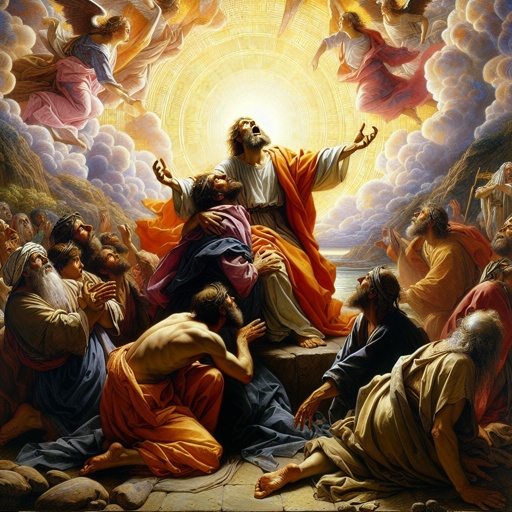
1 Samuel 20:27-30

Matthew 6:30

1 Samuel 14:6

1 Samuel 30:25 - "And it was so from that day forward, that he made it a statute and an ordinance for Israel unto this day."

1 Samuel 30:28 - "And to them which were in Aroer, and to them which were in Siphmoth, and to them which were in Eshtemoa,"

1 Samuel 30:18 - "And David recovered all that the Amalekites had carried away: and David rescued his two wives."

1 Samuel 30:5 - "And David's two wives were taken captives, Ahinoam the Jezreelitess, and Abigail the wife of Nabal the Carmelite."

1 Samuel 8:6 - "¶ But the thing displeased Samuel, when they said, Give us a king to judge us. And Samuel prayed unto the LORD."

1 Kings 6:30 - "And the floor of the house he overlaid with gold, within and without."

1 Samuel 6:1 - "And the ark of the LORD was in the country of the Philistines seven months."

2 Samuel 6:14

1 Samuel 30:4 - "Then David and the people that were with him lifted up their voice and wept, until they had no more power to weep."

1 Samuel 30:29 - "And to them which were in Rachal, and to them which were in the cities of the Jerahmeelites, and to them which were in the cities of the Kenites,"

1 Samuel 30:31 - "And to them which were in Hebron, and to all the places where David himself and his men were wont to haunt."

1 Samuel 30:27 - "To them which were in Beth-el, and to them which were in south Ramoth, and to them which were in Jattir,"

1 Samuel 30:20 - "And David took all the flocks and the herds, which they drave before those other cattle, and said, This is David's spoil."

1 Samuel 30:1 - "And it came to pass, when David and his men were come to Ziklag on the third day, that the Amalekites had invaded the south, and Ziklag, and smitten Ziklag, and burned it with fire;"

1 Chronicles 6:30 - "Shimea his son, Haggiah his son, Asaiah his son."

1 Samuel 30:3 - "¶ So David and his men came to the city, and, behold, it was burned with fire; and their wives, and their sons, and their daughters, were taken captives."

1 Chronicles 6:28 - "And the sons of Samuel; the firstborn Vashni, and Abiah."

1 Samuel 17:30 - "¶ And he turned from him toward another, and spake after the same manner: and the people answered him again after the former manner."

"And to them which were in Hormah, and to them which were in Chorashan, and to them which were in Athach," - 1 Samuel 30:30

1 Samuel 30:2 - "And had taken the women captives, that were therein: they slew not any, either great or small, but carried them away, and went on their way."

1 Samuel 30:11 - "¶ And they found an Egyptian in the field, and brought him to David, and gave him bread, and he did eat; and they made him drink water;"