The Everlasting Covenant: A Reflection on God's Promises
“Ought ye not to know that the LORD God of Israel gave the kingdom over Israel to David for ever, even to him and to his sons by a covenant of salt?” — 2 Chronicles 13:5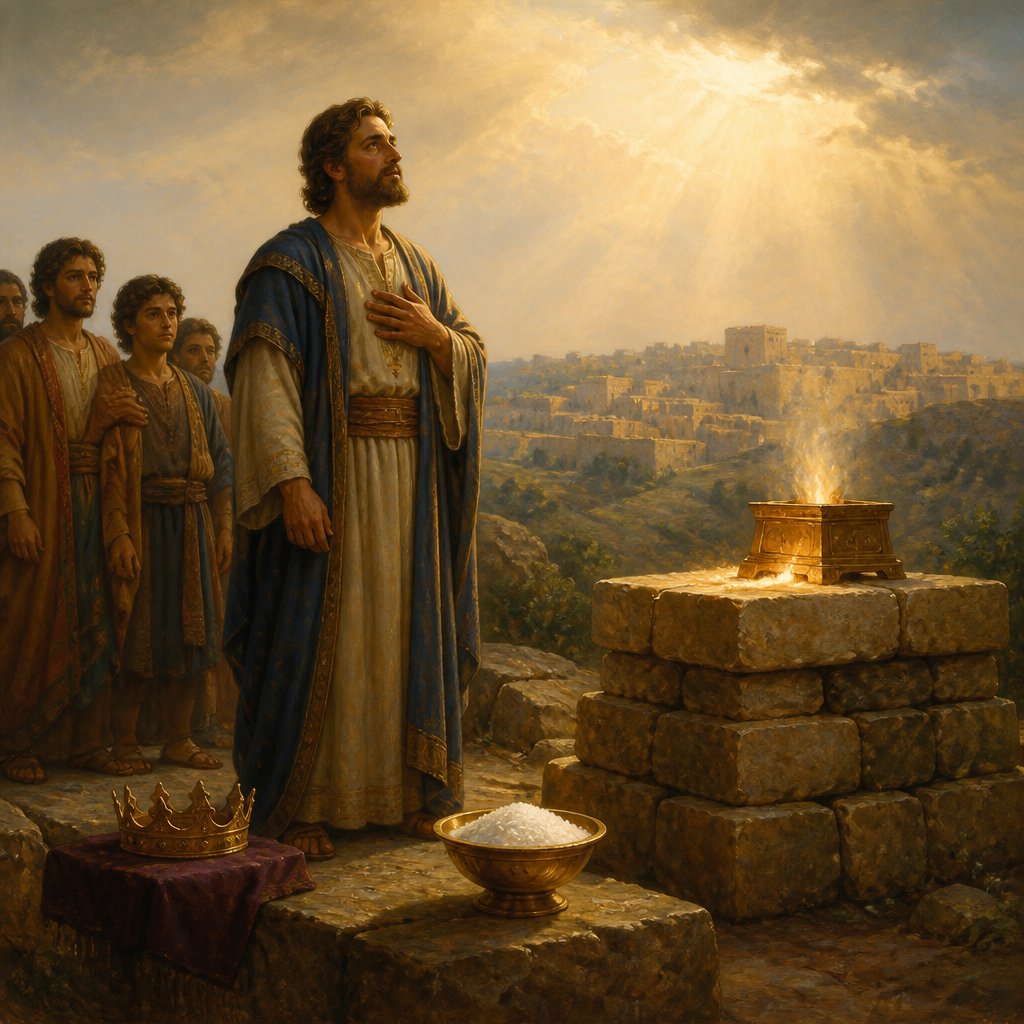
The verse from 2 Chronicles 13:5 states, "Ought ye not to know that the LORD God of Israel gave the kingdom over Israel to David for ever, even to him and to his sons by a covenant of salt?" This moment in the biblical text is not merely historical; it carries profound implications about God’s promise, His faithfulness, and the nature of His covenants with humanity.
To fully appreciate this declaration made by King Abijah of Judah, we must consider the context. Abijah stood against the backdrop of a divided kingdom, where he was striving to rally his people against the forces of Jeroboam, king of Israel. In his speech, he reminds the Israelites of God’s chosen lineage – the everlasting covenant He made with David and his descendants. This covenant was a pledge of fidelity and kingship, rooted in divine authority and human trust.
The expression "covenant of salt" is particularly significant. Salt in the biblical context connotes preservation and purity. It was often used in sacrificial offerings where it symbolized the lasting nature of God’s promises. It was believed that a covenant made with salt was unbreakable and enduring. This is crucial for understanding the security and reliability we can find in our relationship with God.
Abijah emphasizes that God's commitment to David and his lineage is forever. This covenant does not merely suggest a temporal arrangement; it engages a span that extends through generations. It is a reminder of God’s intentions to establish a legacy of leadership and divine guidance, pointing forward to the Messiah, Jesus Christ, who would come from the line of David. God’s plan encompasses not just a particular time or place but architects a thread that weaves through the entirety of scripture and human history, reinforcing the notion that God’s promises are eternal.
As believers, we stand on the promise of God’s unwavering fidelity. In a world that is ever-shifting and transient, we can rest assured that the commitments made by God are not susceptible to change. The kingdom given to David serves as a metaphor for the spiritual inheritance we have received through Christ. It assures us that we are partakers in this divine promise, welcomed into the family of God, not by our merit, but by grace through faith. This is the heart of the New Covenant that Jesus established at the Last Supper, implying that just as God was faithful to David, He will also be faithful to us who trust in His Son.
Furthermore, Abijah’s declaration serves a dual purpose. He admonishes those on the other side—to remember God’s sovereignty and to recognize that rebellion against His anointed is ultimately futile. As we reflect on this passage, we are prompted to consider our own hearts; are we submitted to the kingship of Christ in our lives? Do we remember and honor the covenant made through His blood? Like Abijah, we too are called to be witnesses to this covenant, encouraging others in our spheres of influence to turn towards the true King.
In our day-to-day lives, we sometimes face challenges that make us question God’s promises. In times of doubt, we should reflect on this verse and remember that God is not just the God of the good times; He is the God who reigns eternally. He granted Israel a kingdom, rooted in covenant, and we can trust that our foundational identity lies in Him.
In conclusion, let us embrace the implications of the covenant of salt and the sovereignty of our God. May we be encouraged to hold fast to the truth that God’s promises are bound to His character—not our circumstances. Are we recognizing and remembering the faithful God who entrusted a kingdom to David?Let’s carry this realization in our hearts and embody it in our lives, every day, until the return of our true King.
Get our apps


Artwork for 2 Chronicles 13:5

2 Chronicles 13:5 - "Ought ye not to know that the LORD God of Israel gave the kingdom over Israel to David for ever, even to him and to his sons by a covenant of salt?"
"Ought ye not to know that the LORD God of Israel gave the kingdom over Israel to David for ever, even to him and to his sons by a covenant of salt?" - 2 Chronicles 13:5

2 chronicles 13:12

2 Chronicles 6:13

1 Chronicles 5:13 - "And their brethren of the house of their fathers were, Michael, and Meshullam, and Sheba, and Jorai, and Jachan, and Zia, and Heber, seven."

1 Chronicles 2:5 - "The sons of Pharez; Hezron, and Hamul."

2 Chronicles 2:13 - "And now I have sent a cunning man, endued with understanding, of Huram my father's,"

1 Chronicles 13:5 - "So David gathered all Israel together, from Shihor of Egypt even unto the entering of Hemath, to bring the ark of God from Kirjath-jearim."

2 Chronicles 13:13 - "¶ But Jeroboam caused an ambushment to come about behind them: so they were before Judah, and the ambushment was behind them."

2 Chronicles 2:5 - "And the house which I build is great: for great is our God above all gods."

2 Chronicles 29:13 - "And of the sons of Elizaphan; Shimri, and Jeiel: and of the sons of Asaph; Zechariah, and Mattaniah:"

2 Chronicles 13:1 - "Now in the eighteenth year of king Jeroboam began Abijah to reign over Judah."

2 Chronicles 11:5 - "¶ And Rehoboam dwelt in Jerusalem, and built cities for defence in Judah."

2 Chronicles 20:13 - "And all Judah stood before the LORD, with their little ones, their wives, and their children."

2 Chronicles 13:16 - "And the children of Israel fled before Judah: and God delivered them into their hand."

1 Chronicles 2:13 - "¶ And Jesse begat his firstborn Eliab, and Abinadab the second, and Shimma the third,"

2 Chronicles 5:5 - "And they brought up the ark, and the tabernacle of the congregation, and all the holy vessels that were in the tabernacle, these did the priests and the Levites bring up."

2 Chronicles 5:4 - "And all the elders of Israel came; and the Levites took up the ark."

2 Chronicles 10:13 - "And the king answered them roughly; and king Rehoboam forsook the counsel of the old men,"

2 Chronicles 16:13 - "¶ And Asa slept with his fathers, and died in the one and fortieth year of his reign."

2 Chronicles 11:13 - "¶ And the priests and the Levites that were in all Israel resorted to him out of all their coasts."

2 Chronicles 5:13 - "It came even to pass, as the trumpeters and singers were as one, to make one sound to be heard in praising and thanking the LORD; and when they lifted up their voice with the trumpets and cymbals and instruments of musick, and praised the LORD, saying, For he is good; for his mercy endureth for ever: that then the house was filled with a cloud, even the house of the LORD;"

2 Chronicles 34:5 - "And he burnt the bones of the priests upon their altars, and cleansed Judah and Jerusalem."

2 Chronicles 13:21 - "¶ But Abijah waxed mighty, and married fourteen wives, and begat twenty and two sons, and sixteen daughters."

2 Chronicles 18:13 - "And Micaiah said, As the LORD liveth, even what my God saith, that will I speak."

2 Chronicles 13:22 - "And the rest of the acts of Abijah, and his ways, and his sayings, are written in the story of the prophet Iddo."

2 Chronicles 13:2 - "He reigned three years in Jerusalem. His mother's name also was Michaiah the daughter of Uriel of Gibeah. And there was war between Abijah and Jeroboam."

2 Chronicles 20:5 - "¶ And Jehoshaphat stood in the congregation of Judah and Jerusalem, in the house of the LORD, before the new court,"

2 Chronicles 33:5 - "And he built altars for all the host of heaven in the two courts of the house of the LORD."

2 Chronicles 3:13 - "The wings of these cherubims spread themselves forth twenty cubits: and they stood on their feet, and their faces were inward."