The Fallibility of Self-Reliance: Learning from Asa's Pursuit
“And Asa in the thirty and ninth year of his reign was diseased in his feet, until his disease was exceeding great: yet in his disease he sought not to the LORD, but to the physicians.” — 2 Chronicles 16:12
The verse 2 Chronicles 16:12 declares, "And Asa in the thirty and ninth year of his reign was diseased in his feet, until his disease was exceeding great: yet in his disease he sought not to the LORD, but to the physicians." This scripture captures a profound moment in the life of King Asa of Judah, a king who once relied on God but ultimately turned towards human wisdom in times of distress.
To truly grasp the weight of Asa's actions, we must first look at the context of his reign. Asa ascended to the throne as a reformer, dedicating his reign to the removal of foreign idols and the restoration of true worship in Judah. He led his people with courage, seeking the Lord in moments of crisis, such as when he faced the formidable army of the Cushites. In that instance, Asa called upon the name of the Lord, and God delivered him and the nation from their enemies (2 Chronicles 14:11). This history sets a stark backdrop to his later actions.
As we reach the 39th year of Asa’s reign, we encounter a dramatic shift. The royal bearer, once marked by faith and a dependence on God, now faces a personal crisis—an ailment so severe that it was described as "exceeding great". The weight of this affliction leads him down a troubling path. The text emphasizes that Asa, despite his grave condition, "sought not to the LORD, but to the physicians." This depiction raises several vital questions about faith, reliance, and the choices we make in our times of trials.
Firstly, Asa’s choice to seek the physicians rather than God signifies a pivotal moment of weakness in his faith. Here, we find a cautionary tale about the nature of self-reliance and misplaced trust. Asa had initially demonstrated that the Lord could be trusted for deliverance. Yet, when affliction struck close to home, he gravitated towards human solutions. In doing so, he failed to acknowledge that while God does provide wisdom to physicians, ultimate healing and salvation originate from Him. This reflects a common human struggle: when our strength falters, when our health declines, or when we face trials, it becomes easy to lean on our understanding and the resources available to us, rather than turning our hearts in desperation to the Lord.
Secondly, Asa’s example serves as a poignant reminder of the fleeting nature of earthly solutions. Physicians and medical science play crucial roles in healing and restoration, but they are limited in power. Asa’s reliance on them led to his downfall, as scripture later reveals that the Lord was displeased with him for turning away from divine help (2 Chronicles 16:9-10). This serves as a reminder that choosing human wisdom over divine guidance can lead to spiritual decay. Asa had once depended on the Lord for victory and guidance, but as his health failed him, he succumbed to hopelessness and pragmatism.
Theological reflection on Asa’s journey reveals deep lessons about faith:
1. **Trust in God’s Sovereignty**: Regardless of the severity of our challenges, we are called to trust in the Lord's sovereignty over our lives. His wisdom surpasses our finite understanding of circumstances.
2. **Prioritize Prayer**: In every season—whether we are in a crisis or not, we must maintain constant communication with God, knowing He always listens and is present.
3. **Consider God's Will**: In our pursuit of health and wellness, let our choices align with seeking the will of God, asking for His guidance rather than solely relying on our insights or societal norms.
As we meditate on this transformational passage, let us resolve to be always mindful of our first response to trouble. Let us be like Asa in his earlier years, turning to the Lord in faith, seeking His face before seeking the face of man. In our times of distress, may we echo the understanding that true healing, peace, and rescue come from our Lord. In a world fit with solutions wrapped in human understanding, let us not forget the divine Helper, who stands ready to pour forth His grace and mercy, guiding us back to Him in our times of need.
Get our apps


Artwork for 2 Chronicles 16:12

2 Chronicles 16:12 - "And Asa in the thirty and ninth year of his reign was diseased in his feet, until his disease was exceeding great: yet in his disease he sought not to the LORD, but to the physicians."
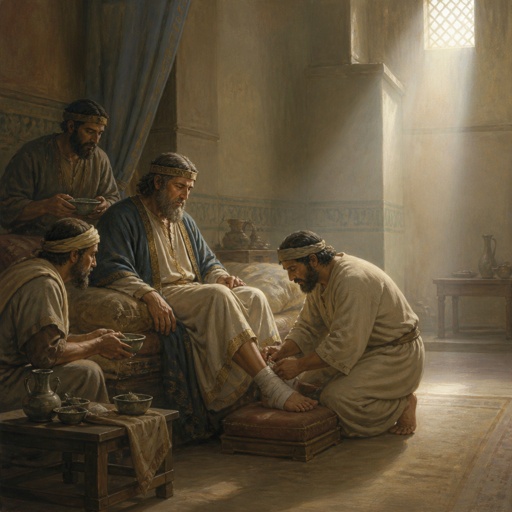
"And Asa in the thirty and ninth year of his reign was diseased in his feet, until his disease was exceeding great: yet in his disease he sought not to the LORD, but to the physicians." - 2 Chronicles 16:12

2 Chronicles 12:16 - "And Rehoboam slept with his fathers, and was buried in the city of David: and Abijah his son reigned in his stead."

1 Chronicles 12:16 - "And there came of the children of Benjamin and Judah to the hold unto David."

1 Chronicles 16:12 - "Remember his marvellous works that he hath done, his wonders, and the judgments of his mouth;"

2 chronicles 13:12
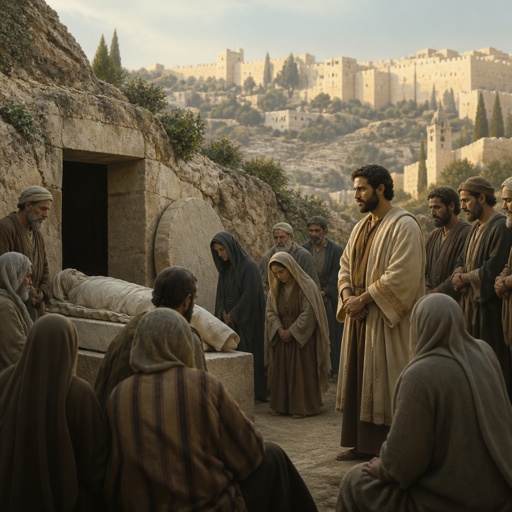
"And Rehoboam slept with his fathers, and was buried in the city of David: and Abijah his son reigned in his stead." - 2 Chronicles 12:16

1 Chronicles 2:12 - "And Boaz begat Obed, and Obed begat Jesse,"

2 Chronicles 13:16 - "And the children of Israel fled before Judah: and God delivered them into their hand."

"And there came of the children of Benjamin and Judah to the hold unto David." - 1 Chronicles 12:16

2 Chronicles 28:16 - "¶ At that time did king Ahaz send unto the kings of Assyria to help him."

2 Chronicles 16:13 - "¶ And Asa slept with his fathers, and died in the one and fortieth year of his reign."

2 Chronicles 12:6 - "Whereupon the princes of Israel and the king humbled themselves; and they said, The LORD is righteous."

2 Chronicles 12:4 - "And he took the fenced cities which pertained to Judah, and came to Jerusalem."

"Remember his marvellous works that he hath done, his wonders, and the judgments of his mouth;" - 1 Chronicles 16:12

2 Kings 12:16 - "The trespass money and sin money was not brought into the house of the LORD: it was the priests'."

2 Chronicles 16:11 - "¶ And, behold, the acts of Asa, first and last, lo, they are written in the book of the kings of Judah and Israel."

1 Chronicles 2:16 - "Whose sisters were Zeruiah, and Abigail. And the sons of Zeruiah; Abishai, and Joab, and Asahel, three."

2 Chronicles 17:12 - "¶ And Jehoshaphat waxed great exceedingly; and he built in Judah castles, and cities of store."

2 Chronicles 21:16 - "¶ Moreover the LORD stirred up against Jehoram the spirit of the Philistines, and of the Arabians, that were near the Ethiopians:"

2 Chronicles 32:16 - "And his servants spake yet more against the LORD God, and against his servant Hezekiah."

2 Kings 16:19 - "¶ Now the rest of the acts of Ahaz which he did, are they not written in the book of the chronicles of the kings of Judah?"

2 Chronicles 14:12 - "So the LORD smote the Ethiopians before Asa, and before Judah; and the Ethiopians fled."

2 Chronicles 15:12 - "And they entered into a covenant to seek the LORD God of their fathers with all their heart and with all their soul;"

2 Chronicles 12:14 - "And he did evil, because he prepared not his heart to seek the LORD."

2 Chronicles 12:12 - "And when he humbled himself, the wrath of the LORD turned from him, that he would not destroy him altogether: and also in Judah things went well."

2 Chronicles 12:8 - "Nevertheless they shall be his servants; that they may know my service, and the service of the kingdoms of the countries."

2 Chronicles 22:12 - "And he was with them hid in the house of God six years: and Athaliah reigned over the land."

2 Kings 12:19 - "¶ And the rest of the acts of Joash, and all that he did, are they not written in the book of the chronicles of the kings of Judah?"

2 Chronicles 16:2 - "Then Asa brought out silver and gold out of the treasures of the house of the LORD and of the king's house, and sent to Ben-hadad king of Syria, that dwelt at Damascus, saying,"