Unity in Purpose: Lessons from Ahab and Jehoshaphat
“And Ahab king of Israel said unto Jehoshaphat king of Judah, Wilt thou go with me to Ramoth-gilead? And he answered him, I am as thou art, and my people as thy people; and we will be with thee in the war.” — 2 Chronicles 18:3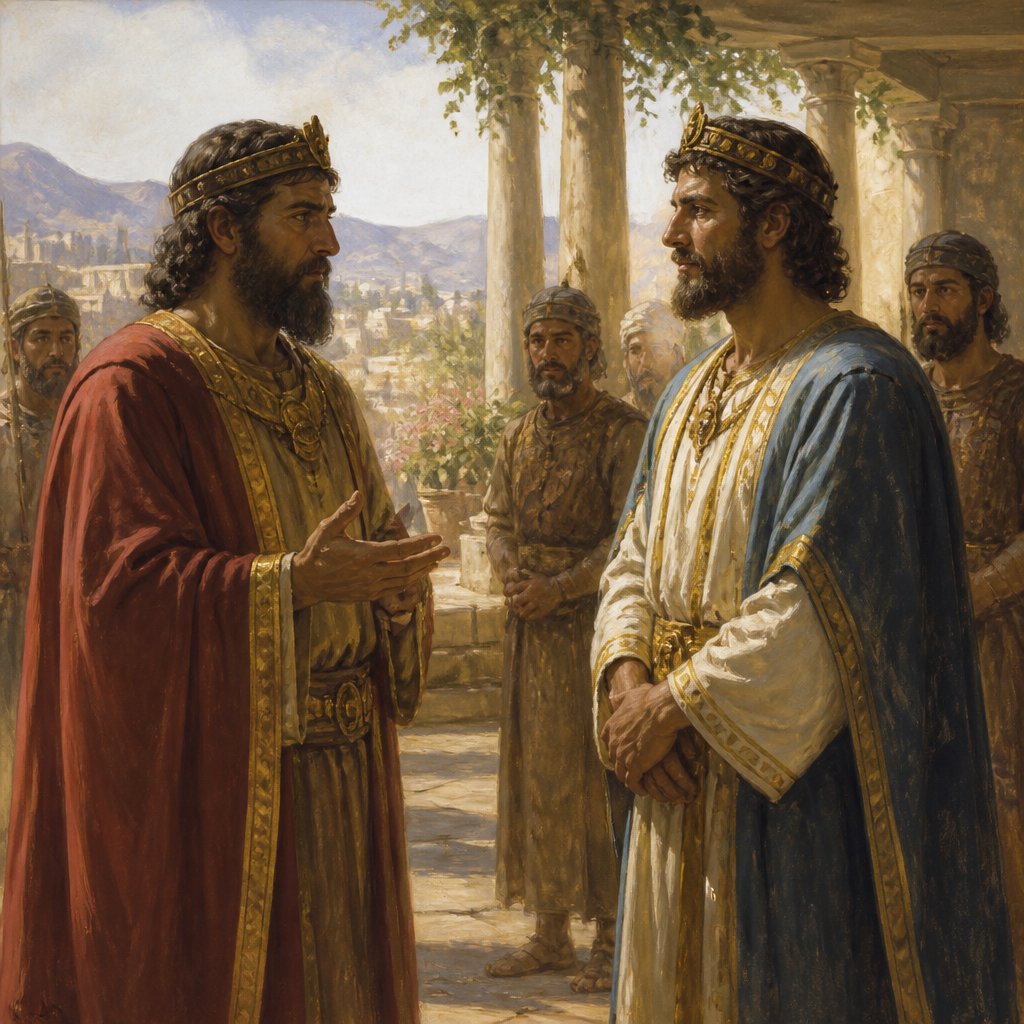
The Biblical account we find in 2 Chronicles 18:3 encapsulates a significant moment in the history of Israel and Judah. The verse reads, "And Ahab king of Israel said unto Jehoshaphat king of Judah, Wilt thou go with me to Ramoth-gilead? And he answered him, I am as thou art, and my people as thy people; and we will be with thee in the war." At first glance, it may seem merely as a political alliance, but upon deeper reflection, this unity—albeit flawed—reveals profound insights into friendship, shared purpose, and the complexities of following God.
The backdrop of this invitation from Ahab to Jehoshaphat is pivotal; it illuminates their differing reigns and priorities. Ahab, a king whose policies and practices often strayed far from the paths of righteousness, sought out Jehoshaphat whose reign was characterized by faithfulness to God. Yet, despite their spiritual differences, Jehoshaphat responds with an unexpected willingness to unite in battle: "I am as thou art, and my people as thy people."
What are the implications of such a statement? Jehoshaphat is engaging in a show of solidarity. His response signifies an understanding that kingship, especially in that era, demanded a readiness to protect and defend each other's land against common threats. Yet, this choice to align himself with Ahab leads us to a poignant realization: the weight of our alliances.
As Christian believers today, we can ponder how often we align ourselves with the world—whether through friendships, professional choices, or even our entertainment options. Jehoshaphat’s manifestation of unity with Ahab causes concern as later events unfold tragic consequences as Jehoshaphat becomes implicated in Ahab’s misdeeds and disconnected from God’s guidance. The choices we make in our relationships are powerful. Are our alliances drawing us closer to God, or are they leading us away from His counsel? We are reminded in 1 Corinthians 15:33, “Be not deceived: evil communications corrupt good manners.”
Furthermore, Jehoshaphat's willingness to join Ahab in battle speaks to the idea of shared burdens. In our lives, we are often faced with decisions that require us to rally alongside others. There is strength in unity, but it must be grounded in righteousness and a shared commitment to God. Ahab was calling for help against the Syrians but did he seek God before engaging in battle? No, the story shows Ahab solicited the voices of false prophets. We must remember that genuine battles—whether spiritual or physical—require divine guidance and wisdom.
This places a challenge before us: Is our unity based on shared values or merely for convenience? Just as Jehoshaphat entered a battle alongside Ahab without first consulting God, how many of us rush into decisions without seeking His counsel? Jehoshaphat, at one point, did acknowledge the Lord and sought the advice of a prophet when doubts arose. Solomon warns us in Proverbs 3:5-6, "Trust in the Lord with all thine heart; and lean not unto thine own understanding. In all thy ways acknowledge him, and he shall direct thy paths." Jehoshaphat’s story evokes the need for discernment in our choices—and especially in the alliances we forge.
In examining the duality of Jehoshaphat’s response, we see a reflection of ourselves. There are moments when we are willing to go along with the world, telling ourselves it is for a greater good. But in aligning ourselves with those who do not seek God’s ways, we risk our own spiritual integrity. Seek partnerships and relationships that encourage your walk in faith, that thrive in truth, and that hold each other accountable. Let us act not just as allies in this battle of life but as comrades in the Kingdom’s cause—a cause focused on righteousness and truth.
May we reflect on the unity we choose to embrace in life, not just from an earthly perspective but with an eternal mindset. And as we move forward, let our hearts echo the prayer of leaders like Jehoshaphat, who sought the Lord not only in behalf of themselves but for their people. In all our pursuits, may our reliance on God be unwavering.
Get our apps


Artwork for 2 Chronicles 18:3
2 Chronicles 18:3 - "And Ahab king of Israel said unto Jehoshaphat king of Judah, Wilt thou go with me to Ramoth-gilead? And he answered him, I am as thou art, and my people as thy people; and we will be with thee in the war."
"And Ahab king of Israel said unto Jehoshaphat king of Judah, Wilt thou go with me to Ramoth-gilead? And he answered him, I am as thou art, and my people as thy people; and we will be with thee in the war." - 2 Chronicles 18:3

2 Chronicles 18:9

2 Chronicles 18:9

1 Chronicles 3:18 - "Malchiram also, and Pedaiah, and Shenazar, Jecamiah, Hoshama, and Nedabiah."

2 Chronicles 20:18

1 Chronicles 18:3 - "¶ And David smote Hadarezer king of Zobah unto Hamath, as he went to stablish his dominion by the river Euphrates."

2 Chronicles 28:3

2 Kings 14:18 - "And the rest of the acts of Amaziah, are they not written in the book of the chronicles of the kings of Judah?"

2 Corinthians 3:18

2 Chronicles 21:18 - "¶ And after all this the LORD smote him in his bowels with an incurable disease."

2 Chronicles 18:1 - "Now Jehoshaphat had riches and honour in abundance, and joined affinity with Ahab."

1 Chronicles 18:2 - "And he smote Moab; and the Moabites became David's servants, and brought gifts."

2 Chronicles 17:18 - "And next him was Jehozabad, and with him an hundred and fourscore thousand ready prepared for the war."

2 Chronicles 18:6 - "But Jehoshaphat said, Is there not here a prophet of the LORD besides, that we might enquire of him?"

2 Chronicles 18:28 - "So the king of Israel and Jehoshaphat the king of Judah went up to Ramoth-gilead."

2 Chronicles 18:13 - "And Micaiah said, As the LORD liveth, even what my God saith, that will I speak."

2 Chronicles 8:3 - "And Solomon went to Hamath-zobah, and prevailed against it."

2 Chronicles 3:2 - "And he began to build in the second day of the second month, in the fourth year of his reign."

2 Chronicles 18:8 - "And the king of Israel called for one of his officers, and said, Fetch quickly Micaiah the son of Imla."

2 Chronicles 4:18 - "Thus Solomon made all these vessels in great abundance: for the weight of the brass could not be found out."

2 Kings 1:18 - "Now the rest of the acts of Ahaziah which he did, are they not written in the book of the chronicles of the kings of Israel?"

2 Chronicles 18:4 - "¶ And Jehoshaphat said unto the king of Israel, Enquire, I pray thee, at the word of the LORD to day."
"Malchiram also, and Pedaiah, and Shenazar, Jecamiah, Hoshama, and Nedabiah." - 1 Chronicles 3:18

2 Chronicles 18:18 - "Again he said, Therefore hear the word of the LORD; I saw the LORD sitting upon his throne, and all the host of heaven standing on his right hand and on his left."

2 Chronicles 11:18 - "¶ And Rehoboam took him Mahalath the daughter of Jerimoth the son of David to wife, and Abihail the daughter of Eliab the son of Jesse;"

2 Chronicles 18:32 - "For it came to pass, that, when the captains of the chariots perceived that it was not the king of Israel, they turned back again from pursuing him."

2 Chronicles 24:18 - "And they left the house of the LORD God of their fathers, and served groves and idols: and wrath came upon Judah and Jerusalem for this their trespass."

1 Chronicles 2:18 - "¶ And Caleb the son of Hezron begat children of Azubah his wife, and of Jerioth: her sons are these; Jesher, and Shobab, and Ardon."

2 Chronicles 2:18 - "And he set threescore and ten thousand of them to be bearers of burdens, and fourscore thousand to be hewers in the mountain, and three thousand and six hundred overseers to set the people a work."