The Cost of Compromise: Lessons from the Fall of Ahab
“And the battle increased that day: howbeit the king of Israel stayed himself up in his chariot against the Syrians until the even: and about the time of the sun going down he died.” — 2 Chronicles 18:34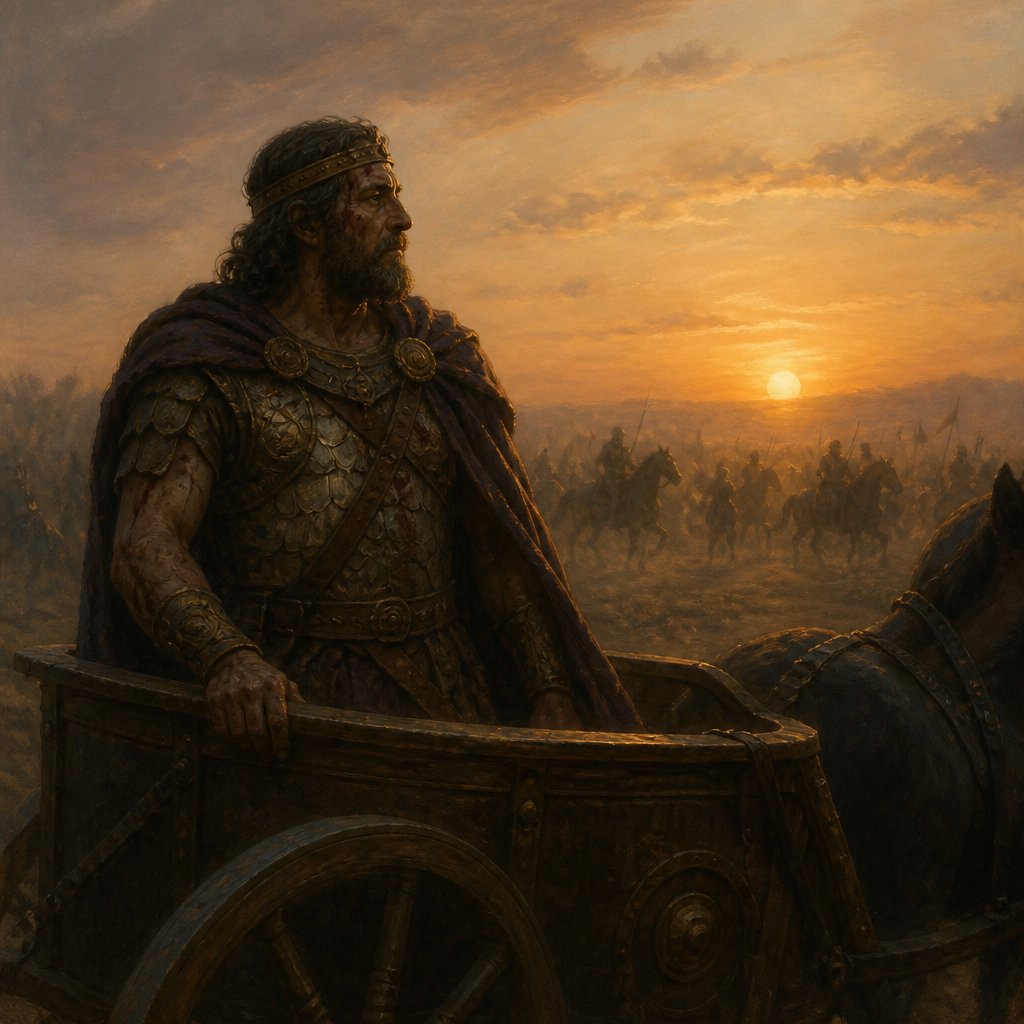
The story of King Ahab, as recorded in 2 Chronicles 18, is a revealing testament to the dangerous consequences of a compromised faith and the perilous path of holding on to power at all costs. Our focal verse, 2 Chronicles 18:34 (KJV), reads:
"And the battle increased that day: howbeit the king of Israel stayed himself up in his chariot against the Syrians until the even: and about the time of the sun going down he died."
In this passage, we see Ahab, who had long strayed from the ways of Yahweh, sustaining his course of disobedience even in the midst of battle. Ahab had aligned himself against the prophet Micaiah, who had warned him against going into battle. Instead of heeding God’s warning, Ahab chose to wear a disguise and sought to defy the odds in what he believed was a calculated risk.
The intensity of the battle heightened throughout the day as Ahab remained steadfast in his chariot, putting his trust in military strength rather than divine guidance. This scene paints a grim picture: a king surrounded by chaos, holding tight to the dreams of victory while neglecting the inevitable consequences of his choices. This moment symbolically illustrates how we often cling to our own chariots—our plans, ambitions, and façades—rather than surrendering to God’s providential direction.
Ahab’s story compels us to examine the battles we face in our own lives. How often do we find ourselves in situations where we stay rooted in our own understanding and methods, only to realize that they lead us farther away from God’s will? The text emphasizes that the “battle increased,” paralleling the struggles and pressures that relentlessly build upon us when we refuse to yield to God. These increasing battles can symbolize our personal ambitions in face of divine conviction, leading us to exhaustion and despair.
Ahab’s refusal to repent and seek God’s counsel ultimately led him to a tragic destiny. The fate of this king serves as a warning that the pursuit of earthly power, when not aligned with God, can lead to destruction. The clock was ticking down the day—symbolically, the sundown represents the closing of Ahab’s life and the arrival of divine judgment. The setting sun signifies the end not only of daylight but also of the fleeting reign of an unrepentant heart.
In our daily battles, how can we ensure that we do not fall into the same trap as Ahab? Firstly, we must seek God's guidance earnestly, particularly in crucial decisions that affect our lives and those around us. Seeking wisdom from the Scriptures and godly counsel can open our eyes to the paths we must avoid.
Secondly, we should evaluate what ‘chariots’ we may be relying on as security in our battles. Are they our careers, relationships, status, or illusion of control? Ahab’s fate warns us of the perils in relying solely on these temporary entities that can ultimately lead to our downfall. Rather than clinging to things that may have only the semblance of strength, we must cling to God’s promises and depend on His power to guide us through the storms of life.
Lastly, we need to be ready to surrender. Ahab never truly realized the power of humility and repentance. To be saved from our battles and potentially futile pursuits, we must align ourselves with God’s heart and purposes, even if it requires difficult choices. Let us reflect on our lives and ask ourselves: where are we fighting battles that God has not called us to fight? May we instead choose to rest in His strength, knowing that our ultimate victory is found in surrender and obedience to His will.
In conclusion, as we meditate upon Ahab’s downfall, it is crucial to remember that God’s ways lead to life and peace, while compromise and self-reliance lead to darkness. Let us choose wisely, turning our hearts toward God and reveling in the assurance of His guidance, even amidst the fiercest battles.
Get our apps


Artwork for 2 Chronicles 18:34

2 Chronicles 18:34 - "And the battle increased that day: howbeit the king of Israel stayed himself up in his chariot against the Syrians until the even: and about the time of the sun going down he died."
"And the battle increased that day: howbeit the king of Israel stayed himself up in his chariot against the Syrians until the even: and about the time of the sun going down he died." - 2 Chronicles 18:34

2 Chronicles 34:18 - "Then Shaphan the scribe told the king, saying, Hilkiah the priest hath given me a book. And Shaphan read it before the king."

2 Chronicles 34:19

2 Chronicles 34:19

2 Chronicles 34:29 - "¶ Then the king sent and gathered together all the elders of Judah and Jerusalem."

2 Chronicles 34:5 - "And he burnt the bones of the priests upon their altars, and cleansed Judah and Jerusalem."

2 Chronicles 18:9

2 Chronicles 18:9
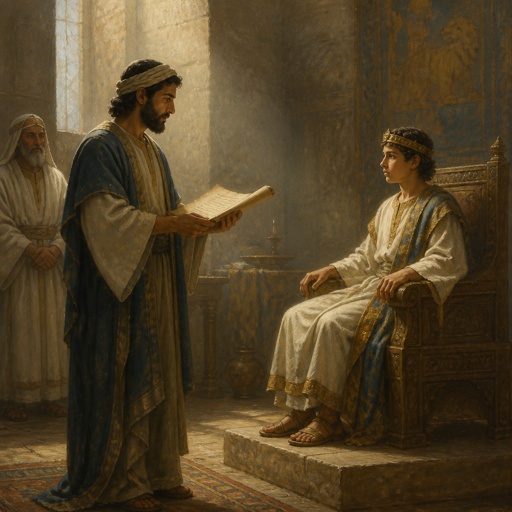
"Then Shaphan the scribe told the king, saying, Hilkiah the priest hath given me a book. And Shaphan read it before the king." - 2 Chronicles 34:18

2 Chronicles 20:18

2 Chronicles 34:19 - "And it came to pass, when the king had heard the words of the law, that he rent his clothes."

1 Chronicles 2:34 - "¶ Now Sheshan had no sons, but daughters. And Sheshan had a servant, an Egyptian, whose name was Jarha."

2 Chronicles 34:2 - "And he did that which was right in the sight of the LORD, and walked in the ways of David his father, and declined neither to the right hand, nor to the left."

2 Chronicles 34:17 - "And they have gathered together the money that was found in the house of the LORD, and have delivered it into the hand of the overseers, and to the hand of the workmen."

2 Chronicles 34:6 - "And so did he in the cities of Manasseh, and Ephraim, and Simeon, even unto Naphtali, with their mattocks round about."

2 Chronicles 34:1 - "Josiah was eight years old when he began to reign, and he reigned in Jerusalem one and thirty years."

2 Chronicles 34:23 - "¶ And she answered them, Thus saith the LORD God of Israel, Tell ye the man that sent you to me,"

2 Chronicles 34:10 - "And they put it in the hand of the workmen that had the oversight of the house of the LORD, and they gave it to the workmen that wrought in the house of the LORD, to repair and amend the house:"

2 Chronicles 34:14 - "¶ And when they brought out the money that was brought into the house of the LORD, Hilkiah the priest found a book of the law of the LORD given by Moses."

2 Kings 10:34 - "Now the rest of the acts of Jehu, and all that he did, and all his might, are they not written in the book of the chronicles of the kings of Israel?"

2 Chronicles 34:20 - "And the king commanded Hilkiah, and Ahikam the son of Shaphan, and Abdon the son of Micah, and Shaphan the scribe, and Asaiah a servant of the king's, saying,"

2 Chronicles 34:16 - "And Shaphan carried the book to the king, and brought the king word back again, saying, All that was committed to thy servants, they do it."

2 Chronicles 34:11 - "Even to the artificers and builders gave they it, to buy hewn stone, and timber for couplings, and to floor the houses which the kings of Judah had destroyed."

2 Kings 18:34 - "Where are the gods of Hamath, and of Arpad? where are the gods of Sepharvaim, Hena, and Ivah? have they delivered Samaria out of mine hand?"

2 Chronicles 34:15 - "And Hilkiah answered and said to Shaphan the scribe, I have found the book of the law in the house of the LORD. And Hilkiah delivered the book to Shaphan."

2 Chronicles 34:32 - "And he caused all that were present in Jerusalem and Benjamin to stand to it. And the inhabitants of Jerusalem did according to the covenant of God, the God of their fathers."

2 Chronicles 20:34 - "Now the rest of the acts of Jehoshaphat, first and last, behold, they are written in the book of Jehu the son of Hanani, who is mentioned in the book of the kings of Israel."

2 Chronicles 34:13 - "Also they were over the bearers of burdens, and were overseers of all that wrought the work in any manner of service: and of the Levites there were scribes, and officers, and porters."

2 Kings 14:18 - "And the rest of the acts of Amaziah, are they not written in the book of the chronicles of the kings of Judah?"