A Call to Unity and Leadership: Lessons from Solomon's Assembly
“Then Solomon spake unto all Israel, to the captains of thousands and of hundreds, and to the judges, and to every governor in all Israel, the chief of the fathers.” — 2 Chronicles 1:2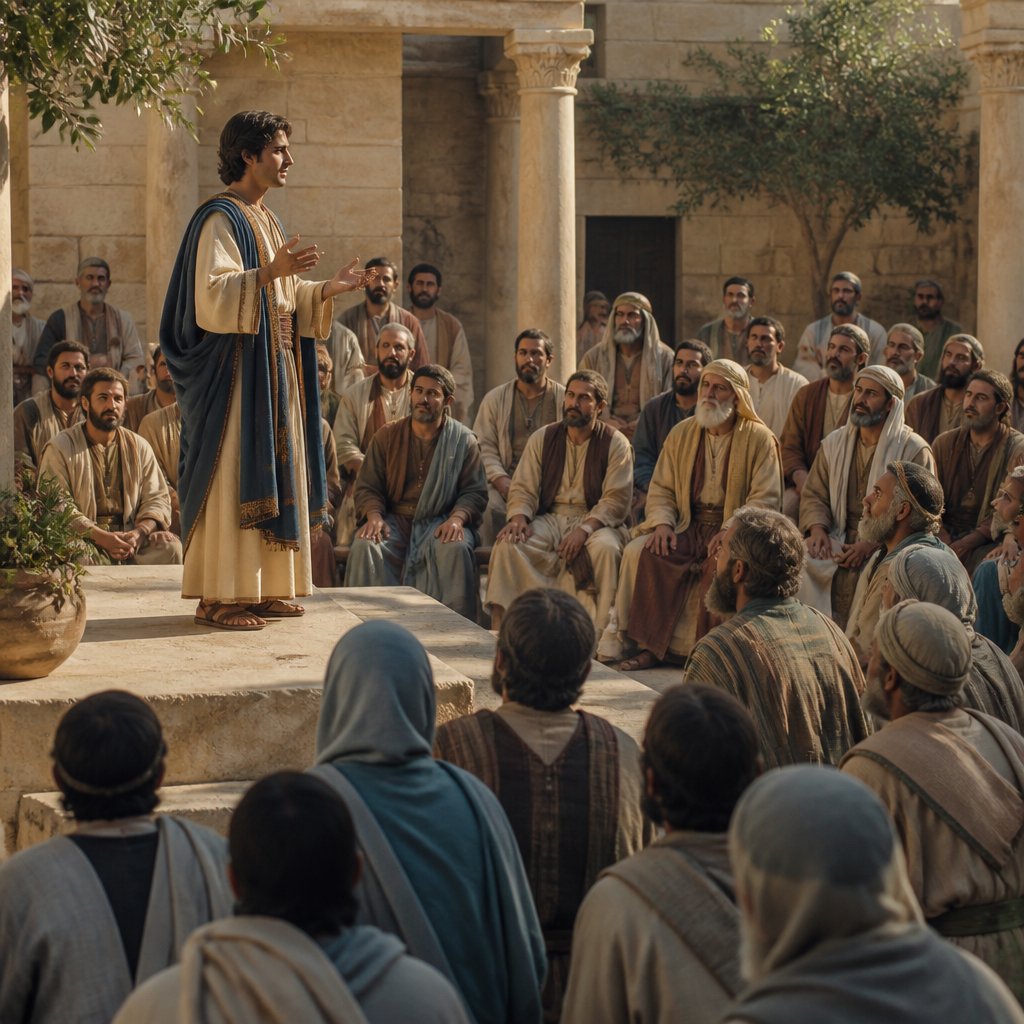
The verse 2 Chronicles 1:2 reads, "Then Solomon spake unto all Israel, to the captains of thousands and of hundreds, and to the judges, and to every governor in all Israel, the chief of the fathers." This brief yet powerful passage encapsulates a pivotal moment in the reign of King Solomon, offering us profound insights into leadership, unity, and the importance of addressing those in positions of authority.
As we delve into this moment, it's essential to understand the context surrounding Solomon’s words. Solomon had just ascended the throne of Israel after his father, King David, who had united the twelve tribes amidst years of warfare and strife. The foundation of his leadership was laid upon the legacy of a united Israel, and Solomon recognized the blessings and responsibilities that accompanied his kingship. Thus, he called together the prominent leaders of the nation – military commanders, judges, governors, and tribal chiefs – to communicate directly with them. Here, Solomon exemplified a crucial leadership principle: the importance of unity among those in authority.
By addressing this broad spectrum of leaders, Solomon was not merely gathering them for a ceremonial assembly. He was intentionally fostering a spirit of collaboration and shared mission among those tasked with guiding the nation. In the modern context, this speaks volumes about our engagement with various leaders within our communities, organizations, and even within our families. Unity among leaders creates an environment conducive to achieving common goals for the welfare of those they serve. This principle is echoed in Psalm 133:1, "Behold, how good and how pleasant it is for brethren to dwell together in unity!" Unity, when cultivated, becomes a force multiplier that enables communities to realize their full potential.
Furthermore, Solomon's meeting was a testament to his recognition of the distinct roles these leaders played. The captains provided military security, judges upheld justice, and governors addressed local governance. Each role was vital for the stability and prosperity of Israel. In the body of Christ, as discussed in 1 Corinthians 12:12-27, we are reminded of the diverse gifts and functions that contribute to our collective mission. When leaders understand and respect one another’s functions, they can work in harmony. Each role becomes an integral part of the greater assembly that God desires for His kingdom.
As Solomon spoke to these men and women of influence, he was also setting a precedent for accountability and shared vision. His authority, though divine in origin, did not exist in isolation; it required the cooperation of those around him. In the church today, leaders must inspire those under their guidance to accept joint responsibility for decisions and actions. It is a call to participate, to voice opinions, and to lend hands to the tasks at hand.
Indeed, Solomon’s assembly reflects the heart of biblical leadership – servant leadership. Jesus himself modeled this perfectly when he washed the feet of his disciples (John 13:1-17), demonstrating that true leadership involves service and humility. Solomon, even as a king, adopted this model by ensuring that each leader in Israel felt valued and acknowledged.
In our personal lives, as we endeavor to be effective in various spheres of influence, Solomon's approach serves as a reminder to gather those around us, to listen, and to collaborate for the goodness of others. Whether you are a parent, a manager, a teacher, or involved in community service, consider how you can emulate Solomon's initiative.
In conclusion, 2 Chronicles 1:2 encourages us to embrace our roles as leaders in conjunction with others, fostering unity, service, and shared responsibility for the betterment of our communities. May we, like Solomon, gather together the voices that matter as we seek to harness collective wisdom and strength. Let us also be reminded that our leadership is not about our authority but about our ability to serve and elevate those around us, ensuring that every decision honors and uplifts the community we lead.
Get our apps


Artwork for 2 Chronicles 1:2

2 Chronicles 1:2 - "Then Solomon spake unto all Israel, to the captains of thousands and of hundreds, and to the judges, and to every governor in all Israel, the chief of the fathers."
"Then Solomon spake unto all Israel, to the captains of thousands and of hundreds, and to the judges, and to every governor in all Israel, the chief of the fathers." - 2 Chronicles 1:2

1 Chronicles 2:2 - "Dan, Joseph, and Benjamin, Naphtali, Gad, and Asher."

1 Chronicles 1:2 - "Kenan, Mahalaleel, Jered,"

2 Chronicles 2:1 - "And Solomon determined to build an house for the name of the LORD, and an house for his kingdom."

2 Chronicles 4:22
2 Chronicles 31:1

2 Chronicles 31:1

1 Chronicles 2:8 - "And the sons of Ethan; Azariah."

1 Chronicles 8:2 - "Nohah the fourth, and Rapha the fifth."

"Kenan, Mahalaleel, Jered," - 1 Chronicles 1:2

1 Chronicles 2:5 - "The sons of Pharez; Hezron, and Hamul."

1 Chronicles 2:15 - "Ozem the sixth, David the seventh:"

1 Chronicles 2:14 - "Nethaneel the fourth, Raddai the fifth,"

1 Chronicles 2:1 - "These are the sons of Israel; Reuben, Simeon, Levi, and Judah, Issachar, and Zebulun,"

1 Chronicles 2:38 - "And Obed begat Jehu, and Jehu begat Azariah,"

1 Chronicles 2:41 - "And Shallum begat Jekamiah, and Jekamiah begat Elishama."

1 Chronicles 2:36 - "And Attai begat Nathan, and Nathan begat Zabad,"

1 Chronicles 2:11 - "And Nahshon begat Salma, and Salma begat Boaz,"

1 Chronicles 2:39 - "And Azariah begat Helez, and Helez begat Eleasah,"

1 Chronicles 2:48 - "Maachah, Caleb's concubine, bare Sheber, and Tirhanah."

1 Chronicles 2:43 - "And the sons of Hebron; Korah, and Tappuah, and Rekem, and Shema."

1 Chronicles 2:20 - "And Hur begat Uri, and Uri begat Bezaleel."

1 Chronicles 2:40 - "And Eleasah begat Sisamai, and Sisamai begat Shallum,"

1 Chronicles 6:2 - "And the sons of Kohath; Amram, Izhar, and Hebron, and Uzziel."

1 Chronicles 2:37 - "And Zabad begat Ephlal, and Ephlal begat Obed,"

1 Chronicles 2:12 - "And Boaz begat Obed, and Obed begat Jesse,"

"Dan, Joseph, and Benjamin, Naphtali, Gad, and Asher." - 1 Chronicles 2:2

1 Chronicles 2:33 - "And the sons of Jonathan; Peleth, and Zaza. These were the sons of Jerahmeel."

1 Chronicles 2:45 - "And the son of Shammai was Maon: and Maon was the father of Beth-zur."