The Legacy of Mercy: Embracing Our Divine Calling
“And Solomon said unto God, Thou hast shewed great mercy unto David my father, and hast made me to reign in his stead.” — 2 Chronicles 1:8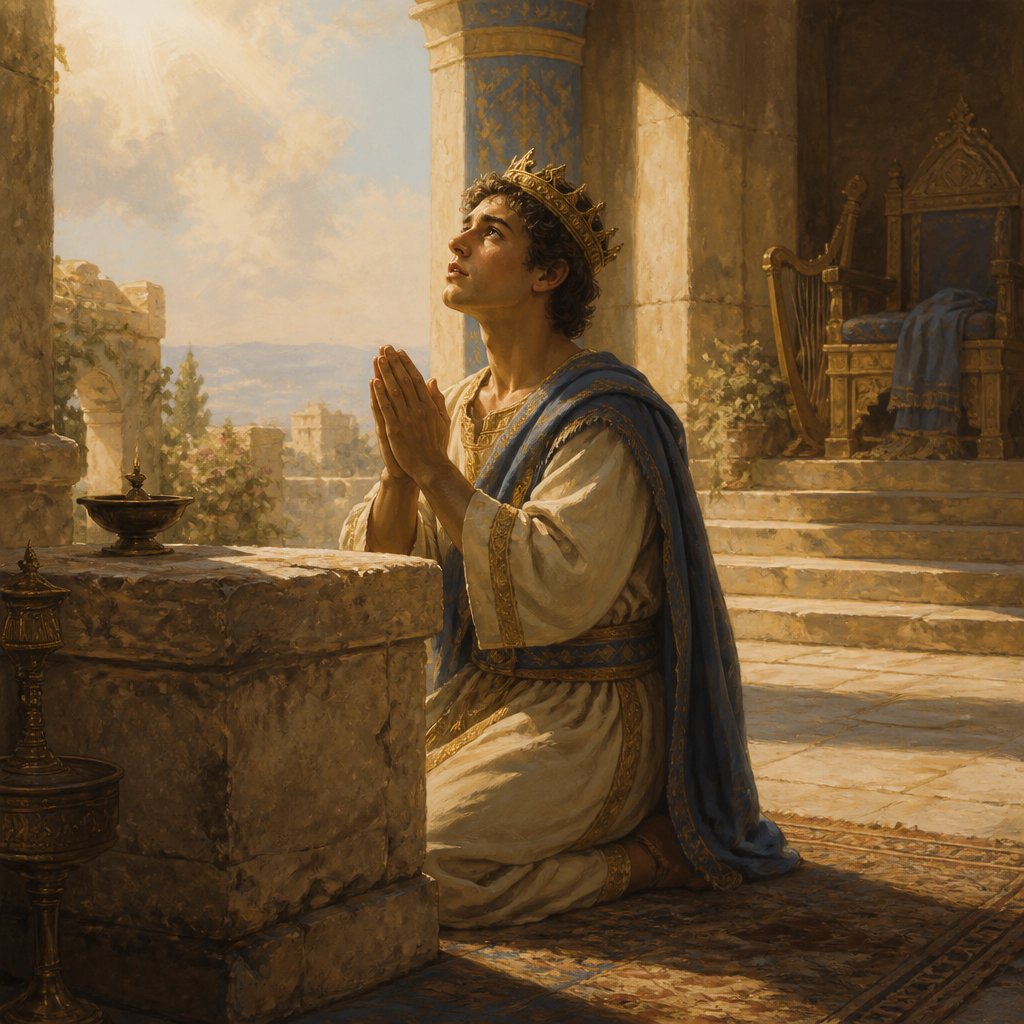
As we turn our hearts and minds to 2 Chronicles 1:8, we are invited into a moment of profound reflection and humility. The verse reads: "And Solomon said unto God, Thou hast shewed great mercy unto David my father, and hast made me to reign in his stead" (KJV). Here, we find Solomon, the son of David, recognizing not only the tremendous grace of God bestowed upon his father but also the weight of the responsibility being passed down to him.
### The Gift of Divine Mercy
To understand the depth of Solomon's acknowledgment, we must first consider the life of David. Known as a man after God’s own heart, David experienced both the heights of victory and the depths of failure. His reign was marked by both his faithfulness and his shortcomings, including moral failures that brought turmoil to his family and kingdom. Yet, throughout all these, God's mercy prevailed. David learned to lean on this mercy, and it shaped his heart, leading him to write many of the Psalms we treasure today.
David’s legacy is a testament to God's willingness to forgive, redeem, and appoint those He chooses despite the failings of humanity. As Solomon stands on the threshold of leadership, he acknowledges that it is by this same mercy that he has been elevated to the throne. He does not take this privilege lightly; rather, he understands that it comes with a divine mandate to govern with wisdom.
### A Call to Wisdom
In this moment, it is important to reflect on our own lives. Each of us, in some capacity, has been granted authority—over our families, our workplaces, or our communities. With this authority comes the call to seek wisdom, much like Solomon did. Later in 2 Chronicles 1, we witness Solomon asking God not for wealth or power, but for wisdom to lead his people effectively. His understanding that his reign is rooted in mercy compels him to seek the heart of God.
This leads us to consider our own prayers. Are we seeking God merely for what He can give us? Or are we earnestly desiring the wisdom to lead those in our charge toward His purposes? When we align our desire for wisdom with a heart of gratitude for the mercy we've received, we open ourselves up to transformative leadership.
### The Responsibility of Leadership
Solomon's reign was not simply about ruling; it was about covenant relationship with God and the people. His leadership style emphasized service, as he was called to reflect God's character in his decisions and actions. Therefore, as we embrace the roles we have been given, we must remain cognizant of the mercies extended to us and the responsibility that comes with our positions.
Leadership motivated by mercy exhibits compassion and justice. It seeks to uplift and empower rather than dominate. For Solomon, recognizing the mercy given to his father sparked a desire to lead wisely and graciously. Reflection on this can compel us to consider how we treat those we lead. Do we extend mercy and grace in our interactions with others?
### Legacy of Mercy
Finally, Solomon’s acknowledgment of his father’s legacy teaches us about the impact we can have on future generations. Just as David’s reliance on God informed Solomon’s reign, so too can our lives reflect the mercy and grace of God, affecting those who come after us.
Today, as we meditate on this verse, let us not only appreciate the mercy shown to David, and through him to Solomon, but also seek to live our lives in a way that reflects that mercy. Let us embrace our calling, regardless of how daunting it may seem, with a heart devoted to seeking wisdom and walking in grace. In doing so, we will not only fulfill our roles but will honor the God who has placed us where we are—reigning, not in our own strength, but through the immense grace He has given us.
Get our apps


Artwork for 2 Chronicles 1:8

2 Chronicles 1:8 - "And Solomon said unto God, Thou hast shewed great mercy unto David my father, and hast made me to reign in his stead."
"And Solomon said unto God, Thou hast shewed great mercy unto David my father, and hast made me to reign in his stead." - 2 Chronicles 1:8

1 Chronicles 2:8 - "And the sons of Ethan; Azariah."

1 Chronicles 8:2 - "Nohah the fourth, and Rapha the fifth."

"And the sons of Ethan; Azariah." - 1 Chronicles 2:8

"Nohah the fourth, and Rapha the fifth." - 1 Chronicles 8:2

1 Chronicles 1:8 - "¶ The sons of Ham; Cush, and Mizraim, Put, and Canaan."

2 Chronicles 8:1 - "And it came to pass at the end of twenty years, wherein Solomon had built the house of the LORD, and his own house,"

"¶ The sons of Ham; Cush, and Mizraim, Put, and Canaan." - 1 Chronicles 1:8

2 Chronicles 11:8 - "And Gath, and Mareshah, and Ziph,"

1 chronicles 12:8

1 Chronicles 8:31 - "And Gedor, and Ahio, and Zacher."

1 Chronicles 8:20 - "And Elienai, and Zilthai, and Eliel,"

1 Chronicles 8:19 - "And Jakim, and Zichri, and Zabdi,"

1 Chronicles 8:24 - "And Hananiah, and Elam, and Antothijah,"

1 Chronicles 8:26 - "And Shamsherai, and Shehariah, and Athaliah,"

1 Chronicles 8:5 - "And Gera, and Shephuphan, and Huram."

1 Chronicles 8:22 - "And Ishpan, and Heber, and Eliel,"

1 Chronicles 8:14 - "And Ahio, Shashak, and Jeremoth,"

1 Chronicles 8:23 - "And Abdon, and Zichri, and Hanan,"

1 Chronicles 8:4 - "And Abishua, and Naaman, and Ahoah,"

1 Chronicles 8:15 - "And Zebadiah, and Arad, and Ader,"

1 Chronicles 3:8 - "And Elishama, and Eliada, and Eliphelet, nine."

2 Chronicles 8:3 - "And Solomon went to Hamath-zobah, and prevailed against it."

1 Chronicles 8:17 - "And Zebadiah, and Meshullam, and Hezeki, and Heber,"

1 Chronicles 8:25 - "And Iphedeiah, and Penuel, the sons of Shashak;"

1 Chronicles 24:8 - "The third to Harim, the fourth to Seorim,"

1 Chronicles 8:21 - "And Adaiah, and Beraiah, and Shimrath, the sons of Shimhi;"

1 Chronicles 8:11 - "And of Hushim he begat Abitub, and Elpaal."

1 Chronicles 8:16 - "And Michael, and Ispah, and Joha, the sons of Beriah;"