Counting the Strangers: Embracing Unity in Diversity
“And Solomon numbered all the strangers that were in the land of Israel, after the numbering wherewith David his father had numbered them; and they were found an hundred and fifty thousand and three thousand and six hundred.” — 2 Chronicles 2:17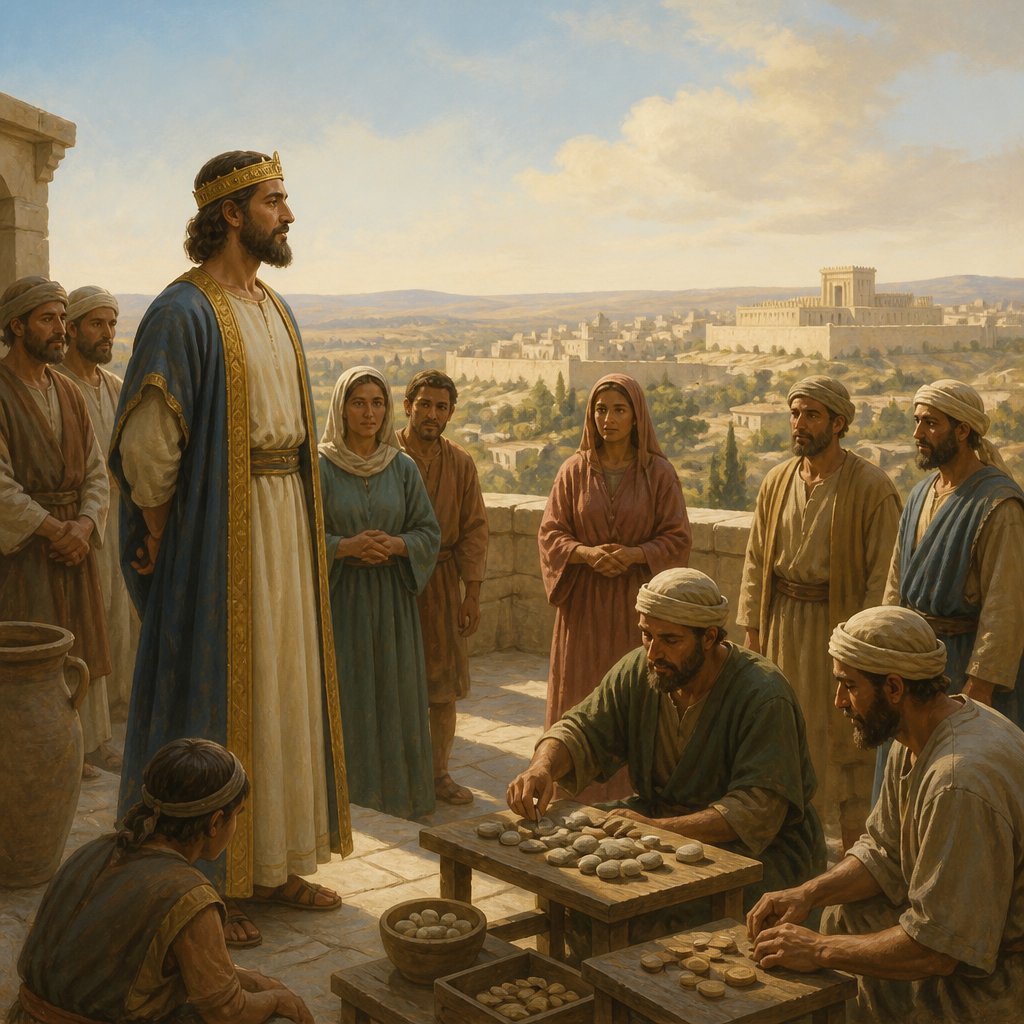
The verse we reflect on today is found in 2 Chronicles 2:17 (KJV): "And Solomon numbered all the strangers that were in the land of Israel, after the numbering wherewith David his father had numbered them; and they were found an hundred and fifty thousand and three thousand and six hundred."
At first glance, Solomon’s act of numbering the strangers in Israel may seem like a mere administrative task of an ancient king, but within this act lies profound spiritual significance and a powerful reflection on unity, inclusivity, and purpose in diversity.
### The Context of the Count
Historically, Solomon was at the pinnacle of Israel's splendor and wealth. He had an ambitious vision: to build a temple for the Lord, a place that would not only serve as a house of worship but also symbolize God’s presence among His people. In such a monumental task, Solomon needed skilled laborers, resources, and support. The "strangers" mentioned in the text refer to foreigners who resided in Israel, particularly those who were willing to contribute to the monumental task ahead.
In David’s reign, as he consolidated the nation of Israel, he recognized the importance of those who were not born into the nation but had come to live among the Israelites. By numbering the strangers, Solomon was following in his father’s footsteps, showing an important continuity in leadership and community engagement.
### Embracing the Strangers
In this context, we can draw a parallel to our own lives. Just as Solomon recognized the value of those who were outsiders, we too are called to embrace diversity in our communities. This verse challenges us to look around and engage with those who may not share our heritage or background. God’s Kingdom is built upon the diversity of His creation.
As believers, we are reminded to be inclusive. In Galatians 3:28, Paul writes, "There is neither Jew nor Greek, neither bond nor free, neither male nor female: for ye are all one in Christ Jesus." This is the essential heart of the Gospel. Solomon’s estimate of the strangers was not merely about numbers. It was about acknowledging and appreciating the different backgrounds, cultures, and skills that contribute to the communal tapestry of the nation.
### Beyond Numbers - A Call for Unity
The total number of one hundred and fifty-three thousand and six hundred is staggering. It speaks to a community that is large, diverse, and vibrant. In churches today, one of the greatest challenges is to unite people from various backgrounds and experiences. Solomon’s census encourages us to see beyond our differences and focus on a common goal – glorifying God through our collective efforts.
The act of counting implies value. Surely, in the eyes of God, every person matters. Each life brings unique gifts, talents, and perspectives. When we create spaces within our churches and communities that honor the contributions of all, we not only fulfill the Great Commission to go and make disciples but also reflect the heart of God who desires that none should perish (2 Peter 3:9).
### A Reflection for Today
As we meditate on this verse today, let us ask ourselves: How do we treat the strangers within our midst? Do we engage with those who are different from us, or do we prefer the comfort of our own familiar circles? Embrace the opportunity to connect, learn, and grow alongside those whose experiences differ from our own. Whether in our families, workplaces, or communities, are we making an effort to uplift and include the marginalized and the different?
Solomon’s decision to count the strangers was not about statistics but about significance. Let us strive to be like Solomon, recognizing and valuing every individual, for in God’s eyes, we are all cherished parts of His grand creation, called to work together in unity for His glory.
Get our apps


Artwork for 2 Chronicles 2:17

2 Chronicles 2:17 - "¶ And Solomon numbered all the strangers that were in the land of Israel, after the numbering wherewith David his father had numbered them; and they were found an hundred and fifty thousand and three thousand and six hundred."
"¶ And Solomon numbered all the strangers that were in the land of Israel, after the numbering wherewith David his father had numbered them; and they were found an hundred and fifty thousand and three thousand and six hundred." - 2 Chronicles 2:17

2 Chronicles 23:17

2 Chronicles 23:17

2 Chronicles 17:17 - "And of Benjamin; Eliada a mighty man of valour, and with him armed men with bow and shield two hundred thousand."

1 Chronicles 2:17 - "And Abigail bare Amasa: and the father of Amasa was Jether the Ishmeelite."

2 Chronicles 17:15 - "And next to him was Jehohanan the captain, and with him two hundred and fourscore thousand."

2 Chronicles 8:17 - "¶ Then went Solomon to Ezion-geber, and to Eloth, at the sea side in the land of Edom."

2 Chronicles 9:17 - "Moreover the king made a great throne of ivory, and overlaid it with pure gold."

2 Chronicles 10:17 - "But as for the children of Israel that dwelt in the cities of Judah, Rehoboam reigned over them."

2 Chronicles 28:17 - "For again the Edomites had come and smitten Judah, and carried away captives."

2 Chronicles 17:12 - "¶ And Jehoshaphat waxed great exceedingly; and he built in Judah castles, and cities of store."

1 Chronicles 17:2 - "Then Nathan said unto David, Do all that is in thine heart; for God is with thee."

2 Chronicles 17:18 - "And next him was Jehozabad, and with him an hundred and fourscore thousand ready prepared for the war."

2 Chronicles 17:1 - "And Jehoshaphat his son reigned in his stead, and strengthened himself against Israel."
2 Chronicles 17:2 - "And he placed forces in all the fenced cities of Judah, and set garrisons in the land of Judah, and in the cities of Ephraim, which Asa his father had taken."

2 Chronicles 17:4 - "But sought to the LORD God of his father, and walked in his commandments, and not after the doings of Israel."

2 Chronicles 4:17 - "In the plain of Jordan did the king cast them, in the clay ground between Succoth and Zeredathah."

2 Chronicles 17:19 - "These waited on the king, beside those whom the king put in the fenced cities throughout all Judah."

2 Chronicles 26:17 - "And Azariah the priest went in after him, and with him fourscore priests of the LORD, that were valiant men:"

2 Chronicles 35:17 - "And the children of Israel that were present kept the passover at that time, and the feast of unleavened bread seven days."

2 Chronicles 33:17 - "Nevertheless the people did sacrifice still in the high places, yet unto the LORD their God only."

2 Chronicles 31:17 - "Both to the genealogy of the priests by the house of their fathers, and the Levites from twenty years old and upward, in their charges by their courses;"

2 Chronicles 17:13 - "And he had much business in the cities of Judah: and the men of war, mighty men of valour, were in Jerusalem."

2 Chronicles 34:17 - "And they have gathered together the money that was found in the house of the LORD, and have delivered it into the hand of the overseers, and to the hand of the workmen."

2 Chronicles 17:3 - "And the LORD was with Jehoshaphat, because he walked in the first ways of his father David, and sought not unto Baalim;"

2 Chronicles 15:17 - "But the high places were not taken away out of Israel: nevertheless the heart of Asa was perfect all his days."

2 Chronicles 24:17 - "Now after the death of Jehoiada came the princes of Judah, and made obeisance to the king. Then the king hearkened unto them."

2 Chronicles 17:9 - "And they taught in Judah, and had the book of the law of the LORD with them, and went about throughout all the cities of Judah, and taught the people."

2 Chronicles 18:17 - "And the king of Israel said to Jehoshaphat, Did I not tell thee that he would not prophesy good unto me, but evil?"