Yielded Hearts in His Sanctuary
"Now be ye not stiffnecked, as your fathers were, but yield yourselves unto the LORD, and enter into his sanctuary, which he hath sanctified for ever: and serve the LORD your God, that the fierceness of his wrath may turn away from you." - 2 Chronicles 30:8
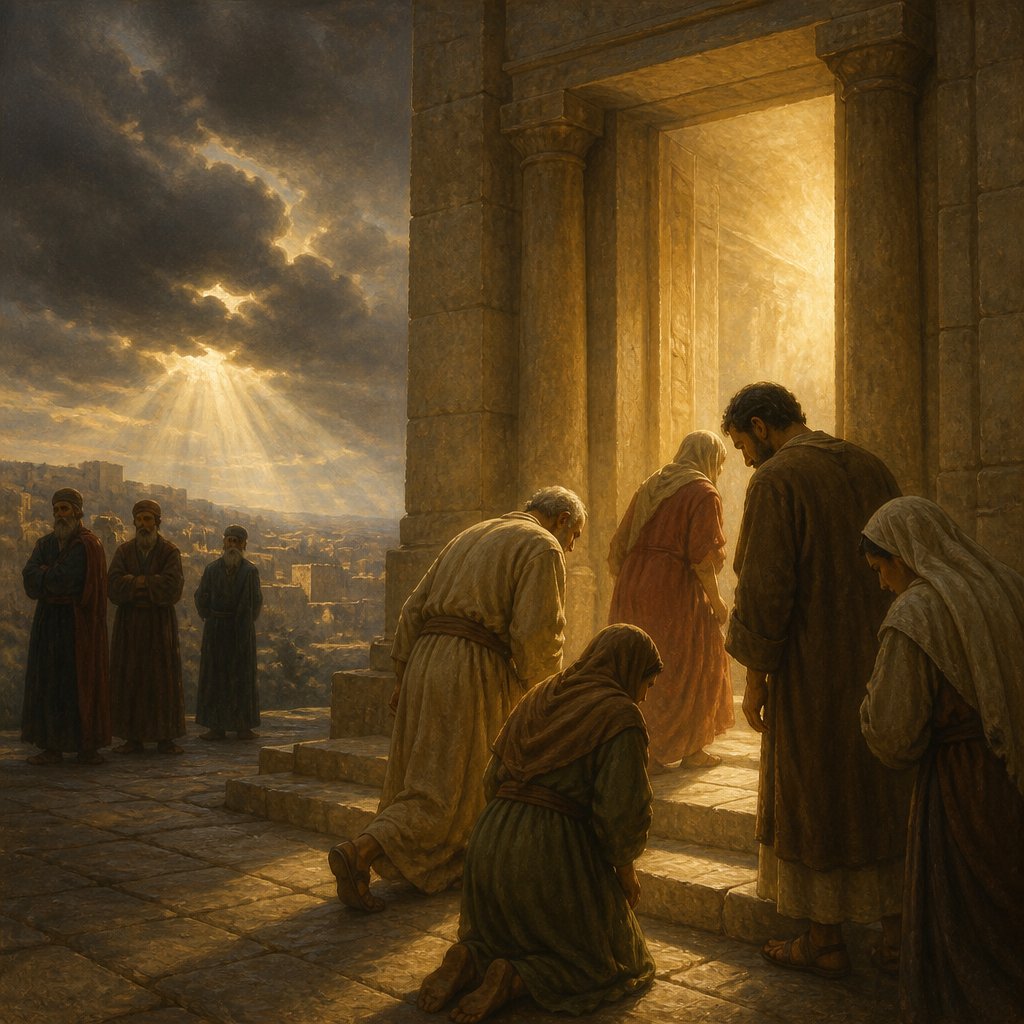
In 2 Chronicles 30:8, we encounter a powerful invitation and a profound exhortation, delivered by King Hezekiah to the people of Israel. The verse states, "Now be ye not stiffnecked, as your fathers were, but yield yourselves unto the LORD, and enter into his sanctuary, which he hath sanctified for ever: and serve the LORD your God, that the fierceness of his wrath may turn away from you." This verse encapsulates a plea for humility, devotion, and trust in God, showing us the eternal relevance of yielding ourselves to the Lord, especially as we navigate the complexities of life.
The phrase "stiffnecked" rings with historical significance. It denotes rebellion, pride, and an unwillingness to bend before God. The history of Israel is marked by cycles of disobedience and rebellion against God's commands. They often turned away from their covenant with God and fell into patterns of idolatry and sin. However, Hezekiah, as a king who was dedicated to restoring proper worship and drawing the hearts of the people back to God, calls them to abandon this manner of living—a call that still resonates with us today.
As we reflect on this warning, we might need to confront the stiffness of our own necks. Are there areas of our lives where we hold onto pride or stubbornness? Are there particular sins or patterns of behavior we refuse to relinquish, despite their consequences? In a world that prizes independence and self-sufficiency, we must recognize that true freedom begins with surrender. To yield ourselves to the Lord means to recognize His authority and submit our individual desires to His greater plan. It means laying down our defenses and allowing the Holy Spirit to mold us into Christ-like individuals.
King Hezekiah urges the people to yield and enter into the sanctuary of the Lord. The sanctuary symbolizes not only a physical place of worship but also a spiritual refuge where God’s presence dwells. When we yield ourselves and enter into His sacred space, we are not just crossing a threshold into a building; we are entering into communion with the Almighty. The sanctuary is a place where we can lay down our burdens, find peace, and be reminded of God's everlasting nature.
"Which he hath sanctified for ever" signifies that this invitation is extended not only in that historical moment but also throughout all ages. The availability of God’s presence is eternal. When we enter His sanctuary, be it in prayer, worship, or even quiet moments of reflection, we encounter the holiness of God—a place where we can be renewed and transformed. We are challenged to consider how often we create our own sanctuaries—whether through distractions, comforts, or temporal securities—when the true sanctuary of peace and belonging is found only in Him.
Moreover, Hezekiah emphasizes a crucial aspect of yielding: service. He calls the people to "serve the LORD your God." Serving God is not simply about performing duties or following rules; it is an expression of our love and gratitude toward Him for who He is and what He has done. When we yield and serve, we participate in His divine purposes, becoming conduits of His grace and mercy to others. Our service is an act of worship that reflects our understanding of His unfathomable love.
Finally, the verse concludes with the powerful reminder that yielding and serving can lead to the turning away of God's wrath. The fierceness of His wrath necessitates a response from us; it beckons our repentance and redirection back to His ways. His love and justice cannot be separated, and while His grace is ever-abundant, there is urgency in responding to His call.
In our lives today, let us examine our hearts. Are we willing to yield, enter His sanctuary, and serve? May we find strength in surrender and unfailing grace in our submission to God, who lovingly invites us into a deeper relationship with Him. Let us not remain stiffnecked, but rather soft-hearted, eager to experience His presence and serve with joyful abandon. Amen.
Want to reflect more on 2 Chronicles 30:8?
Continue your spiritual journey with Bible Chat — an AI-powered tool for exploring God's Word through conversation. Ask questions, discover connections, and deepen your understanding.
Get Our Apps


2 Chronicles 30:8 Artwork

2 Chronicles 30:8 - "Now be ye not stiffnecked, as your fathers were, but yield yourselves unto the LORD, and enter into his sanctuary, which he hath sanctified for ever: and serve the LORD your God, that the fierceness of his wrath may turn away from you."
"Now be ye not stiffnecked, as your fathers were, but yield yourselves unto the LORD, and enter into his sanctuary, which he hath sanctified for ever: and serve the LORD your God, that the fierceness of his wrath may turn away from you." - 2 Chronicles 30:8

1 Chronicles 8:30 - "And his firstborn son Abdon, and Zur, and Kish, and Baal, and Nadab,"

2 Chronicles 30:10

2 Chronicles 30:4 - "And the thing pleased the king and all the congregation."

2 Chronicles 30:20 - "And the LORD hearkened to Hezekiah, and healed the people."

2 Chronicles 9:30 - "And Solomon reigned in Jerusalem over all Israel forty years."

1 Chronicles 2:30 - "And the sons of Nadab; Seled, and Appaim: but Seled died without children."

2 Chronicles 30:2 - "For the king had taken counsel, and his princes, and all the congregation in Jerusalem, to keep the passover in the second month."

2 Chronicles 30:11 - "Nevertheless divers of Asher and Manasseh and of Zebulun humbled themselves, and came to Jerusalem."

2 Chronicles 20:30 - "So the realm of Jehoshaphat was quiet: for his God gave him rest round about."

"And his firstborn son Abdon, and Zur, and Kish, and Baal, and Nadab," - 1 Chronicles 8:30

1 Chronicles 2:8 - "And the sons of Ethan; Azariah."

2 Chronicles 11:8 - "And Gath, and Mareshah, and Ziph,"

2 Chronicles 30:23 - "And the whole assembly took counsel to keep other seven days: and they kept other seven days with gladness."

2 Chronicles 30:26 - "So there was great joy in Jerusalem: for since the time of Solomon the son of David king of Israel there was not the like in Jerusalem."

2 Chronicles 30:13 - "¶ And there assembled at Jerusalem much people to keep the feast of unleavened bread in the second month, a very great congregation."

1 Chronicles 8:2 - "Nohah the fourth, and Rapha the fifth."

"And the LORD hearkened to Hezekiah, and healed the people." - 2 Chronicles 30:20

"And the thing pleased the king and all the congregation." - 2 Chronicles 30:4

2 Chronicles 30:12 - "Also in Judah the hand of God was to give them one heart to do the commandment of the king and of the princes, by the word of the LORD."

2 Chronicles 30:14 - "And they arose and took away the altars that were in Jerusalem, and all the altars for incense took they away, and cast them into the brook Kidron."

2 Chronicles 30:19 - "That prepareth his heart to seek God, the LORD God of his fathers, though he be not cleansed according to the purification of the sanctuary."

2 Chronicles 8:3 - "And Solomon went to Hamath-zobah, and prevailed against it."

2 Chronicles 30:3 - "For they could not keep it at that time, because the priests had not sanctified themselves sufficiently, neither had the people gathered themselves together to Jerusalem."

2 Chronicles 30:16 - "And they stood in their place after their manner, according to the law of Moses the man of God: the priests sprinkled the blood, which they received of the hand of the Levites."

2 Chronicles 30:27 - "¶ Then the priests the Levites arose and blessed the people: and their voice was heard, and their prayer came up to his holy dwelling place, even unto heaven."

2 Chronicles 30:15 - "Then they killed the passover on the fourteenth day of the second month: and the priests and the Levites were ashamed, and sanctified themselves, and brought in the burnt offerings into the house of the LORD."

2 Chronicles 18:30 - "Now the king of Syria had commanded the captains of the chariots that were with him, saying, Fight ye not with small or great, save only with the king of Israel."

2 Chronicles 30:10 - "So the posts passed from city to city through the country of Ephraim and Manasseh even unto Zebulun: but they laughed them to scorn, and mocked them."