The Call to Gather: Embracing God's Invitation for Renewal
“And Hezekiah sent to all Israel and Judah, and wrote letters also to Ephraim and Manasseh, that they should come to the house of the LORD at Jerusalem, to keep the passover unto the LORD God of Israel.” — 2 Chronicles 30:1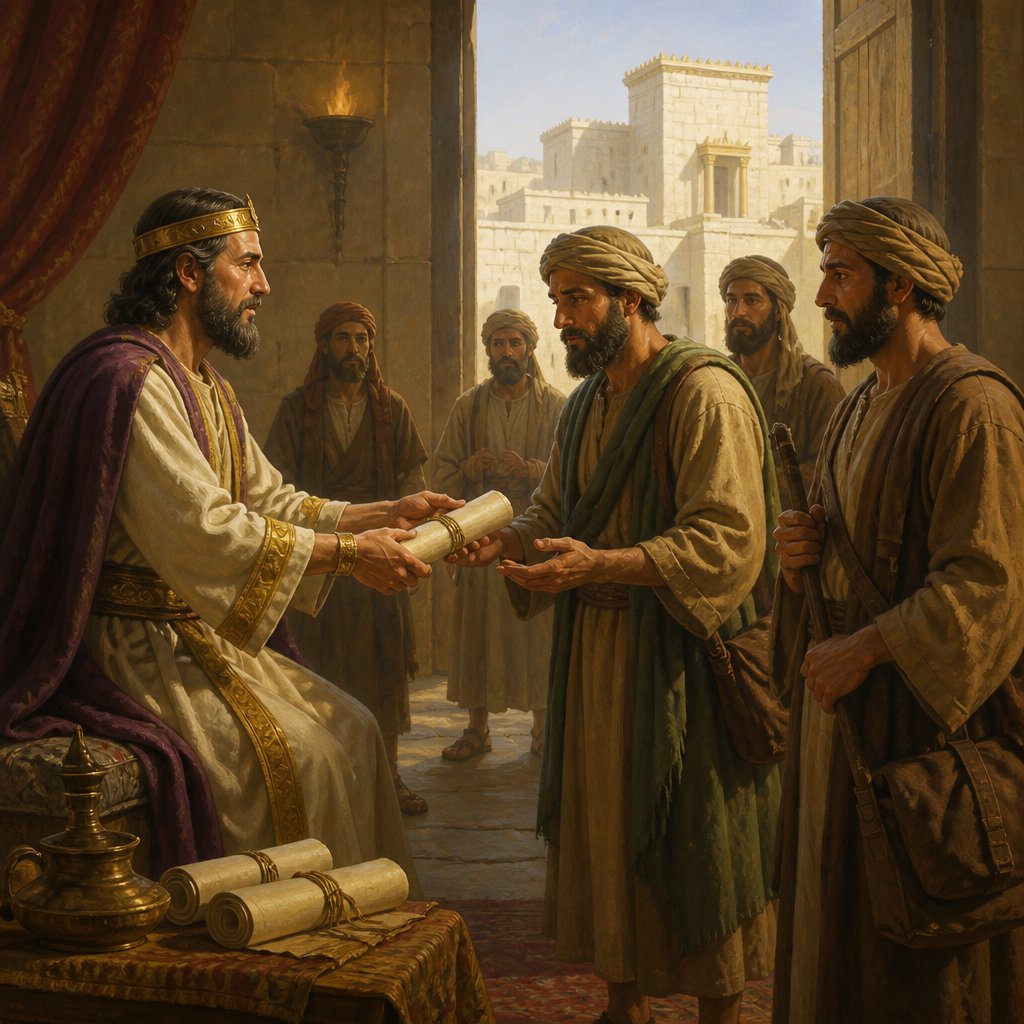
In the passage from 2 Chronicles 30:1, we find King Hezekiah, a pivotal figure in the history of Israel, taking bold steps to restore the worship of the true God among His people. The verse reads: "And Hezekiah sent to all Israel and Judah, and wrote letters also to Ephraim and Manasseh, that they should come to the house of the LORD at Jerusalem, to keep the passover unto the LORD God of Israel."
This verse encapsulates a significant moment in Israel’s spiritual narrative—a call to return to the worship of Yahweh, a renewal of covenant commitment, and a communal celebration of God's deliverance.
### A Call to Gather
Hezekiah's initiative is remarkable for several reasons. First, it echoes a deep understanding of the communal nature of faith. He reached out not only to Judah, where he ruled, but also to the northern tribes of Israel, including Ephraim and Manasseh, which had fallen into disarray and idol worship. His letters were an invitation—a reminder that God’s mercy was still extended to those who had strayed.
This call to gather reflects God's desire for unity among His people. In our own lives, we may often feel fragmented due to divisions, whether they be doctrinal, cultural, or personal. Yet, just as Hezekiah sought to unite the tribes for a common cause, we too are called to come together in fellowship, to worship, and to remember the justifying work of Christ on our behalf.
### A Call to Remember
Second, this passage invites us to remember the significance of the Passover, which symbolized deliverance from Egypt and a reminder of God’s promise. The Passover was not just a celebration; it was a profound declaration of faith—a collective witness to God’s saving grace. For the Jewish people, observing the Passover represented not only a historical event but ongoing participation in God’s story.
For us today, engaging in ritual practices like communion or baptism can serve as our own reminder of God’s ultimate deliverance through Christ. Hezekiah’s encouragement to come to Jerusalem for the Passover prompts us to consider whether we actively partake in the communal dimensions of our faith. Do we gather with our community to remember, reflect, and worship?
### A Call to Obedience
Hezekiah’s actions were also rooted in obedience. Scripture tells us that he sought to restore the worship practices that had unfortunately waned under previous kings. He understood that the worship of God should be a priority and that observance of the Passover was pivotal to their identity as His people. When he sent out letters inviting everyone to the house of the Lord, it was a declaration of his own commitment to fidelity to God.
In our walk with God, obedience remains a crucial aspect of our faith journey. The decision to gather, to worship together, and to partake in community observances is a choice to submit to God's will. We must ask ourselves: Are we obedient to God’s call to faithfulness in our gatherings? Have we prioritized worship in the rhythm of our lives?
### The Invitation Stands
Moreover, Hezekiah's invitation to the people was one of hope. In a time when the nation was divided, the echoed words through letters became an avenue for healing and restoration. The call to return to worship was a chance for the people to realign their hearts, renew their commitment to God, and experience His love and forgiveness profoundly.
As believers today, we hear a similar invitation. God still calls us to come together, reminding us to observe His goodness, grace, and mercy. Just like the Israelites were invited to participate in a sacred tradition, we are called to remember and celebrate our own deliverance through Christ. Our gatherings can be times of healing and reconciliation, where once-broken relationships can be mended in His presence.
### Conclusion
In conclusion, as we reflect on 2 Chronicles 30:1, let us take Hezekiah's call not merely as a historical moment but as a personal invitation from God. May we gather in worship, hold traditions that anchor us in faith, and obediently respond to God’s ongoing call for our lives and communities. Let this be the season where we step toward Him, inviting others to join us at the house of the Lord, to embrace all that He offers.
Get our apps


Artwork for 2 Chronicles 30:1

2 Chronicles 30:1 - "And Hezekiah sent to all Israel and Judah, and wrote letters also to Ephraim and Manasseh, that they should come to the house of the LORD at Jerusalem, to keep the passover unto the LORD God of Israel."
"And Hezekiah sent to all Israel and Judah, and wrote letters also to Ephraim and Manasseh, that they should come to the house of the LORD at Jerusalem, to keep the passover unto the LORD God of Israel." - 2 Chronicles 30:1

1 Chronicles 2:30 - "And the sons of Nadab; Seled, and Appaim: but Seled died without children."

2 Chronicles 30:10

1 Chronicles 1:30 - "Mishma, and Dumah, Massa, Hadad, and Tema,"

1 Chronicles 4:30 - "And at Bethuel, and at Hormah, and at Ziklag,"

2 Chronicles 30:4 - "And the thing pleased the king and all the congregation."

2 Chronicles 30:20 - "And the LORD hearkened to Hezekiah, and healed the people."

"And the sons of Nadab; Seled, and Appaim: but Seled died without children." - 1 Chronicles 2:30

1 Chronicles 11:30 - "Maharai the Netophathite, Heled the son of Baanah the Netophathite,"

1 Chronicles 9:30 - "And some of the sons of the priests made the ointment of the spices."

2 Chronicles 9:30 - "And Solomon reigned in Jerusalem over all Israel forty years."

2 Chronicles 30:2 - "For the king had taken counsel, and his princes, and all the congregation in Jerusalem, to keep the passover in the second month."

2 Chronicles 30:11 - "Nevertheless divers of Asher and Manasseh and of Zebulun humbled themselves, and came to Jerusalem."

1 Chronicles 23:30 - "And to stand every morning to thank and praise the LORD, and likewise at even;"

1 Chronicles 7:30 - "The sons of Asher; Imnah, and Isuah, and Ishuai, and Beriah, and Serah their sister."

1 Chronicles 8:30 - "And his firstborn son Abdon, and Zur, and Kish, and Baal, and Nadab,"

1 Chronicles 6:30 - "Shimea his son, Haggiah his son, Asaiah his son."

1 Chronicles 27:30 - "Over the camels also was Obil the Ishmaelite: and over the asses was Jehdeiah the Meronothite:"

"And at Bethuel, and at Hormah, and at Ziklag," - 1 Chronicles 4:30

2 Chronicles 20:30 - "So the realm of Jehoshaphat was quiet: for his God gave him rest round about."

"Mishma, and Dumah, Massa, Hadad, and Tema," - 1 Chronicles 1:30

1 Chronicles 16:30 - "Fear before him, all the earth: the world also shall be stable, that it be not moved."

1 Chronicles 25:30 - "The three and twentieth to Mahazioth, he, his sons, and his brethren, were twelve:"

2 Chronicles 30:23 - "And the whole assembly took counsel to keep other seven days: and they kept other seven days with gladness."

2 Chronicles 30:26 - "So there was great joy in Jerusalem: for since the time of Solomon the son of David king of Israel there was not the like in Jerusalem."

2 Chronicles 30:13 - "¶ And there assembled at Jerusalem much people to keep the feast of unleavened bread in the second month, a very great congregation."

"And the LORD hearkened to Hezekiah, and healed the people." - 2 Chronicles 30:20

"And the thing pleased the king and all the congregation." - 2 Chronicles 30:4

1 Chronicles 21:30 - "But David could not go before it to enquire of God: for he was afraid because of the sword of the angel of the LORD."