Assembling for Worship: A Call to Unity
“Wherefore all the men of Israel assembled themselves unto the king in the feast which was in the seventh month.” — 2 Chronicles 5:3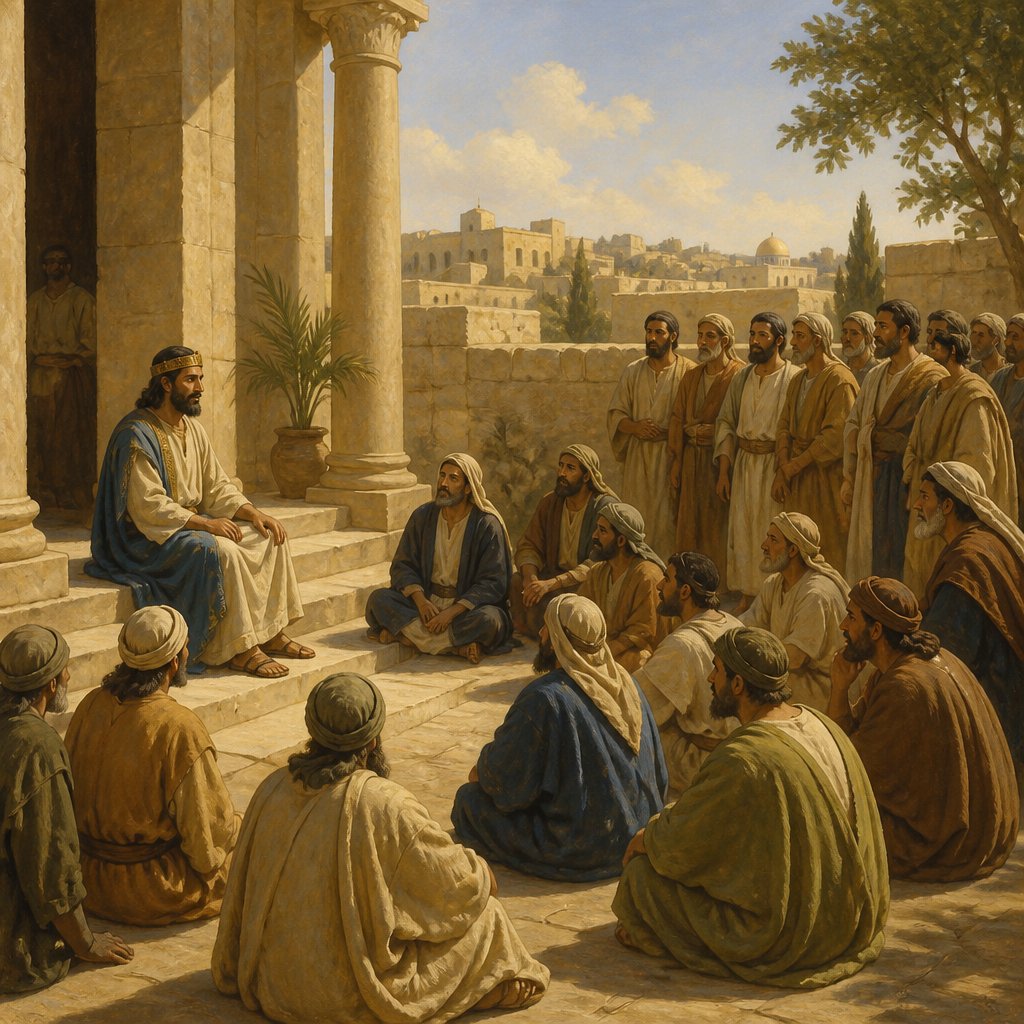
The verse taken from 2 Chronicles 5:3 in the King James Version (KJV) reads: "Wherefore all the men of Israel assembled themselves unto the king in the feast which was in the seventh month." This passage invites us to explore themes of assembly, worship, and the significance of community in our faith journey.
The seventh month of the Hebrew calendar is significant for several reasons. It is often associated with the Feast of Tabernacles (Sukkot), which celebrates God's provision and presence among His people. This festival symbolizes not just gratitude for the harvest but also a reminder of the times of wilderness wanderings when Israel depended entirely on God for sustenance and guidance. As the men of Israel come together during this time, it is a powerful representation of communal worship—an act of coming together to acknowledge the sovereignty of God.
As we reflect on this gathering, we need to recognize the importance of community in our worship. The act of assembling is not merely a social gathering; it is a spiritual declaration. When the men of Israel gathered before King Solomon, it was a commitment to uphold their covenant with God. Their act of collectively coming together illustrates the principle found throughout scripture that we are stronger together than we are apart.
In Hebrews 10:24-25, we are reminded: "And let us consider one another to provoke unto love and to good works: Not forsaking the assembling of ourselves together, as the manner of some is; but exhorting one another: and so much the more, as ye see the day approaching." Just like the men of Israel, we must recognize the necessity of being present with one another, wherein our faith is not merely individualistic but communal. In unity, there is strength; in relationship, there is accountability and encouragement.
Moreover, the term "assembled" suggests a sense of purpose. This wasn't a casual meet-up; there was intent and urgency tied to this gathering. Each man had the opportunity to bring his offerings, his praises, and his needs. In the New Testament, this concept echoes through the practice of coming together in worship services, prayer gatherings, and Bible studies. When we gather, we are adding our voices to a collective chorus of worship, which is both honoring to God and enriching for us as individuals.
The KJV uses the word "wherefore" which implies a conclusion drawn from preceding events. What we learn from the preceding verses is the fulfillment of God's promises and the establishment of His presence in the temple that Solomon built. Today, as believers gathered in Christ, we stand on the promises that God is with us wherever we go. This understanding should compel us to incorporate worship as a way of life and not treat it as an isolated event.
This assembly signifies much more; it is a foreshadowing of the Church—comprised of many members, yet one body in Christ (1 Corinthians 12:12). Just as those men had a king and a temple, we have Christ as our King and our hearts as His dwelling place. As we come together to worship, study His word, and pray, we invite His presence among us.
As we approach our gatherings, let’s remember the importance of preparation and participation. Just as the men of Israel took time to travel and come together, we too should make mindful efforts to engage in our local churches and communities of faith. Be present. Share your heart with those around you, and let your lives reflect the glorious truth of God's faithfulness. As we dedicate ourselves to worship together, let us also commit to encouraging and uplifting one another, fortifying our faith through shared experience.
In conclusion, while the passage speaks of a historical assembly, it speaks volumes to us today about the power and necessity of gathering as a community of believers. Let us take heart and prioritize our assembly, reflecting on the reality of Christ's presence in our midst. May we echo the call of the men of Israel, recognizing the beauty of unity and the power of communal worship as we journey together in faith.
Get our apps


Artwork for 2 Chronicles 5:3

2 Chronicles 5:3 - "Wherefore all the men of Israel assembled themselves unto the king in the feast which was in the seventh month."
"Wherefore all the men of Israel assembled themselves unto the king in the feast which was in the seventh month." - 2 Chronicles 5:3

2 Chronicles 3:5 - "And the greater house he cieled with fir tree, which he overlaid with fine gold, and set thereon palm trees and chains."

1 Chronicles 5:3 - "The sons, I say, of Reuben the firstborn of Israel were, Hanoch, and Pallu, Hezron, and Carmi."
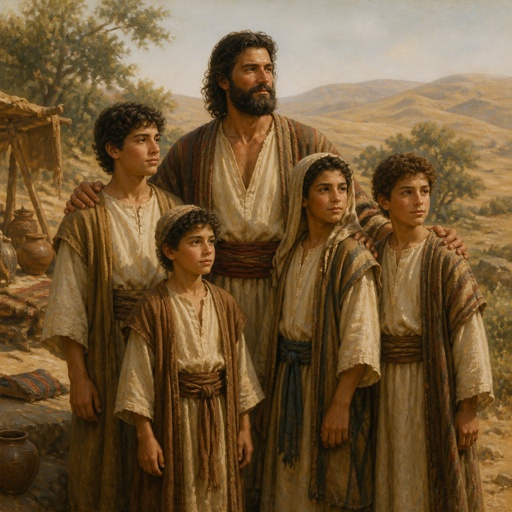
"The sons, I say, of Reuben the firstborn of Israel were, Hanoch, and Pallu, Hezron, and Carmi." - 1 Chronicles 5:3

1 Chronicles 2:5 - "The sons of Pharez; Hezron, and Hamul."

2 Chronicles 28:3

2 corinthians 10:3-5

2 corinthians 10:3-5

2 corinthians 10:3-5

2 corinthians 10:3-5

2 corinthians 10:3-5

2 corinthians 10:3-5

2 corinthians 10:3-5

2 corinthians 10:3-5

2 corinthians 10:3-5

2 corinthians 10:3-5

2 corinthians 10:3-5

2 corinthians 10:3-5

2 Chronicles 5:4 - "And all the elders of Israel came; and the Levites took up the ark."

2 Chronicles 2:5 - "And the house which I build is great: for great is our God above all gods."

2 Chronicles 11:5 - "¶ And Rehoboam dwelt in Jerusalem, and built cities for defence in Judah."

2 Chronicles 8:3 - "And Solomon went to Hamath-zobah, and prevailed against it."

2 Chronicles 5:5 - "And they brought up the ark, and the tabernacle of the congregation, and all the holy vessels that were in the tabernacle, these did the priests and the Levites bring up."

2 Chronicles 3:2 - "And he began to build in the second day of the second month, in the fourth year of his reign."

1 Chronicles 3:5 - "And these were born unto him in Jerusalem; Shimea, and Shobab, and Nathan, and Solomon, four, of Bath-shua the daughter of Ammiel:"

Titus 2:3-5

2 Chronicles 34:5 - "And he burnt the bones of the priests upon their altars, and cleansed Judah and Jerusalem."

Titus 2:3-5

Titus 2:3-5