The Heart of Worship: A Study of Consistency in Sacrifice
"Even after a certain rate every day, offering according to the commandment of Moses, on the sabbaths, and on the new moons, and on the solemn feasts, three times in the year, even in the feast of unleavened bread, and in the feast of weeks, and in the feast of tabernacles." - 2 Chronicles 8:13
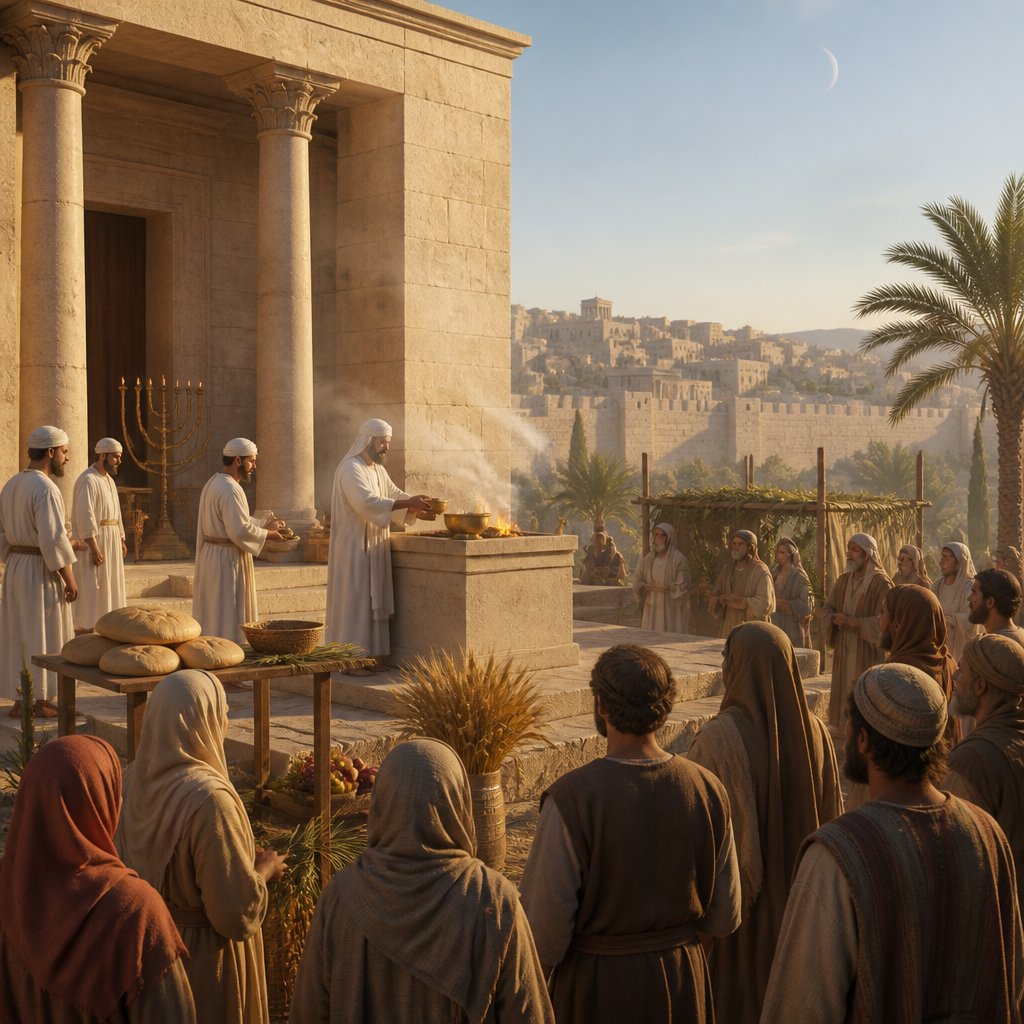
In 2 Chronicles 8:13, we find a beautiful depiction of the heart of worship as King Solomon conducts the offerings of the temple. The verse states, "Even after a certain rate every day, offering according to the commandment of Moses, on the sabbaths, and on the new moons, and on the solemn feasts, three times in the year, even in the feast of unleavened bread, and in the feast of weeks, and in the feast of tabernacles" (2 Chronicles 8:13, KJV). This passage invites us to delve into the essence of giving in worship and the practices mandated by God that fortify the spirit of communal remembrance and gratitude.
In the ancient Israelite community, offerings were not mere rituals; they were the very fabric of their relationship with God. The regularity prescribed here - daily offerings along with special observances during sabbaths, new moons, and the great festivals - demonstrated a systematic approach to worship that underscored its importance. Solomon, as the king, understood that his role was not only to lead his people in political matters but also to guide them in their covenant relationship with God.
### The Importance of Consistency
The concept of offering 'after a certain rate every day' reveals the discipline and consistency at the heart of spiritual stewardship. Just as we set aside time for work, recreation, and relationships, our worship should also be prioritized. In a world that often pulls us in a thousand directions, finding daily moments to connect with God becomes crucial. This verse reminds us that worship is not merely an event we attend but a daily practice lived out in the ordinary moments of our lives.
The daily offerings can symbolize our daily needs and concerns surrendered to God. Each offering brings us back to the understanding that He is our Provider, our Sustainer. By making time each day to acknowledge His goodness, we cultivate a habit of relying on Him - a path to deeper faith.
### Special Days of Worship
Moreover, the mention of sabbaths and solemn feasts teaches us about the rhythm of celebration in worship. The Jewish calendar was dotted with moments of remembrance that centered on God’s faithfulness, from the feast of unleavened bread commemorating the Exodus, to the feast of weeks celebrating the harvest, and the feast of tabernacles symbolizing God’s provision in times of wandering. Each of these feasts invites God’s people to pause and reflect on their stories – to recognize where they have come from and to celebrate where they are going.
These occasions serve as vital reminders to us today about the significance of rhythm and rest in our spiritual walks. We live in a fast-paced society that seldom pauses; however, the observance of sabbaths affirms that taking time to withdraw and reconnect with God is fundamental to maintaining a healthy faith. Our lives must include regular unhurried moments where we spend time in prayer, Scripture, and community – celebrating together what God has done and is doing.
### The Call to Sacrifice
What Solomon, under God’s command, establishes is not just a system of offerings, but a culture of sacrificial love. Each offering made was a testament to how their lives were dedicated to God, being thankful for all He provided. Likewise, as New Testament believers, we are called to live lives of sacrifice, reflecting the ultimate offering made by Christ on our behalf. Romans 12:1 urges us to present our bodies as living sacrifices, holy and acceptable to God, which is our reasonable service.
### Conclusion
As we reflect on 2 Chronicles 8:13, may we be inspired to foster a consistent and intentional approach to our worship. Let us create space for daily offerings of gratitude and seek joy in celebrating God’s faithfulness through the unique rhythms He has given us. In every aspect of our lives, let’s embody a spirit of sacrificial love, understanding that every moment, every act of worship, brings us closer to the heart of God.
Want to reflect more on 2 Chronicles 8:13?
Continue your spiritual journey with Bible Chat — an AI-powered tool for exploring God's Word through conversation. Ask questions, discover connections, and deepen your understanding.
Get Our Apps


2 Chronicles 8:13 Artwork

2 Chronicles 8:13 - "Even after a certain rate every day, offering according to the commandment of Moses, on the sabbaths, and on the new moons, and on the solemn feasts, three times in the year, even in the feast of unleavened bread, and in the feast of weeks, and in the feast of tabernacles."
"Even after a certain rate every day, offering according to the commandment of Moses, on the sabbaths, and on the new moons, and on the solemn feasts, three times in the year, even in the feast of unleavened bread, and in the feast of weeks, and in the feast of tabernacles." - 2 Chronicles 8:13

2 Kings 13:8 - "¶ Now the rest of the acts of Jehoahaz, and all that he did, and his might, are they not written in the book of the chronicles of the kings of Israel?"

2 Chronicles 13:8 - "And now ye think to withstand the kingdom of the LORD in the hand of the sons of David; and ye be a great multitude, and there are with you golden calves, which Jeroboam made you for gods."

1 Chronicles 8:13 - "Beriah also, and Shema, who were heads of the fathers of the inhabitants of Aijalon, who drove away the inhabitants of Gath:"

2 Chronicles 6:13

2 chronicles 13:12

1 Chronicles 2:8 - "And the sons of Ethan; Azariah."

2 Chronicles 11:8 - "And Gath, and Mareshah, and Ziph,"

1 Chronicles 8:2 - "Nohah the fourth, and Rapha the fifth."

1 Chronicles 13:8 - "And David and all Israel played before God with all their might, and with singing, and with harps, and with psalteries, and with timbrels, and with cymbals, and with trumpets."

2 Chronicles 2:13 - "And now I have sent a cunning man, endued with understanding, of Huram my father's,"

2 Chronicles 13:13 - "¶ But Jeroboam caused an ambushment to come about behind them: so they were before Judah, and the ambushment was behind them."

2 Chronicles 8:3 - "And Solomon went to Hamath-zobah, and prevailed against it."

"¶ Now the rest of the acts of Jehoahaz, and all that he did, and his might, are they not written in the book of the chronicles of the kings of Israel?" - 2 Kings 13:8

2 Chronicles 29:13 - "And of the sons of Elizaphan; Shimri, and Jeiel: and of the sons of Asaph; Zechariah, and Mattaniah:"

2 Chronicles 20:13 - "And all Judah stood before the LORD, with their little ones, their wives, and their children."

2 Chronicles 13:16 - "And the children of Israel fled before Judah: and God delivered them into their hand."

1 Chronicles 2:13 - "¶ And Jesse begat his firstborn Eliab, and Abinadab the second, and Shimma the third,"

2 Chronicles 8:2 - "That the cities which Huram had restored to Solomon, Solomon built them, and caused the children of Israel to dwell there."

2 Chronicles 24:8 - "And at the king's commandment they made a chest, and set it without at the gate of the house of the LORD."

2 Chronicles 13:1 - "Now in the eighteenth year of king Jeroboam began Abijah to reign over Judah."

2 Chronicles 10:13 - "And the king answered them roughly; and king Rehoboam forsook the counsel of the old men,"

2 Chronicles 16:13 - "¶ And Asa slept with his fathers, and died in the one and fortieth year of his reign."

2 Chronicles 11:13 - "¶ And the priests and the Levites that were in all Israel resorted to him out of all their coasts."

"And the sons of Ethan; Azariah." - 1 Chronicles 2:8

"And Gath, and Mareshah, and Ziph," - 2 Chronicles 11:8

2 Chronicles 8:17 - "¶ Then went Solomon to Ezion-geber, and to Eloth, at the sea side in the land of Edom."
"Beriah also, and Shema, who were heads of the fathers of the inhabitants of Aijalon, who drove away the inhabitants of Gath:" - 1 Chronicles 8:13

2 Corinthians 8:13 - "For I mean not that other men be eased, and ye burdened:"