Parental Love: The Heart of True Service
“Behold, the third time I am ready to come to you; and I will not be burdensome to you: for I seek not yours, but you: for the children ought not to lay up for the parents, but the parents for the children.” — 2 Corinthians 12:14
As we delve into the poignant words of 2 Corinthians 12:14, we find a profound expression of sacrificial love and the relational dynamics between parents and children. The Apostle Paul writes, "Behold, the third time I am ready to come to you; and I will not be burdensome to you: for I seek not your's, but you: for the children ought not to lay up for the parents, but the parents for the children" (2 Corinthians 12:14, KJV). In this verse, Paul highlights not only his intentions but also the nature of genuine Christian fellowship and the responsibilities that come with love and mentorship.
To fully appreciate the depth of this verse, we first need to understand the context in which Paul writes. His letter to the Corinthians is filled with a mix of admonition, clarification, and deep pastoral concern. The Apostle has faced challenges from others who have questioned his authority and sincerity, yet he presses on, determined to demonstrate his genuine love for the church and its people. As he states his intention to visit them for the third time, he makes it clear that his visit will not be to extract anything from them; rather, it is to build them up, to serve them, and to invest in their spiritual well-being.
Paul’s assertion, "I will not be burdensome to you," immediately sets the tone of selflessness and care. He distances himself from the mentality that leaders or mentors should always be taking from those they lead. Instead, a true leader exemplifies the heart of a parent, one who seeks only the best for their children. This reflects the very nature of God, who in His infinite love, gives abundantly to His children without expecting anything in return. Paul embodies this principle, showing that in faith communities, it is the responsibility of the strong to support the weak, and the mature to nurture the young.
The phrase, "for I seek not your's, but you," serves as a powerful reminder of the need for authentic relationships grounded in love rather than transactionalism. In both spiritual and earthly families, we often find ourselves caught in a cycle of give-and-take, where motives can sometimes become blurred. However, Paul calls us to rise above this mindset. He encourages us to seek people for who they are, not for what they can offer or provide. This kind of love is unconditional and seeks the flourishing of the other in every way possible.
Then, Paul draws a striking analogy: "for the children ought not to lay up for the parents, but the parents for the children." This remark highlights the inherent responsibility of parents to care for their children. It emphasizes the expectation of sacrifice and provision that comes with parenthood and leadership within a community. Just as earthly parents tirelessly provide for their offspring, so too should spiritual leaders invest themselves into their communities. It drives home the point that spiritual parenting involves labor, sacrifice, and unyielding love.
In contemplating this passage, let us reflect on our own roles within our families and communities. Are we operating from a place of selflessness, ready to serve others without expectation? Or have we unintentionally slipped into patterns of demanding or transactional relationships? Moreover, are we embodying the heart of a parent in our approach to mentoring others? These questions invite us to consider how we can more closely align with Paul's teaching by truly seeking the welfare of others above our own interests.
In conclusion, Paul’s message is a call to reflect Christ's love in our relationships. As we prepare to serve those entrusted to us, let us remember to do so with the heart of a parent—willing to pour ourselves out, nurturing and supporting others without seeking recompense. Let us be reminded that true service in the body of Christ stems from love, and in that love, we find our highest calling and deepest purpose.
Get our apps


Artwork for 2 Corinthians 12:14

2 Corinthians 12:14 - "Behold, the third time I am ready to come to you; and I will not be burdensome to you: for I seek not your's, but you: for the children ought not to lay up for the parents, but the parents for the children."

"Behold, the third time I am ready to come to you; and I will not be burdensome to you: for I seek not your's, but you: for the children ought not to lay up for the parents, but the parents for the children." - 2 Corinthians 12:14

1 Corinthians 12:14 - "For the body is not one member, but many."

1 corinthians 2:12

1 corinthians 2:12

2 Corinthians 12:9

2 Corinthians 12:7

2 Corinthians 12:7

1 corinthians 2:12

1 corinthians 2:12

2 Corinthians 12:2-4 – Paul’s vision of the third heaven.

2 Corinthians 12:9

2 Corinthians 12:9

2 Corinthians 12:7

2 Corinthians 12:7

"For the body is not one member, but many." - 1 Corinthians 12:14
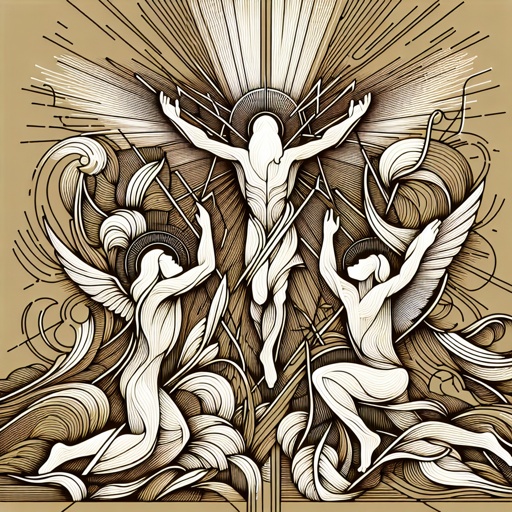
2 Corinthians 12:9-10

2 Corinthians 6:14-18

2 Corinthians 13:12 - "Greet one another with an holy kiss."

2 Corinthians 11:14 - "And no marvel; for Satan himself is transformed into an angel of light."

1 Corinthians 14:12 - "Even so ye, forasmuch as ye are zealous of spiritual gifts, seek that ye may excel to the edifying of the church."

1 cor 12:12-14

2 Corinthians 4:12 - "So then death worketh in us, but life in you."

2 Corinthians 12:12 - "Truly the signs of an apostle were wrought among you in all patience, in signs, and wonders, and mighty deeds."

2 Corinthians 6:12 - "Ye are not straitened in us, but ye are straitened in your own bowels."

2 Corinthians 2:12 - "Furthermore, when I came to Troas to preach Christ's gospel, and a door was opened unto me of the Lord,"

2 Corinthians 3:12 - "Seeing then that we have such hope, we use great plainness of speech:"

2 Corinthians 12:1 - "It is not expedient for me doubtless to glory. I will come to visions and revelations of the Lord."

2 Corinthians 12:8 - "For this thing I besought the Lord thrice, that it might depart from me."

2 Corinthians 12:5 - "Of such an one will I glory: yet of myself I will not glory, but in mine infirmities."