The Divine Commendation: Authenticity in Faith
“Do we begin again to commend ourselves? or need we, as some others, epistles of commendation to you, or letters of commendation from you?” — 2 Corinthians 3:1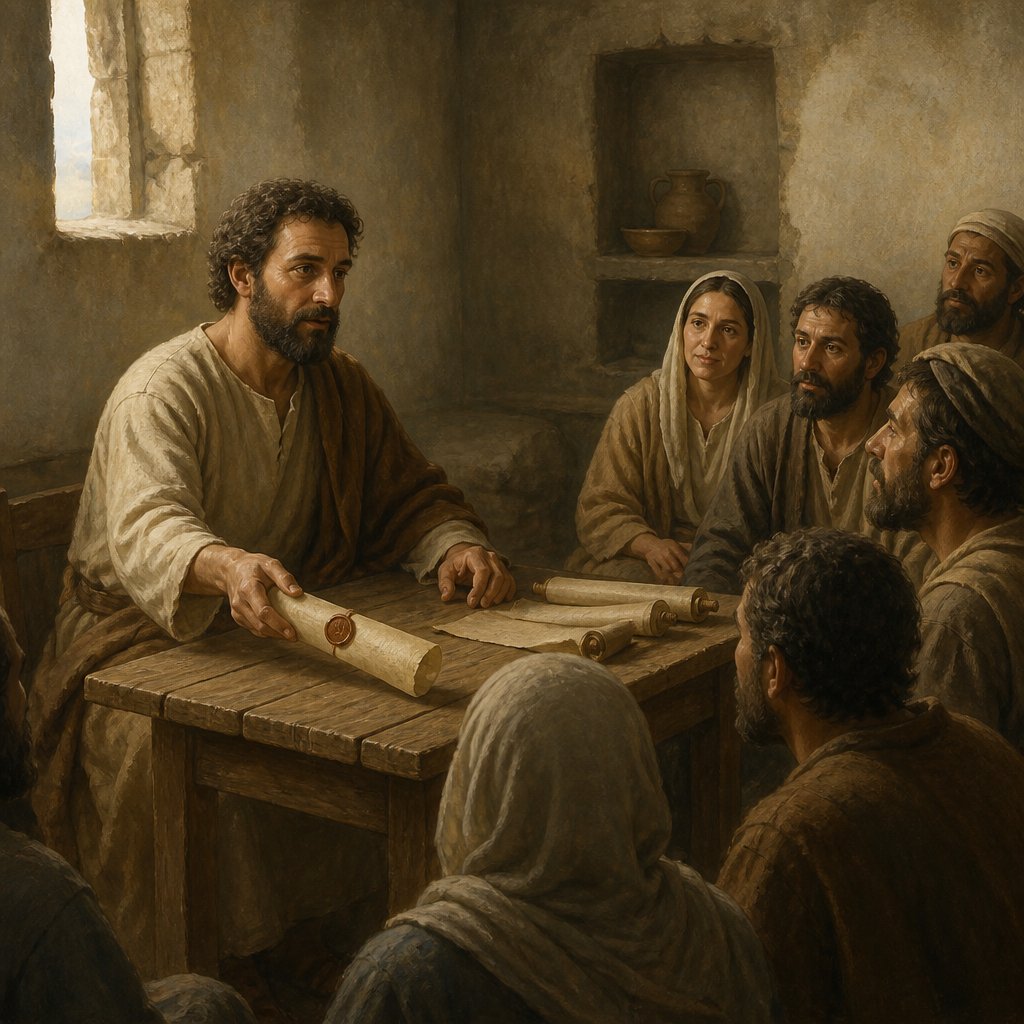
In 2 Corinthians 3:1, the Apostle Paul poses a thought-provoking question: "Do we begin again to commend ourselves? or need we, as some others, epistles of commendation to you, or letters of commendation from you?" (KJV). This inquiry beckons us to explore the essence of true validation and the nature of our witness in Christ's service.
The Corinthian church was plagued by divisions and confusion. Various teachers and preachers were vying for influence and authority, many presenting letters of commendation to assert their credibility and sway their hearts. In this context, Paul’s rhetorical question cuts through the noise, challenging both the religious status quo and the very concepts of merit and recognition that had infiltrated the church.
Paul, who previously boasted of his extensive qualifications as a Pharisee, now finds himself in a position where he must seek to clarify his standing not through accolades or written testimonials, but through the power and transformation brought about by the Gospel. The very nature of Christian ministry is anchored not in human approval or certificates of legitimacy, but in the inward change that God works in the hearts of believers.
In essence, Paul is inviting the Corinthians to look at the fruit of his labor rather than the external validations he could boast. He reminds us that authenticity in faith is not measured by letters or endorsements, but by the visible transformation of lives that reflect the character of Christ. This prompts a profound self-examination: in what ways do we seek validation in our own lives? Do we rely on social accolades, educational accomplishments, or prominent positions to confirm our worth? Or do we rest in the assurance that our true value is defined solely by our relationship with Jesus Christ?
When we consider the broader context of our faith journey, it’s crucial to understand that believers are called to be "living epistles" (2 Corinthians 3:2-3) – letters written not with ink, but by the Spirit of the living God. The Gospel is transformative, capable of turning us into messages of hope and grace for the world around us. Our lives hold the power to commend God’s work far more effectively than any written reference could. Are we reflecting the love, grace, and truth of Christ in our daily interactions? Do our lives testify of the transformative work that God has done within us?
Furthermore, Paul’s query challenges us to consider our dependence upon others for validation. In a culture where social media often crafts identities based on likes and comments, this truth resounds deeply. We must remember that the true testimony of our faith does not depend on how others perceive us. It rests in our personal encounter with Christ and the authenticity of our relationship with Him. A heart changed by Christ naturally draws others toward Him, while a life based on external appearance will inevitably lead to disappointment and disillusionment.
In light of Paul’s words, we are urged to cultivate authenticity in our relation to God and others. We can seek to commend the work that God is doing in us, rather than our own achievement. The Gospel invites us into a community where encouragement and growth are rooted in Christ’s commendation rather than human approval. Let us strive to live out our faith boldly, allowing God to use our transformed lives as letters that speak of His grace and might.
In conclusion, let us reflect today on who we are in Christ. Are we caught up in seeking human validation, or do we embrace our identity as a living epistle? May we find comfort and confidence in knowing that it is not with letters or commendations that we stand but with the power of the Holy Spirit transforming us from the inside out. Trust in this divine commendation – for it is through our lives that others will see and experience the hope of the Gospel.
Get our apps


Artwork for 2 Corinthians 3:1

2 Corinthians 3:1 - "Do we begin again to commend ourselves? or need we, as some others, epistles of commendation to you, or letters of commendation from you?"
"Do we begin again to commend ourselves? or need we, as some others, epistles of commendation to you, or letters of commendation from you?" - 2 Corinthians 3:1

2 Corinthians 1:3-4

1 Corinthians 2:3 - "And I was with you in weakness, and in fear, and in much trembling."

2 Corinthians 3:6

2 Corinthians 3:18

2 Corinthians 3:6

2 Corinthians 1:3 - "Blessed be God, even the Father of our Lord Jesus Christ, the Father of mercies, and the God of all comfort;"

2 corinthians 10:3-5

2 corinthians 10:3-5

2 corinthians 10:3-5

2 corinthians 10:3-5

2 corinthians 10:3-5

2 corinthians 10:3-5

2 corinthians 10:3-5

2 corinthians 10:3-5

2 corinthians 10:3-5

2 corinthians 10:3-5

2 corinthians 10:3-5

2 corinthians 10:3-5

"And I was with you in weakness, and in fear, and in much trembling." - 1 Corinthians 2:3

1 corinthians 3:16-17

1 Corinthians 3:2 - "I have fed you with milk, and not with meat: for hitherto ye were not able to bear it, neither yet now are ye able."

1 corinthians 3:16-17

1 corinthians 3:16-17

1 Corinthians 3:16

1 Corinthians 3:16

2 corinthians 10:3-5

1 Corinthians 3:16

1 Corinthians 3:1 - "And I, brethren, could not speak unto you as unto spiritual, but as unto carnal, even as unto babes in Christ."