Clothed in Glory: A Reflection on Our Eternal Hope
“For we that are in this tabernacle do groan, being burdened: not for that we would be unclothed, but clothed upon, that mortality might be swallowed up of life.” — 2 Corinthians 5:4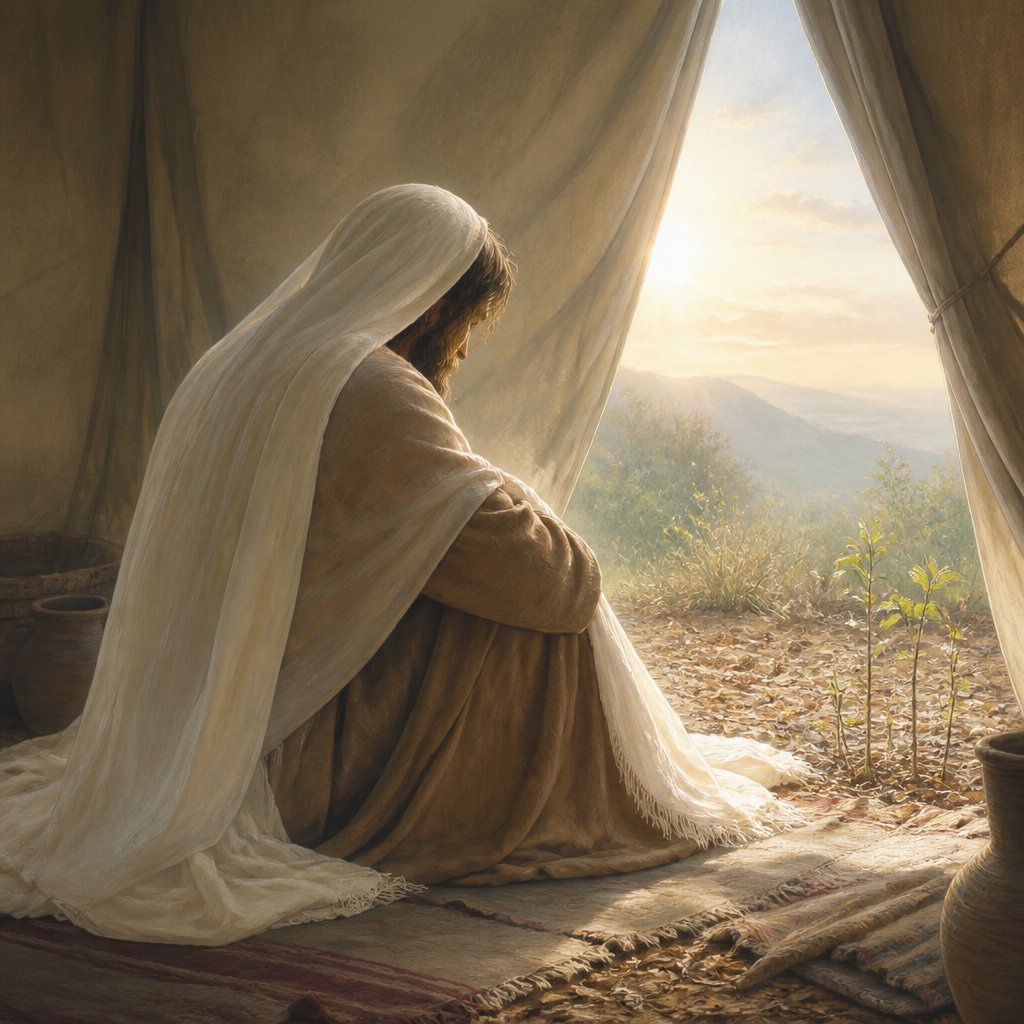
In the epistle of 2 Corinthians, Paul invites the church at Corinth—and by extension, all believers—to contemplate the profound reality of our present existence and the glorious hope that awaits us. In 2 Corinthians 5:4, he writes, "For we that are in this tabernacle do groan, being burdened: not for that we would be unclothed, but clothed upon, that mortality might be swallowed up of life."
At first glance, this verse presents a paradox of life and death, tension and resolution. Paul uses the metaphor of a "tabernacle" to describe the earthly body. The tabernacle, a temporary dwelling place for God’s presence during the Israelites’ exodus, signifies the transient nature of our physical bodies. Just as the Israelites journeyed through the wilderness with a portable structure serving as their home, we, too, navigate our lives within the confines of flesh. Paul acknowledges that living in these bodies brings burdens that can feel overwhelming—illness, aging, loss, and the everyday trials that accompany our human experience. He notes that we "do groan, being burdened," expressing the deep longing within us for something more.
Every human life is marked by moments of dissatisfaction, suffering, and sorrow. These experiences are just part of our existence in the earthly realm. However, our groaning is not merely a sign of despair; it is an expression of hope. We yearn for a different kind of existence—one that transcends this earthly life. Here, Paul differentiates between the desire to be "unclothed" and the longing to be "clothed upon." To be "unclothed" signifies death or separation from the body; it is not a state we should wish for. Rather, it is the longing for our resurrected state, that glorious moment when mortality is equipped with immortality, and the perishable is enveloped in the eternal. Montaigne said, "The greatest thing in the world is to know how to belong to oneself." Paul calls us to recognize that true belonging, as believers, lies not primarily in our present state but in our eternal union with Christ.
Thus, the burdens of life lead us to the ultimate truth that is encapsulated in Paul’s assertion that "mortality might be swallowed up of life." This vivid imagery evokes the notion of being enveloped, consumed, and transformed by life—a life that is not subject to decay or despair. This life is found in Christ, who conquered death and offers us not just a return to life, but a new, eternal existence that is forever united with Him. This hope galvanizes us to live in the present with an eye on the future, grounded in the assurance of God’s promises.
The deep discomfort we sometimes bear in our earthly existence motivates us to seek the one who provides true solace and fulfillment. In realizing that our current sufferings are temporary, we find strength and courage to endure. Paul’s words remind us that our discomforts can lead us closer to our ultimate destination. The burdens we carry serve as a reminder that we are made for more than mere existence in this world; we are destined for life everlasting, an eternal home where we will be "clothed upon" in divine glory.
In practical terms, how does this understanding of our eternal hope influence our daily walks? When we encounter trials, let us remember that these challenges are momentary and intended to grow our faith and reliance on God. Instead of being overwhelmed by our burdens, we can lean into the grace of God, knowing that He is transforming us and preparing us for a future without pain, loss, or sorrow.
Let us meditate on the unfathomable gift of life that God promises to those who believe. Let us walk with the assurance that every groan is a step toward our ultimate resurrection, a chance to be clothed in the glorious garments of eternity. May we embrace our current journeys not with despair, but with hope, knowing that every burden draws us nearer to the fullness of life that awaits.
Get our apps


Artwork for 2 Corinthians 5:4
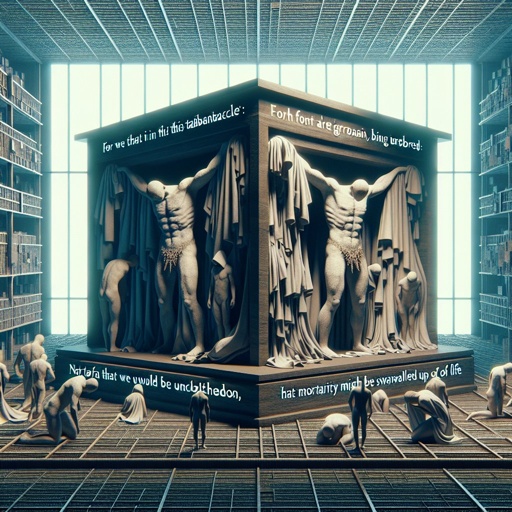
2 Corinthians 5:4 - "For we that are in this tabernacle do groan, being burdened: not for that we would be unclothed, but clothed upon, that mortality might be swallowed up of life."
"For we that are in this tabernacle do groan, being burdened: not for that we would be unclothed, but clothed upon, that mortality might be swallowed up of life." - 2 Corinthians 5:4

2 Corinthians 4:5 - "For we preach not ourselves, but Christ Jesus the Lord; and ourselves your servants for Jesus' sake."

2 Corinthians 4:4

2 Corinthians 4:4

2 Corinthians 4:4

2 Corinthians 4:4

2 Corinthians 4:4

2 Corinthians 4:4

2 Corinthians 4:4

2 Corinthians 5:17

2 Corinthians 5:17

2 Corinthians 5:17

2 Corinthians 5:17

2 Corinthians 5:17

2 Corinthians 5:17

2 Corinthians 5:17

2 Corinthians 5:17

2 Corinthians 5:17

2 Corinthians 5:17

2 Corinthians 5:17
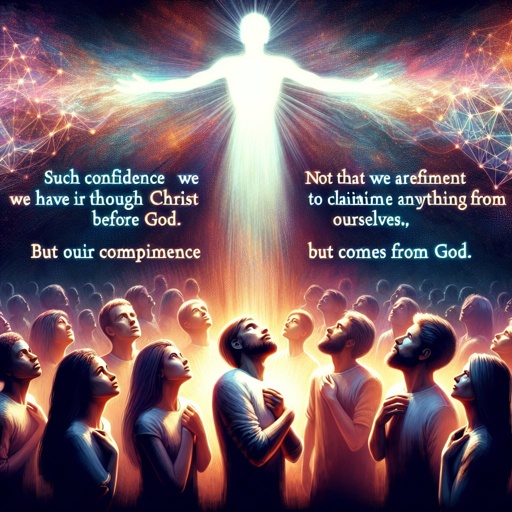
2 Corinthians 3:4-5 - "Such confidence we have through Christ before God. Not that we are competent in ourselves to claim anything for ourselves, but our competence comes from God."

2 Corinthians 4:4

2 corinthians 10:3-5

2 corinthians 10:3-5

2 corinthians 10:3-5

2 corinthians 10:3-5

2 corinthians 10:3-5

2 corinthians 10:3-5

2 corinthians 10:3-5