The Courage to Stand: A Reflection on 2 Kings 10:13
“Jehu met with the brethren of Ahaziah king of Judah, and said, Who are ye? And they answered, We are the brethren of Ahaziah; and we go down to salute the children of the king and the children of the queen.” — 2 Kings 10:13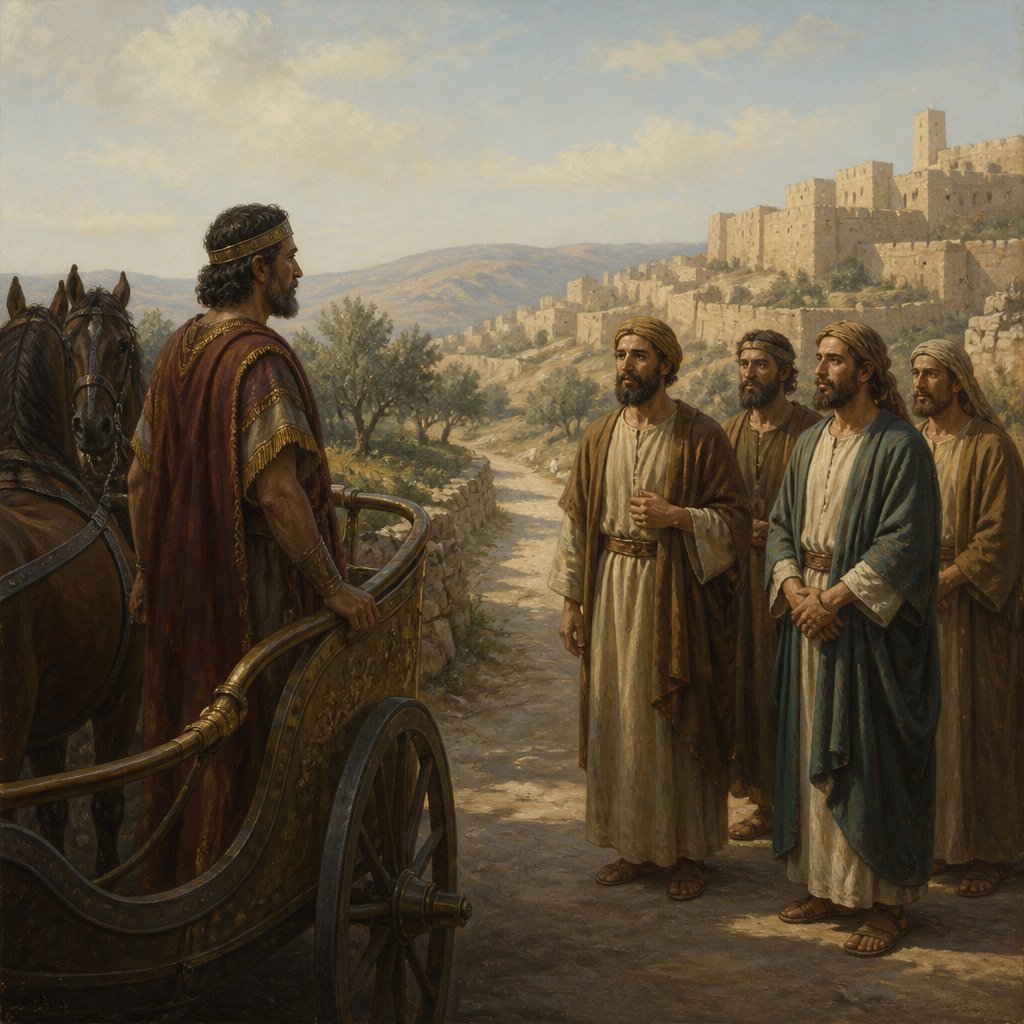
In the depth of a tumultuous era in Israel's history, we find Jehu, a man appointed by God to execute judgment upon the house of Ahab, encountering unexpected allies on his path. In 2 Kings 10:13 (KJV), we read, "Jehu met with the brethren of Ahaziah king of Judah, and said, Who are ye? And they answered, We are the brethren of Ahaziah; and we go down to salute the children of the king and the children of the queen." This verse is a critical intersection between the lives of two kingdoms—the northern kingdom of Israel and the southern kingdom of Judah. It encapsulates themes of identity, purpose, and divine providence that warrant our contemplation.
On the surface, we witness a casual exchange between two groups, yet beneath it lies an invitation to reflect on the deeper implications of their meeting, particularly regarding apostolic courage in our faith. Jehu’s very presence was charged with the spirit of confrontation. Appointed by God, he carried out a divine mandate against wickedness and idolatry prevalent in Israel, particularly associated with the family of Ahab. The context of Jehu’s order was not just a political strategy but a spiritual cleansing that God desired for His people.
To understand the significance of Jehu's question, "Who are ye?", we must grapple with our identities as followers of Christ today. What does it mean to identify with Jesus in a world that is often counter to His teachings? The brethren of Ahaziah, while identifying themselves as kin to the royal family, were essentially ambassadors of the existing regime, one that had been heavily influenced by the idolatrous practices of their forefathers. Their journey to salute the children of the king and queen was not merely familial; it represented a loyalty to a legacy that was firmly entrenched in disobedience to God.
This moment urges us to consider the legacies we choose to uphold. How often do we find ourselves mistakenly aligning with traditions and practices that do not honor God? As believers, we must always interrogate our identities with respect to God’s truth. Jehu, confronting the brethren, compels us to stand firm in Christ even when such stances may isolate us from ‘familiar’ companies, familial connections, or popular support. He exemplifies a divinely inspired boldness that ultimately leads to reform.
Moreover, Jehu’s interaction highlights the constant battle between truth and comfort. The brethren of Ahaziah were en route to express goodwill, but during a time of such radical change, goodwill could very well align with complacency. Hence, the straightforward question “Who are ye?” echoes the challenge to discern if our actions align with God’s plan or merely uphold the status quo of our existence.
The confidence with which Jehu conducted himself is a testament to the necessity of unwavering faith in our pursuits. Just as Jehu was equipped for a purpose beyond himself, we too are called to a divine purpose that often requires confrontation—not with weapons, but with truth. This brings us to the heart of our walk with Christ. Each day, we are presented with choices that can either point ourselves and others towards God’s righteousness, or away into spiritual lethargy.
In closing, as we ponder on 2 Kings 10:13, let us ask ourselves who we are in Christ and what our mission is. Are we like the brethren of Ahaziah, going through the motions of faith, or are we ready to take a stand for God’s truth, as Jehu did? May we commit ourselves to living courageously for Christ, constantly seeking His guidance in identifying our calling and purpose. Let this serve as a reminder that our identity in Christ propels us towards transformation, not just for ourselves, but for the world around us. Amen.
Get our apps


Artwork for 2 Kings 10:13

2 Kings 10:13 - "Jehu met with the brethren of Ahaziah king of Judah, and said, Who are ye? And they answered, We are the brethren of Ahaziah; and we go down to salute the children of the king and the children of the queen."
"Jehu met with the brethren of Ahaziah king of Judah, and said, Who are ye? And they answered, We are the brethren of Ahaziah; and we go down to salute the children of the king and the children of the queen." - 2 Kings 10:13

2 Kings 13:10 - "¶ In the thirty and seventh year of Joash king of Judah began Jehoash the son of Jehoahaz to reign over Israel in Samaria, and reigned sixteen years."

2 Kings 13:13 - "And Joash slept with his fathers; and Jeroboam sat upon his throne: and Joash was buried in Samaria with the kings of Israel."

1 Kings 13:10 - "So he went another way, and returned not by the way that he came to Beth-el."

2 Kings 3:10 - "And the king of Israel said, Alas! that the LORD hath called these three kings together, to deliver them into the hand of Moab!"

2 Kings 13:22 - "¶ But Hazael king of Syria oppressed Israel all the days of Jehoahaz."

2 Kings 13:8 - "¶ Now the rest of the acts of Jehoahaz, and all that he did, and his might, are they not written in the book of the chronicles of the kings of Israel?"

2 Kings 10:28 - "Thus Jehu destroyed Baal out of Israel."

2 Kings 21:10 - "¶ And the LORD spake by his servants the prophets, saying,"

2 Kings 10:4 - "But they were exceedingly afraid, and said, Behold, two kings stood not before him: how then shall we stand?"

2 Kings 19:13 - "Where is the king of Hamath, and the king of Arpad, and the king of the city of Sepharvaim, of Hena, and Ivah?"

2 Kings 10:34 - "Now the rest of the acts of Jehu, and all that he did, and all his might, are they not written in the book of the chronicles of the kings of Israel?"

2 Kings 10:20 - "And Jehu said, Proclaim a solemn assembly for Baal. And they proclaimed it."

2 Kings 2:13 - "He took up also the mantle of Elijah that fell from him, and went back, and stood by the bank of Jordan;"

2 Kings 13:12 - "And the rest of the acts of Joash, and all that he did, and his might wherewith he fought against Amaziah king of Judah, are they not written in the book of the chronicles of the kings of Israel?"

"Thus Jehu destroyed Baal out of Israel." - 2 Kings 10:28

1 Kings 2:10 - "So David slept with his fathers, and was buried in the city of David."

2 Kings 10:26 - "And they brought forth the images out of the house of Baal, and burned them."

1 Kings 10:13 - "And king Solomon gave unto the queen of Sheba all her desire, whatsoever she asked, beside that which Solomon gave her of his royal bounty. So she turned and went to her own country, she and her servants."
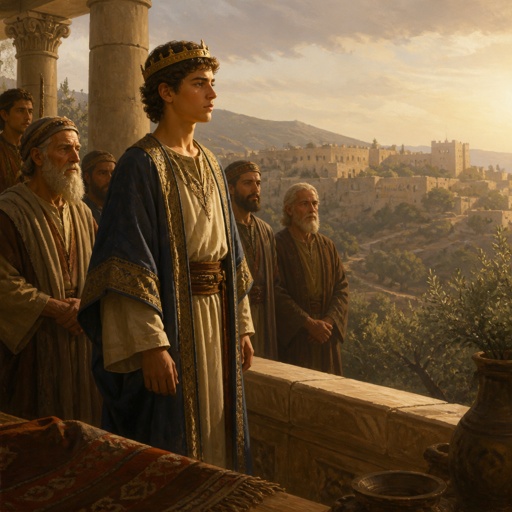
"¶ In the thirty and seventh year of Joash king of Judah began Jehoash the son of Jehoahaz to reign over Israel in Samaria, and reigned sixteen years." - 2 Kings 13:10

2 Kings 10:12 - "¶ And he arose and departed, and came to Samaria. And as he was at the shearing house in the way,"

2 Kings 13:20 - "¶ And Elisha died, and they buried him. And the bands of the Moabites invaded the land at the coming in of the year."

Psalms 2:10 - "Be wise now therefore, O ye kings: be instructed, ye judges of the earth."

2 Kings 10:36 - "And the time that Jehu reigned over Israel in Samaria was twenty and eight years."

2 Kings 24:10 - "¶ At that time the servants of Nebuchadnezzar king of Babylon came up against Jerusalem, and the city was besieged."

"And Joash slept with his fathers; and Jeroboam sat upon his throne: and Joash was buried in Samaria with the kings of Israel." - 2 Kings 13:13

2 Kings 13:24 - "So Hazael king of Syria died; and Ben-hadad his son reigned in his stead."

2 Chronicles 10:13 - "And the king answered them roughly; and king Rehoboam forsook the counsel of the old men,"

Daniel 10:13 - "But the prince of the kingdom of Persia withstood me one and twenty days: but, lo, Michael, one of the chief princes, came to help me; and I remained there with the kings of Persia."