The High Places of Our Hearts
“Save that the high places were not removed: the people sacrificed and burnt incense still on the high places.” — 2 Kings 15:4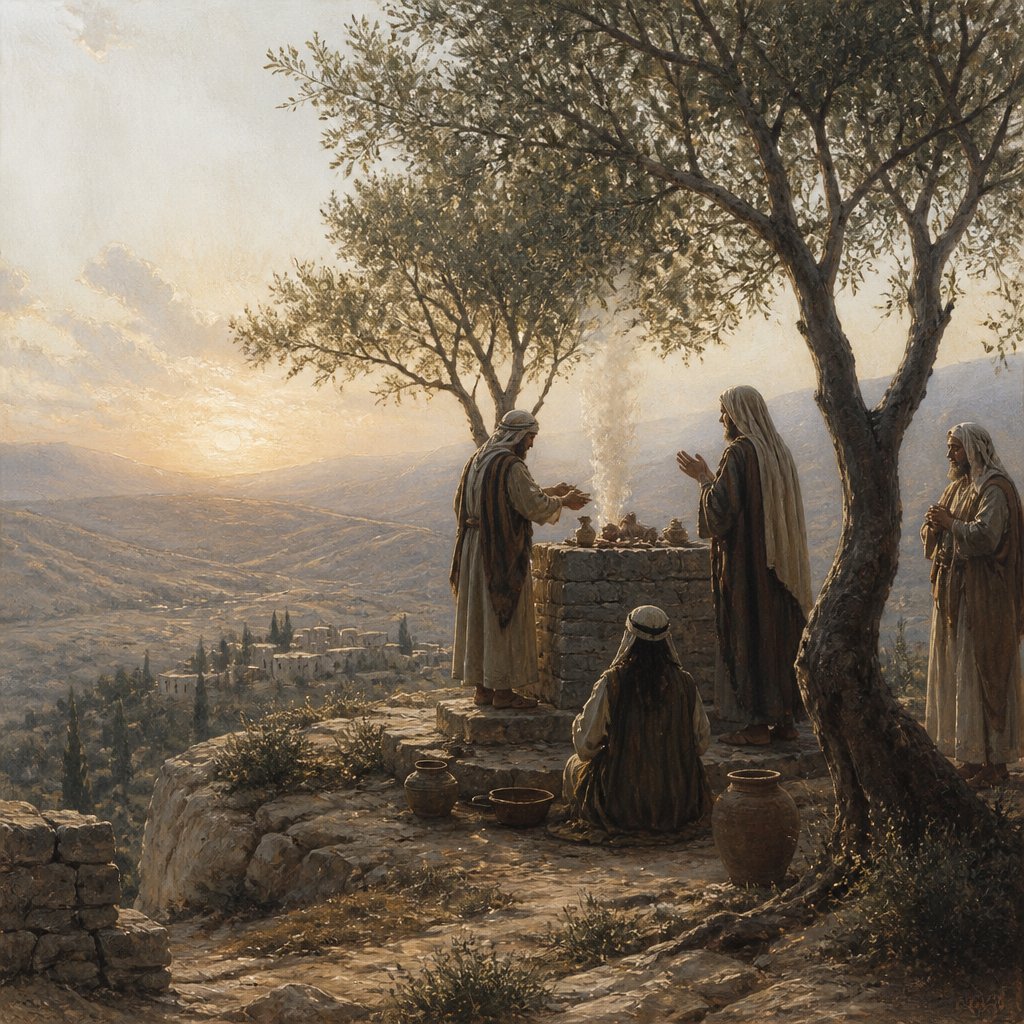
In 2 Kings 15:4, we read: "Save that the high places were not removed: the people sacrificed and burnt incense still on the high places." This verse speaks profoundly to the spiritual state of Israel during the reign of King Azariah, also known as Uzziah. While this king is noted to have done what was right in the sight of the Lord, as his father Amaziah had done, the verse brings to our attention a glaring issue. The high places, sites of pagan worship, remained untouched.
This is a remarkable statement not only about the people of Israel but also presents a mirror to our own spiritual lives. High places symbolize those areas in our lives that we keep set apart, unaddressed, or improperly worshipped. They represent the habits, customs, or sins that, though we may be making progress in other areas spiritually, still linger in our lives, allowing us to worship God partially rather than wholly. They are a testament to half-hearted devotion, to a faith that is content to manage what we can see but reluctant to confront what lies beyond our comfort zones.
Israel's continued sacrifice on the high places indicates a blend of worship – an effort to honor God without necessarily following the commandments He set forth. This brings to mind the question for ourselves: what are the 'high places' in our own lives? Are there aspects of our character, relationships, or habits that we keep in place, thinking they are too ingrained to confront? Our high places may not be physical locations, but rather emotional strongholds or rationalizations that prevent us from experiencing complete obedience and worship.
In Scripture, God repeatedly calls us to walk in obedience, a theme established from the very beginning with Adam and Eve. When we allow high places to remain, we are essentially saying to the Lord, "I will follow You in some areas, but these portions of my life are off-limits." It is here that we can learn from Uzziah’s kingship. Much like many of us, Uzziah was well-intentioned. He sought to glorify God, yet failed to fully eradicate the influences that distracted from pure worship.
Reflect on your own life: are there practices or attitudes that you have accepted as part of your routine, though they might be contrary to God’s will? Perhaps it is an addiction, a relationship that leads you away from God, or simply a mindset of cynicism or pride. Each time we sidestep these high places, we miss the chance for spiritual renewal and a deeper relationship with God.
Furthermore, staying in our high places could risk leading us to complacency or even worse, a false sense of security. "For many will come in my name, saying, ‘I am the Christ,’ and will deceive many" (Matthew 24:5, KJV). It speaks to how those who worship in high places might be mistakenly believing they are fulfilling their obligations to God while missing the essence of His commands. Are there deceptive practices we partake in thinking we are following the Lord, yet compromising on key exhortations?
To confront our high places, we need humility and a willingness to submit every part of our hearts to God. This means acknowledging those areas of our life that need sacred change and actively working on them through prayer, fasting, and community support. God’s promise to us is that as we draw near to Him, He will draw near to us (James 4:8, KJV). When we abandon our high places, we open our hearts for a genuine sacrifice of praise that is acceptable to Him, a true incense that arises before His throne.
Prayer:
Heavenly Father, thank You for Your Word that brings clarity to our hearts. Help us to see the high places in our lives – those areas we keep separate from your light. Teach us to surrender them to You, that our worship may be pure and undivided. May we draw closer to You in obedience and authenticity. Amen.
Get our apps


Artwork for 2 Kings 15:4

2 Kings 15:4 - "Save that the high places were not removed: the people sacrificed and burnt incense still on the high places."
"Save that the high places were not removed: the people sacrificed and burnt incense still on the high places." - 2 Kings 15:4

2 Kings 4:15 - "And he said, Call her. And when he had called her, she stood in the door."

2 Kings 15:15 - "And the rest of the acts of Shallum, and his conspiracy which he made, behold, they are written in the book of the chronicles of the kings of Israel."

2 Kings 3:15

2 Kings 3:15

2 Kings 3:15

2 Kings 15:11 - "And the rest of the acts of Zachariah, behold, they are written in the book of the chronicles of the kings of Israel."

2 Kings 4:4-5

1 Kings 4:15 - "Ahimaaz was in Naphtali; he also took Basmath the daughter of Solomon to wife:"
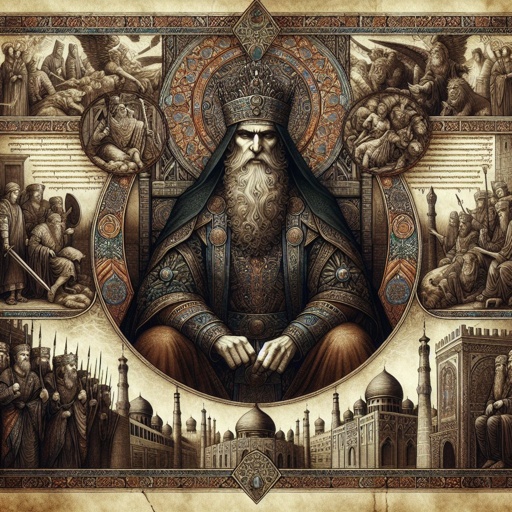
2 Kings 15:6 - "And the rest of the acts of Azariah, and all that he did, are they not written in the book of the chronicles of the kings of Judah?"

2 Kings 15:21 - "¶ And the rest of the acts of Menahem, and all that he did, are they not written in the book of the chronicles of the kings of Israel?"

"And he said, Call her. And when he had called her, she stood in the door." - 2 Kings 4:15
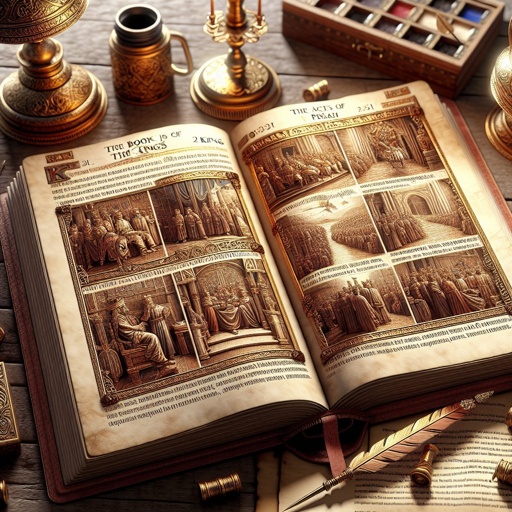
2 Kings 15:31 - "And the rest of the acts of Pekah, and all that he did, behold, they are written in the book of the chronicles of the kings of Israel."

2 Kings 15:36 - "¶ Now the rest of the acts of Jotham, and all that he did, are they not written in the book of the chronicles of the kings of Judah?"

2 Kings 15:26 - "And the rest of the acts of Pekahiah, and all that he did, behold, they are written in the book of the chronicles of the kings of Israel."

2 Kings 15:29 show the army and attack

1 Kings 15:4 - "Nevertheless for David's sake did the LORD his God give him a lamp in Jerusalem, to set up his son after him, and to establish Jerusalem:"

2 Kings 18:15 - "And Hezekiah gave him all the silver that was found in the house of the LORD, and in the treasures of the king's house."
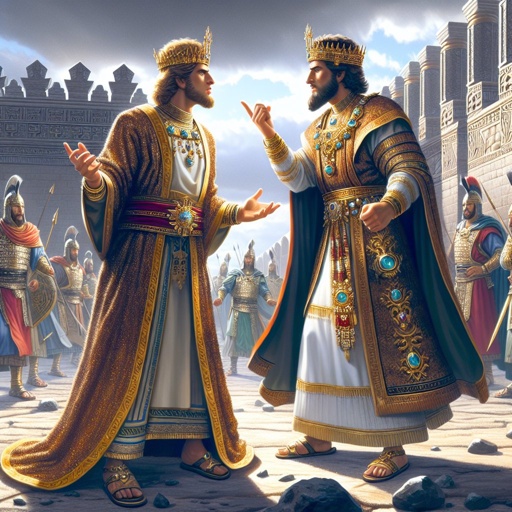
2 Kings 14:15 - "¶ Now the rest of the acts of Jehoash which he did, and his might, and how he fought with Amaziah king of Judah, are they not written in the book of the chronicles of the kings of Israel?"

2 Chronicles 4:15 - "One sea, and twelve oxen under it."

2 Kings 10:4 - "But they were exceedingly afraid, and said, Behold, two kings stood not before him: how then shall we stand?"

2 Kings 15:22 - "And Menahem slept with his fathers; and Pekahiah his son reigned in his stead."

2 Kings 15:1 - "In the twenty and seventh year of Jeroboam king of Israel began Azariah son of Amaziah king of Judah to reign."

"And the rest of the acts of Shallum, and his conspiracy which he made, behold, they are written in the book of the chronicles of the kings of Israel." - 2 Kings 15:15

1 Kings 15:2 - "Three years reigned he in Jerusalem. And his mother's name was Maachah, the daughter of Abishalom."

2 Kings 12:15 - "Moreover they reckoned not with the men, into whose hand they delivered the money to be bestowed on workmen: for they dealt faithfully."

2 Kings 15:37 - "In those days the LORD began to send against Judah Rezin the king of Syria, and Pekah the son of Remaliah."

2 Kings 15:32 - "¶ In the second year of Pekah the son of Remaliah king of Israel began Jotham the son of Uzziah king of Judah to reign."

"And the rest of the acts of Zachariah, behold, they are written in the book of the chronicles of the kings of Israel." - 2 Kings 15:11