The Weight of Legacy: A Reflection on Sorrow and Hope
"Behold, the days come, that all that is in thine house, and that which thy fathers have laid up in store unto this day, shall be carried into Babylon: nothing shall be left, saith the LORD." - 2 Kings 20:17
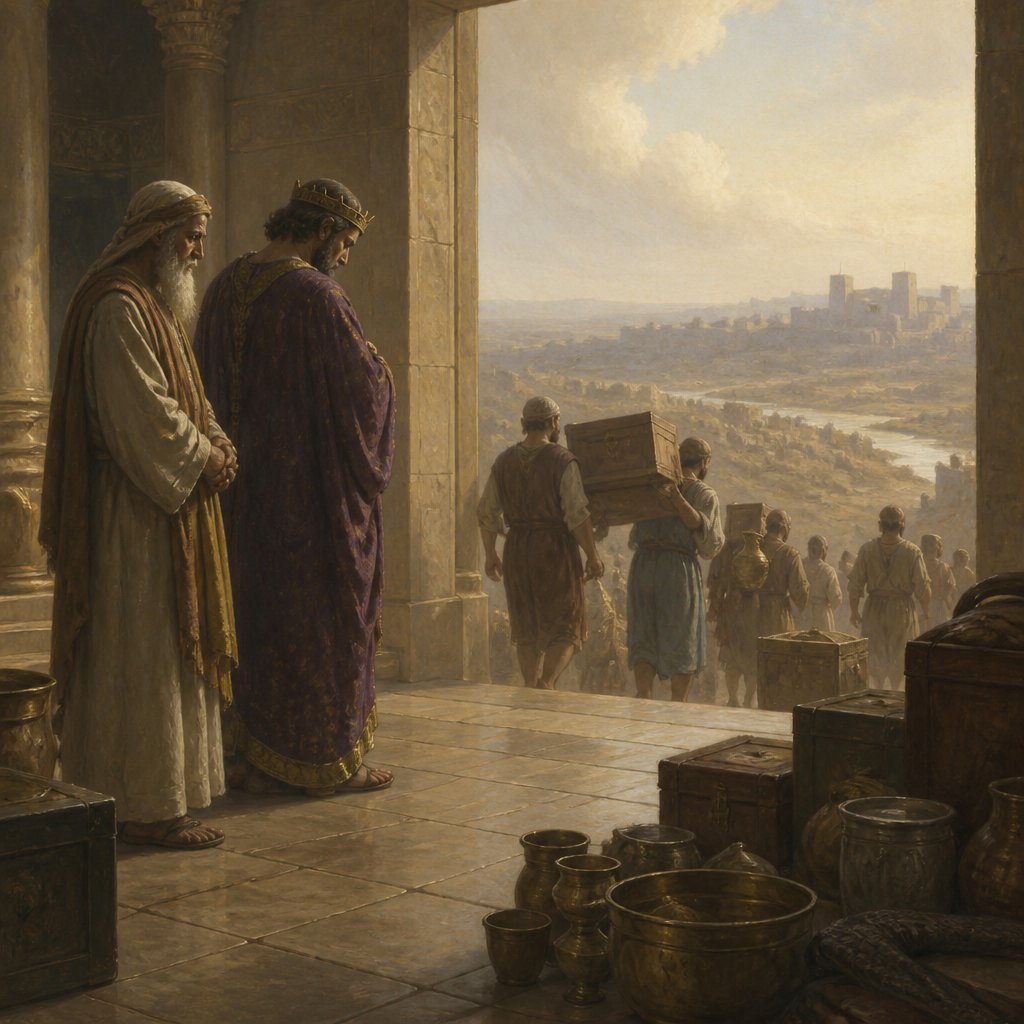
In the somber and prophetic words of 2 Kings 20:17, we encounter a critical moment that reverberates through the ages: "Behold, the days come, that all that is in thine house, and that which thy fathers have laid up in store unto this day, shall be carried into Babylon: nothing shall be left, saith the LORD." This proclamation made by the prophet Isaiah to King Hezekiah serves as a poignant reminder of the fragility of earthly possessions and the weight of our legacies.
At this juncture in Israel’s history, Hezekiah had just recovered from a grave illness, and as a sign of God's grace, he was granted an extension of life. However, the very healing that should have brought unfettered joy was intertwined with the ominous news from Isaiah. The prophet's declaration was not merely a national curse but a deeply personal warning to Hezekiah; everything he cherished, every piece of wealth and inheritance, all that symbolized stability and pride would soon be stripped away, leaving only remnants of loss.
This passage raises profound questions about the nature of legacy. What do we leave behind? As humans, we often invest in physical possessions, believing that these will fortify our legacy. We compile savings, acquire properties, and seek to create a comfortable life for our descendants. Yet, like the treasures of Hezekiah's house, such material gains can vanish in an instant. The warning encapsulated here is not only a historical account but a spiritual lesson: we should guard against placing our identity and significance in the transitory things of this world.
Hezekiah’s kingdom was marked by immense prosperity, cultivated by his reforms and faithfulness to God. In his stewardship, one might think he would use this time to prepare his hearts and minds for God’s purposes rather than hoarding accolades. Yet, instead, we encounter the relentless allure of pride. In the preceding verses, even as he showed visitors from Babylon the riches of his kingdom, his oversight revealed a critical flaw—a misplaced trust in material wealth rather than in God’s eternal promises.
The impending captivity foreshadows a divine truth: while God blesses us with material resources, they are not the ultimate source of His blessing. It directs us to a more profound wealth, one that transcends earthly confines. The inheritance we lay up should not merely consist of wealth but, more importantly, an enduring faith, moral integrity, and an unwavering relationship with God. As the treasure in heaven cannot be taken away—from where moth and rust do not corrupt (Matthew 6:19-20)—so too can our legacy be safeguarded against earthly calamities.
Moreover, the prophecy serves as a reminder of God’s sovereignty. Though Hezekiah felt as if his actions were solely responsible for his kingdom's legacy, God gently realigns this perspective by informing him that the true context of history rests in divine providence. The ability of God to orchestrate the rise and fall of nations, to direct the flow of history, puts human affairs in a humbling light. In our highs and lows, we often forget that God commands the universe according to His will—teaching us reliance on Him and not on human constructs.
Thus, as we reflect on Hezekiah’s legacy, let us take heed. We have a choice: will we invest in a legacy characterized by the transient, or will we seek to create one that echoes through generations? Our children and those we influence do not merely inherit our possessions but absorb our values, faith, and understanding of God’s character.
In moments of uncertainty, when losses come as unexpected waves, may we remember that God is faithful. Our legacy rests not on what is lost but what remains in His eternal kingdom. Let us strive to build a foundation upon this solid rock, ensuring that though earthly goods may fade away, the treasures of the spirit endure forever.
Want to reflect more on 2 Kings 20:17?
Continue your spiritual journey with Bible Chat — an AI-powered tool for exploring God's Word through conversation. Ask questions, discover connections, and deepen your understanding.
Get Our Apps


2 Kings 20:17 Artwork

2 Kings 20:17 - "Behold, the days come, that all that is in thine house, and that which thy fathers have laid up in store unto this day, shall be carried into Babylon: nothing shall be left, saith the LORD."
"Behold, the days come, that all that is in thine house, and that which thy fathers have laid up in store unto this day, shall be carried into Babylon: nothing shall be left, saith the LORD." - 2 Kings 20:17

2 Kings 17:20 - "And the LORD rejected all the seed of Israel, and afflicted them, and delivered them into the hand of spoilers, until he had cast them out of his sight."

2 Kings 17:2 - "And he did that which was evil in the sight of the LORD, but not as the kings of Israel that were before him."

2 Kings 19:17 - "Of a truth, LORD, the kings of Assyria have destroyed the nations and their lands,"

2 Kings 20:20 - "¶ And the rest of the acts of Hezekiah, and all his might, and how he made a pool, and a conduit, and brought water into the city, are they not written in the book of the chronicles of the kings of Judah?"

1 Kings 20:17 - "And the young men of the princes of the provinces went out first; and Ben-hadad sent out, and they told him, saying, There are men come out of Samaria."

2 Samuel 22:17-20

2 Kings 20:2 - "Then he turned his face to the wall, and prayed unto the LORD, saying,"

Jeremiah 17:20 - "And say unto them, Hear ye the word of the LORD, ye kings of Judah, and all Judah, and all the inhabitants of Jerusalem, that enter in by these gates:"

1 Kings 17:2 - "And the word of the LORD came unto him, saying,"

2 Kings 2:20 - "And he said, Bring me a new cruse, and put salt therein. And they brought it to him."

2 Kings 20:16 - "And Isaiah said unto Hezekiah, Hear the word of the LORD."

2 Kings 10:20 - "And Jehu said, Proclaim a solemn assembly for Baal. And they proclaimed it."

2 Kings 17:40 - "Howbeit they did not hearken, but they did after their former manner."

2 Kings 25:20 - "And Nebuzar-adan captain of the guard took these, and brought them to the king of Babylon to Riblah:"

2 Kings 17:8 - "And walked in the statutes of the heathen, whom the LORD cast out from before the children of Israel, and of the kings of Israel, which they had made."

2 Kings 21:17 - "¶ Now the rest of the acts of Manasseh, and all that he did, and his sin that he sinned, are they not written in the book of the chronicles of the kings of Judah?"

2 Kings 14:20 - "And they brought him on horses: and he was buried at Jerusalem with his fathers in the city of David."

2 Kings 20:21 - "And Hezekiah slept with his fathers: and Manasseh his son reigned in his stead."

2 Kings 21:20 - "And he did that which was evil in the sight of the LORD, as his father Manasseh did."

2 Kings 13:20 - "¶ And Elisha died, and they buried him. And the bands of the Moabites invaded the land at the coming in of the year."

2 Kings 17:17 - "And they caused their sons and their daughters to pass through the fire, and used divination and enchantments, and sold themselves to do evil in the sight of the LORD, to provoke him to anger."

2 Kings 20:7 - "And Isaiah said, Take a lump of figs. And they took and laid it on the boil, and he recovered."

2 Kings 11:20 - "And all the people of the land rejoiced, and the city was in quiet: and they slew Athaliah with the sword beside the king's house."

2 Kings 8:20 - "¶ In his days Edom revolted from under the hand of Judah, and made a king over themselves."

"And he did that which was evil in the sight of the LORD, but not as the kings of Israel that were before him." - 2 Kings 17:2

"Of a truth, LORD, the kings of Assyria have destroyed the nations and their lands," - 2 Kings 19:17

1 Kings 17:20 - "And he cried unto the LORD, and said, O LORD my God, hast thou also brought evil upon the widow with whom I sojourn, by slaying her son?"

2 Kings 17:19 - "Also Judah kept not the commandments of the LORD their God, but walked in the statutes of Israel which they made."