The Weight of Captivity: A Divine Lesson in Loss and Redemption
“And he carried away Jehoiachin to Babylon, and the king’s mother, and the king’s wives, and his officers, and the mighty of the land, those carried he into captivity from Jerusalem to Babylon.” — 2 Kings 24:15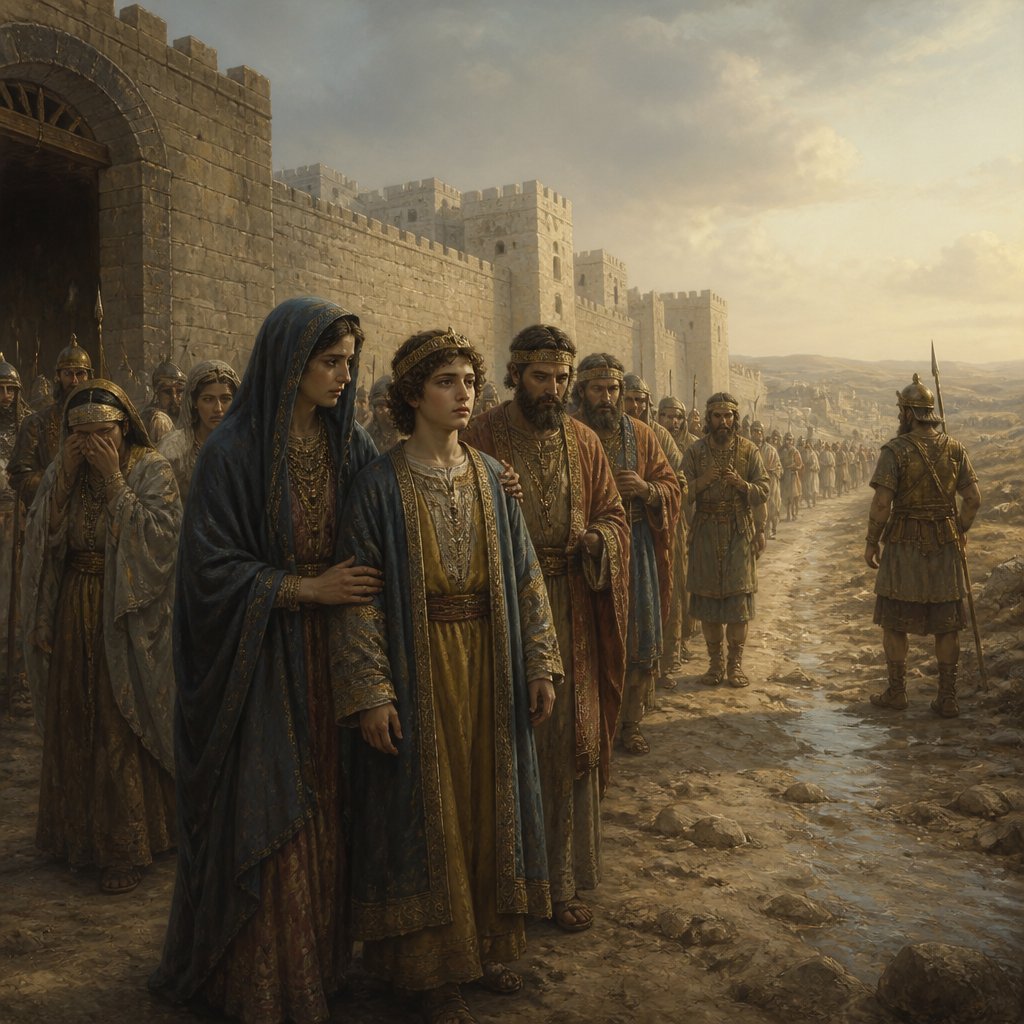
In 2 Kings 24:15, we witness a pivotal moment in biblical history: "And he carried away Jehoiachin to Babylon, and the king's mother, and the king's wives, and his officers, and the mighty of the land; those carried he into captivity from Jerusalem to Babylon." This verse encapsulates the profound heartbreak of exile, the stripping away of identity, and the looming shadow of divine consequence. Through this scripture, we find not only a historical account but also deep theological insights into God’s sovereignty and the path to redemption.
At first glance, the narrative is bleak. Jehoiachin, the king of Judah, has been taken captive along with his royal family and the leaders of the nation. This was a significant loss not just for Jehoiachin personally but for the entire kingdom of Judah. Captivity often represents the end of hope and the severing of ties with one’s past life. The imagery is powerful: a king, once seated on a throne, is now a prisoner. This echoes through generations, reminding us how quickly the tides of life can change. Yet, within this dark episode, God’s purpose shines through.
In the biblical context, captivity was a consequence of disobedience and idolatry. Judah had strayed from the path intended for them, flouting God’s commandments and turning to foreign gods. For us today, this serves as a clear warning of how important it is to remain aligned with God’s will. Often, we may feel like we are in a form of spiritual captivity due to our choices, struggles, and disobedience. But there is always a path back to God; He is waiting with open arms.
Reflect on Jehoiachin’s situation: stripped of his throne and dignity, trapped in a foreign land. It’s a stark reminder that our circumstances do not define our identity nor our future. For Jehoiachin, this season was one of profound loss, yet it was also a time for introspection and eventual realization. Through these hardships, God was ultimately preparing His people for redemption.
Looking deeper, captivity in Babylon was not simply a punishment but an opportunity for transformation. What seemed like a loss was, in reality, a step towards restoration. God used this exile to discipline His people, shape their character, and lead them back to genuine worship and fidelity. This can be seen in the subsequent generations that emerged post-exile, leading to the restoration of Israel and the coming of the Messiah.
As we reflect on our own lives, we must consider the "Babylonian captivities" we experience. It may be the loss of a job, a relationship breakdown, or struggles with sin. We may feel exiled from our comfort zones or even from the joy God intends for us. Yet, in these moments, just like Israel during their captivity, God is at work within us.
Jeremiah’s words to the exiles in Babylon provide a beautiful insight into God’s heart: "For I know the plans I have for you," declares the Lord, "plans to prosper you and not to harm you, plans to give you hope and a future" (Jeremiah 29:11). Even in dark times, we must remember that God is forging us into who He wants us to be.
Thus, let us embrace our ‘captivities’ as seasons of growth and glean from them, understanding they may lead to greater purposes. Instead of lamenting our losses, we can lean into God, pray for clarity, and await the blessings that He will unfold in the process. Like Jehoiachin eventually did, may we find restoration through reliability and faithfulness to God, even amid difficulties. Let us understand that captivity is not the end but rather a chapter in the story of our transformation.
Get our apps


Artwork for 2 Kings 24:15

2 Kings 24:15 - "And he carried away Jehoiachin to Babylon, and the king's mother, and the king's wives, and his officers, and the mighty of the land, those carried he into captivity from Jerusalem to Babylon."
"And he carried away Jehoiachin to Babylon, and the king's mother, and the king's wives, and his officers, and the mighty of the land, those carried he into captivity from Jerusalem to Babylon." - 2 Kings 24:15

2 Kings 15:24 - "And he did that which was evil in the sight of the LORD: he departed not from the sins of Jeroboam the son of Nebat, who made Israel to sin."

2 kings 6:24

2 Kings 15:15 - "And the rest of the acts of Shallum, and his conspiracy which he made, behold, they are written in the book of the chronicles of the kings of Israel."

2 Kings 24:5 - "¶ Now the rest of the acts of Jehoiakim, and all that he did, are they not written in the book of the chronicles of the kings of Judah?"

2 Kings 3:15

2 Kings 3:15

2 Kings 3:15

2 Kings 15:11 - "And the rest of the acts of Zachariah, behold, they are written in the book of the chronicles of the kings of Israel."

2 Kings 24:10 - "¶ At that time the servants of Nebuchadnezzar king of Babylon came up against Jerusalem, and the city was besieged."

2 Kings 24:11 - "And Nebuchadnezzar king of Babylon came against the city, and his servants did besiege it."
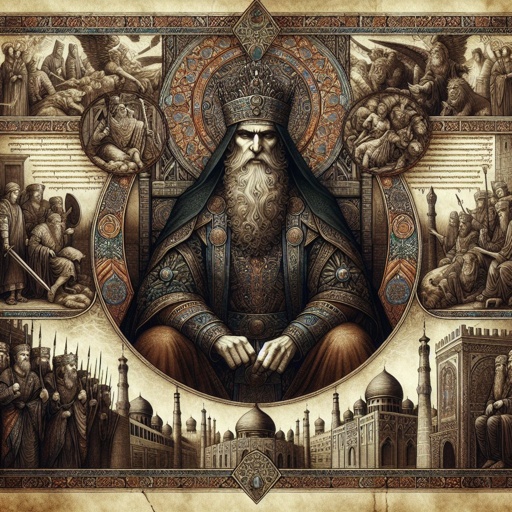
2 Kings 15:6 - "And the rest of the acts of Azariah, and all that he did, are they not written in the book of the chronicles of the kings of Judah?"

2 Kings 15:21 - "¶ And the rest of the acts of Menahem, and all that he did, are they not written in the book of the chronicles of the kings of Israel?"

1 Kings 15:24 - "And Asa slept with his fathers, and was buried with his fathers in the city of David his father: and Jehoshaphat his son reigned in his stead."

2 Kings 15:31 - "And the rest of the acts of Pekah, and all that he did, behold, they are written in the book of the chronicles of the kings of Israel."

2 Kings 15:36 - "¶ Now the rest of the acts of Jotham, and all that he did, are they not written in the book of the chronicles of the kings of Judah?"

2 Kings 15:26 - "And the rest of the acts of Pekahiah, and all that he did, behold, they are written in the book of the chronicles of the kings of Israel."

2 Kings 24:6 - "So Jehoiakim slept with his fathers: and Jehoiachin his son reigned in his stead."

2 Kings 24:1 - "In his days Nebuchadnezzar king of Babylon came up, and Jehoiakim became his servant three years: then he turned and rebelled against him."

2 Kings 13:24 - "So Hazael king of Syria died; and Ben-hadad his son reigned in his stead."

2 Kings 24:9 - "And he did that which was evil in the sight of the LORD, according to all that his father had done."
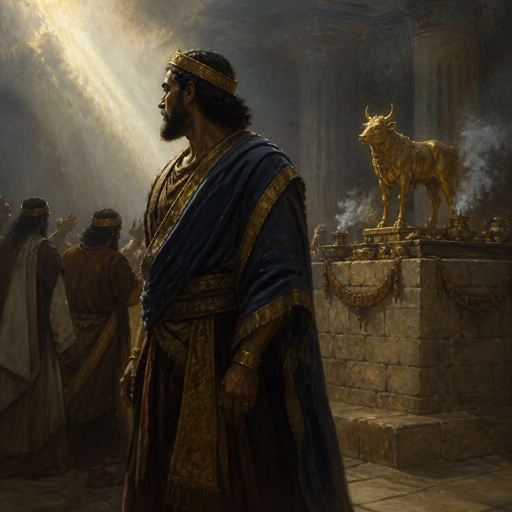
"And he did that which was evil in the sight of the LORD: he departed not from the sins of Jeroboam the son of Nebat, who made Israel to sin." - 2 Kings 15:24

2 Kings 24:19 - "And he did that which was evil in the sight of the LORD, according to all that Jehoiakim had done."

2 Kings 24:17 - "¶ And the king of Babylon made Mattaniah his father's brother king in his stead, and changed his name to Zedekiah."

2 Kings 15:29 show the army and attack

2 Kings 18:15 - "And Hezekiah gave him all the silver that was found in the house of the LORD, and in the treasures of the king's house."

2 Kings 14:15 - "¶ Now the rest of the acts of Jehoash which he did, and his might, and how he fought with Amaziah king of Judah, are they not written in the book of the chronicles of the kings of Israel?"

2 Kings 6:24 - "¶ And it came to pass after this, that Ben-hadad king of Syria gathered all his host, and went up, and besieged Samaria."

2 Kings 15:22 - "And Menahem slept with his fathers; and Pekahiah his son reigned in his stead."