Fleeing the Fortress: Lessons from the Fall of Jerusalem
"And the city was broken up, and all the men of war fled by night by the way of the gate between two walls, which is by the king’s garden: ( now the Chaldees were against the city round about:) and the king went the way toward the plain." - 2 Kings 25:4
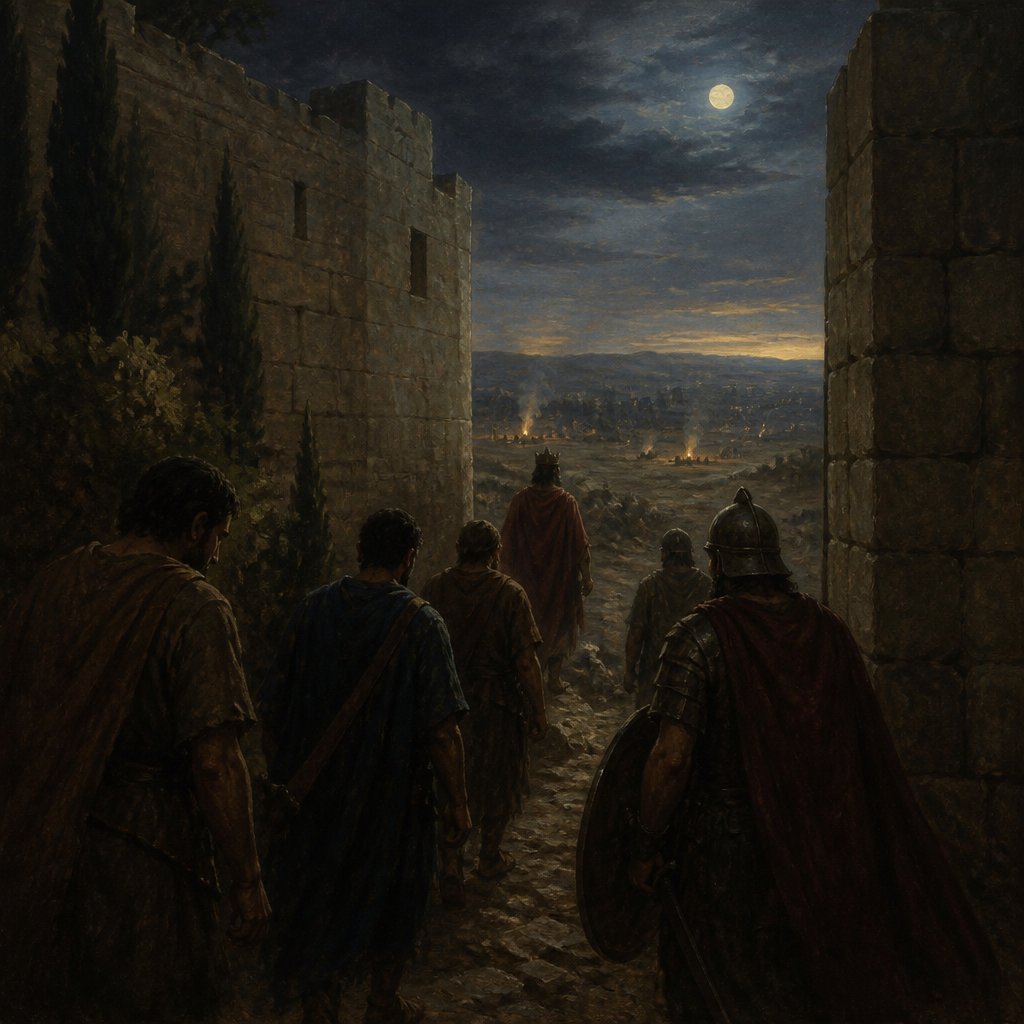
In 2 Kings 25:4, we encounter a scene that marks a profound and tragic moment in Israel's history: "And the city was broken up, and all the men of war fled by night by the way of the gate between two walls, which is by the king's garden: (now the Chaldees were against the city round about:) and the king went the way toward the plain." This distressing image captures the essence of defeat and despair, yet through careful reflection, we can glean significant lessons about faith, fear, and the providence of God.
The context of this passage is crucial. The siege of Jerusalem by the Chaldeans (Babylonians) represents not just a physical assault, but also a spiritual and moral decline among the people of Israel. Jerusalem, once a bustling city of worship, was now a broken fortress—a reflection of a nation that had turned away from God. As the city’s walls crumbled and fear took hold, we see a desperate flight at night, where the very men who once stood strong and brave chose to abandon their posts.
This leads us to the first profound lesson: **Fear Drives Us from Our Strongholds.** In moments of crisis, we tend to cling to survival rather than conviction. The men of war who fled were driven by fear, their courage evaporated in the face of overwhelming odds. We can liken this to our own lives when faced with insurmountable challenges. When we become ensnared by our fears, we might abandon our strongholds—our faith, relationships, or purpose. The key takeaway here is recognizing that fear can lead us to run from the very sources of strength God has provided. Instead of fleeing, we are called to seek refuge in God, who is our fortress (Psalm 18:2).
Secondly, we notice the **Significance of the King’s Flight.** The King, presumably Zedekiah, chose a particular way to escape—toward the plain, which symbolizes a path of abandonment rather than pride. This decision was not merely about physical safety; it represents a painful yet beautiful truth about leadership. As leaders, we are often faced with impossible situations where the choices we make can define our legacy. Zedekiah's flight signifies the failure to lead his people in faith, reflecting the importance of trusting God amidst the storm. As followers of Christ, we must ponder the direction of our own lives. Are we leading others toward faith or away from it in times of crisis?
Yet, amid this scene of despair, there also lies an invitation to **Hope and Redemption.** The fall of Jerusalem was not the end of God's plan for his people. Throughout the prophets, God assured His people that after judgment comes restoration. Likewise, in our struggles and failings, God promises that if we turn back to Him, we will receive His mercy and grace. In Jeremiah 29:11, He declares, "For I know the thoughts that I think toward you, saith the Lord, thoughts of peace, and not of evil, to give you an expected end."
The destruction of Jerusalem reminds us that even in our darkest moments, God's grace is at work. His plans are steadfast and sure, transcending our human failures and fears. He invites us into a deeper relationship with Him, transforming our trials into testimonies of His goodness and love.
As we reflect on this verse, we are called to remain steadfast in our faith, recognizing that even when the walls of our lives seem to crumble, God is in control. He asks us not to flee but to trust Him fully, to seek the strength found in His presence, and to remain committed to our calling as disciples of Christ.
Let us pray: "Lord, when fear threatens to overwhelm and lead me to flee from You and my responsibilities, help me to remember that You are my fortress. May I find strength in You and lead others to seek You amidst life’s challenges. Help me to trust that You have a good plan for my life and that I can stand firm in Your promise of restoration. Amen."
Want to reflect more on 2 Kings 25:4?
Continue your spiritual journey with Bible Chat — an AI-powered tool for exploring God's Word through conversation. Ask questions, discover connections, and deepen your understanding.
Get Our Apps


2 Kings 25:4 Artwork

2 Kings 25:4 - "¶ And the city was broken up, and all the men of war fled by night by the way of the gate between two walls, which is by the king's garden: (now the Chaldees were against the city round about:) and the king went the way toward the plain."
"¶ And the city was broken up, and all the men of war fled by night by the way of the gate between two walls, which is by the king's garden: (now the Chaldees were against the city round about:) and the king went the way toward the plain." - 2 Kings 25:4

2 Kings 25:2 - "And the city was besieged unto the eleventh year of king Zedekiah."
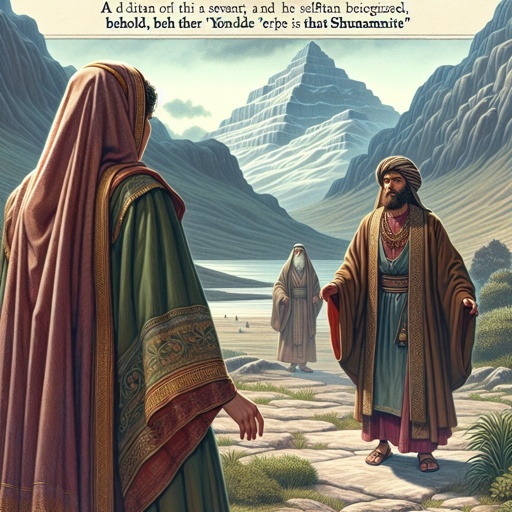
2 Kings 4:25 - "So she went and came unto the man of God to mount Carmel. And it came to pass, when the man of God saw her afar off, that he said to Gehazi his servant, Behold, yonder is that Shunammite:"

2 Kings 25:1 show King Nebuchadnezzar in war zone

2 Kings 21:25 - "Now the rest of the acts of Amon which he did, are they not written in the book of the chronicles of the kings of Judah?"

2 Kings 25:28 - "And he spake kindly to him, and set his throne above the throne of the kings that were with him in Babylon;"

2 Kings 2:25 - "And he went from thence to mount Carmel, and from thence he returned to Samaria."

2 Kings 25:1 show King Nebuchadnezzar and the army and the Temple

2 Kings 25:12 - "But the captain of the guard left of the poor of the land to be vinedressers and husbandmen."

2 Kings 4:4-5

Proverbs 25:2 - "It is the glory of God to conceal a thing: but the honour of kings is to search out a matter."

2 Kings 25:20 - "And Nebuzar-adan captain of the guard took these, and brought them to the king of Babylon to Riblah:"

Jehoiachin is released from Babylonian jail 2 kings 25: 27

Jeremiah 25:25 - "And all the kings of Zimri, and all the kings of Elam, and all the kings of the Medes,"

"And the city was besieged unto the eleventh year of king Zedekiah." - 2 Kings 25:2

2 Kings 25:3 - "And on the ninth day of the fourth month the famine prevailed in the city, and there was no bread for the people of the land."

2 Kings 25:6 - "So they took the king, and brought him up to the king of Babylon to Riblah; and they gave judgment upon him."

2 Kings 25:14 - "And the pots, and the shovels, and the snuffers, and the spoons, and all the vessels of brass wherewith they ministered, took they away."

1 Kings 2:25 - "And king Solomon sent by the hand of Benaiah the son of Jehoiada; and he fell upon him that he died."

2 Kings 25:10 - "And all the army of the Chaldees, that were with the captain of the guard, brake down the walls of Jerusalem round about."

2 Kings 25:18 - "¶ And the captain of the guard took Seraiah the chief priest, and Zephaniah the second priest, and the three keepers of the door:"

2 Chronicles 25:26 - "Now the rest of the acts of Amaziah, first and last, behold, are they not written in the book of the kings of Judah and Israel?"

2 Kings 25:15 - "And the firepans, and the bowls, and such things as were of gold, in gold, and of silver, in silver, the captain of the guard took away."

2 Kings 8:25 - "¶ In the twelfth year of Joram the son of Ahab king of Israel did Ahaziah the son of Jehoram king of Judah begin to reign."

2 Kings 25:26 - "And all the people, both small and great, and the captains of the armies, arose, and came to Egypt: for they were afraid of the Chaldees."

2 Kings 25:30 - "And his allowance was a continual allowance given him of the king, a daily rate for every day, all the days of his life."

2 Kings 25:25 - "But it came to pass in the seventh month, that Ishmael the son of Nethaniah, the son of Elishama, of the seed royal, came, and ten men with him, and smote Gedaliah, that he died, and the Jews and the Chaldees that were with him at Mizpah."

2 Kings 25:21 - "And the king of Babylon smote them, and slew them at Riblah in the land of Hamath. So Judah was carried away out of their land."

2 Kings 25:9 - "And he burnt the house of the LORD, and the king's house, and all the houses of Jerusalem, and every great man's house burnt he with fire."