The Tenacity of Faith: A Mother's Promise
"And the mother of the child said, As the LORD liveth, and as thy soul liveth, I will not leave thee. And he arose, and followed her." - 2 Kings 4:30
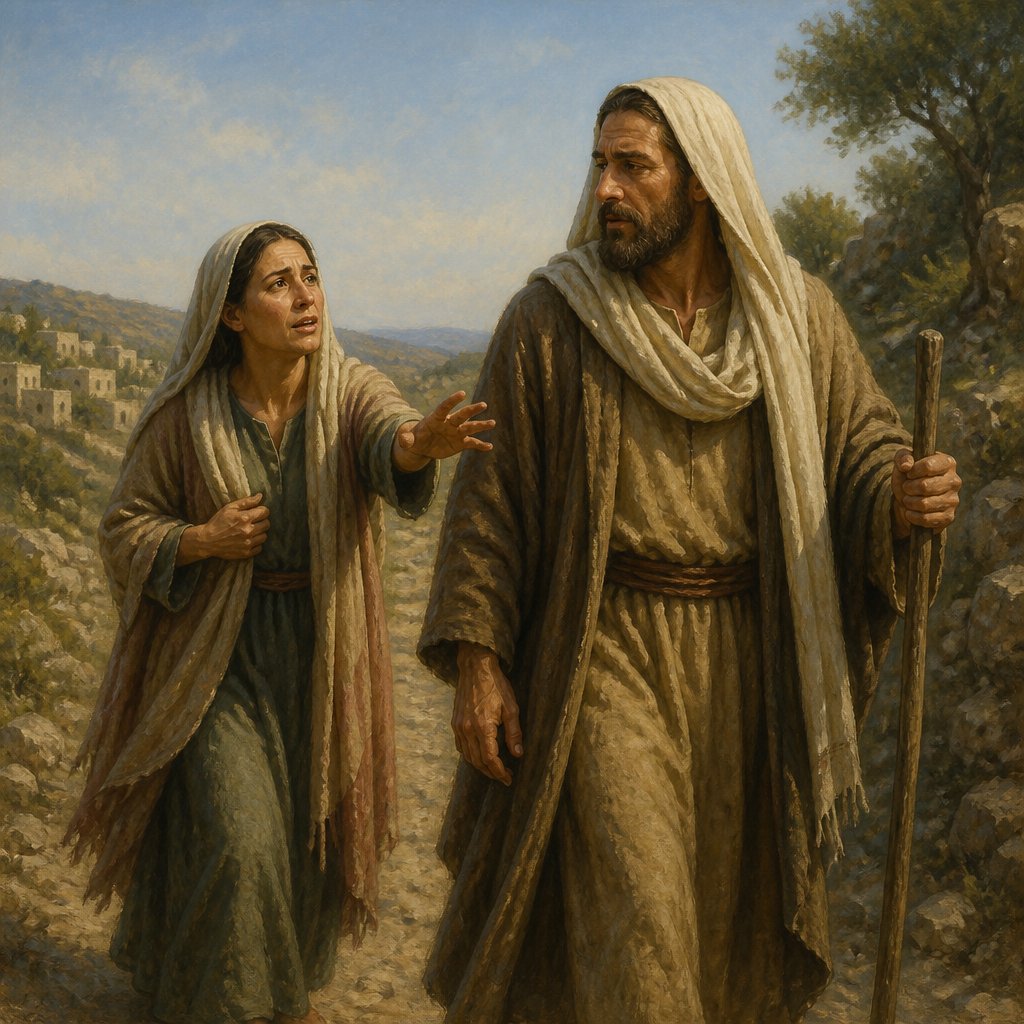
In the fourth chapter of Second Kings, we encounter a profound moment fueled by hope, despair, and tenacious faith. The verse, "And the mother of the child said, As the LORD liveth, and as thy soul liveth, I will not leave thee. And he arose, and followed her" (2 Kings 4:30 KJV), encapsulates the essence of a mother’s love and the unwavering strength of faith in dire circumstances.
To understand the significance of this moment, we must delve deeper into the narrative surrounding this powerful declaration. The story begins with a Shunammite woman who showed kindness to the prophet Elisha by providing him with a place to stay whenever he passed through her town. Moved by her hospitality, Elisha sought to bless her, and with the help of his servant Gehazi, he prophesied that she would bear a son, despite her old age and barrenness.
Miraculously, she became pregnant and later gave birth. Yet, the joy of motherhood was soon overshadowed by tragedy when, as a young boy, her son suffered a fatal headache. In her unimaginable grief, the Shunammite woman set out to find Elisha, believing that he was her only hope.
In the passage we examine, when Elisha catches sight of her in the distance, he sends his servant to greet her. She, however, does not stop to speak. Instead, she insists on finding Elisha himself, proclaiming a steadfast faith that cannot be shaken even in the face of tragedy. The words she speaks are not just a declaration of her intent to find the prophet, but a profound affirmation of her faith in God’s power and in the divine appointment and anointing of Elisha. Her exclamation, "As the LORD liveth, and as thy soul liveth," emphasizes the covenant relationship between her, God, and His servant.
This moment embodies the depth of a mother’s love and tenacity. She does not retreat into despair; instead, she pursues the source of her hope with unwavering determination. It exemplifies a central theme in Scripture: faith does not waver even when circumstances seem hopeless. This mother’s refusal to leave Elisha’s side signifies her belief that he is the vessel through which God will act on her behalf. Her faith is active.
What can we learn from this mother’s experience? Firstly, it teaches us about the importance of tenacity in our faith. When we face seemingly insurmountable hardships, our first instinct may be to retreat into doubt or despair. However, this narrative teaches us that true faith propels us to action. The Shunammite woman exemplifies that movement; she does not allow her sorrow to silence her but instead seeks out the prophet, the man of God, who she believes has the power to change her circumstances through God’s intervention.
Moreover, this verse reminds us of the power of intercession. Sometimes, our desperation drives us to the front lines of faith, not just for ourselves but for others. The mother’s journey is more than a pursuit of healing for her son—it is a passionate advocacy for life, hope, and restoration. She stands as an intercessor, and Elisha’s willingness to follow her demonstrates the importance of community and support during trials.
As believers, we can take courage from this story. When we encounter insurmountable trials, let us echo the Shunammite woman's tenacity: seeking God and His servants, not allowing discouragement to dictate our actions. Let us remember that in moments of despair, our faith can ignite hope and mobilize the power of God.
In conclusion, the Shunammite mother's statement,
"I will not leave thee," is not merely a declaration to Elisha but a covenant affirmation to God. May we, too, hold fast to our faith, proclaiming our unwillingness to part from the presence of God and His promises, trusting that He is always working for our good, even in our darkest hours.
Want to reflect more on 2 Kings 4:30?
Continue your spiritual journey with Bible Chat — an AI-powered tool for exploring God's Word through conversation. Ask questions, discover connections, and deepen your understanding.
Get Our Apps


2 Kings 4:30 Artwork

2 Kings 4:30 - "And the mother of the child said, As the LORD liveth, and as thy soul liveth, I will not leave thee. And he arose, and followed her."
"And the mother of the child said, As the LORD liveth, and as thy soul liveth, I will not leave thee. And he arose, and followed her." - 2 Kings 4:30

1 Kings 4:30 - "And Solomon's wisdom excelled the wisdom of all the children of the east country, and all the wisdom of Egypt."

2 Chronicles 30:4 - "And the thing pleased the king and all the congregation."

2 Kings 4:4-5

"And Solomon's wisdom excelled the wisdom of all the children of the east country, and all the wisdom of Egypt." - 1 Kings 4:30

2 Kings 17:30 - "And the men of Babylon made Succoth-benoth, and the men of Cuth made Nergal, and the men of Hamath made Ashima,"

2 Kings 25:30 - "And his allowance was a continual allowance given him of the king, a daily rate for every day, all the days of his life."

2 Kings 19:30 - "And the remnant that is escaped of the house of Judah shall yet again take root downward, and bear fruit upward."

"And the thing pleased the king and all the congregation." - 2 Chronicles 30:4

2 Kings 18:30 - "Neither let Hezekiah make you trust in the LORD, saying, The LORD will surely deliver us, and this city shall not be delivered into the hand of the king of Assyria."

2 Kings 9:30 - "¶ And when Jehu was come to Jezreel, Jezebel heard of it; and she painted her face, and tired her head, and looked out at a window."

2 Kings 10:4 - "But they were exceedingly afraid, and said, Behold, two kings stood not before him: how then shall we stand?"

2 Kings 15:30 - "And Hoshea the son of Elah made a conspiracy against Pekah the son of Remaliah, and smote him, and slew him, and reigned in his stead, in the twentieth year of Jotham the son of Uzziah."

2 Kings 4:11 - "And it fell on a day, that he came thither, and he turned into the chamber, and lay there."

1 Kings 4:2 - "And these were the princes which he had; Azariah the son of Zadok the priest,"

2 Kings 9:4 - "¶ So the young man, even the young man the prophet, went to Ramoth-gilead."

2 Kings 6:4 - "So he went with them. And when they came to Jordan, they cut down wood."

2 Kings 6:30 - "¶ And it came to pass, when the king heard the words of the woman, that he rent his clothes; and he passed by upon the wall, and the people looked, and, behold, he had sackcloth within upon his flesh."

Acts 4:30

Acts 4:30

2 Kings 4:15 - "And he said, Call her. And when he had called her, she stood in the door."

Acts 4:30

Acts 4:30

2 Kings 16:4 - "And he sacrificed and burnt incense in the high places, and on the hills, and under every green tree."

2 Kings 4:33 - "He went in therefore, and shut the door upon them twain, and prayed unto the LORD."

2 Kings 4:32 - "And when Elisha was come into the house, behold, the child was dead, and laid upon his bed."

2 Kings 4:18 - "¶ And when the child was grown, it fell on a day, that he went out to his father to the reapers."

1 Kings 11:30-31

1 Kings 11:30-31