The Silent Cry: When Miracles Seem Delayed
"And Gehazi passed on before them, and laid the staff upon the face of the child; but there was neither voice, nor hearing. Wherefore he went again to meet him, and told him, saying, The child is not awaked." - 2 Kings 4:31
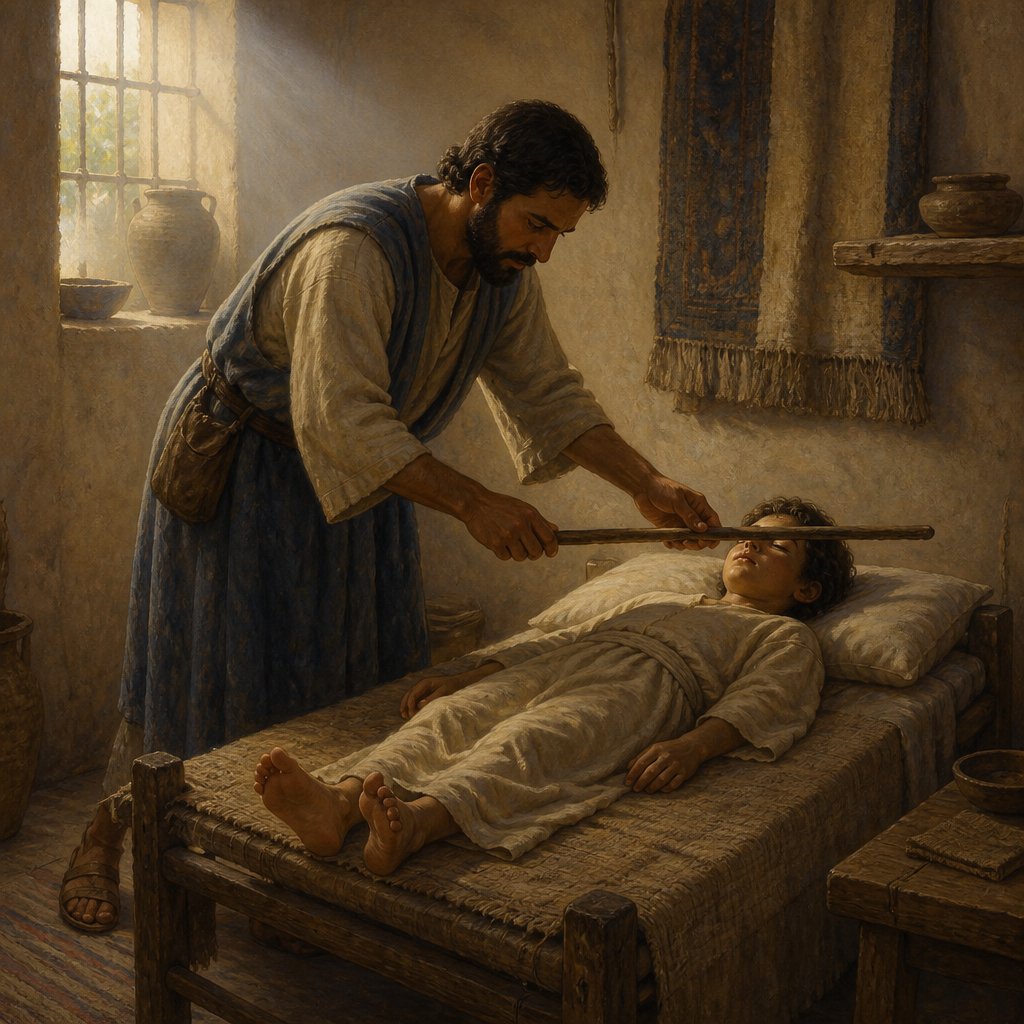
The story of Elisha and the Shunammite woman's son in 2 Kings 4 carries profound lessons about faith, hope, and divine timings. At the heart of this passage is the moment captured in 2 Kings 4:31: "And Gehazi passed on before them, and laid the staff upon the face of the child; but there was neither voice, nor hearing. Wherefore he went again to meet him, and told him, saying, The child is not awaked." In this moment of desperation, the silence of the child speaks volumes, inviting us to reflect on our own encounters with hope and the seeming absence of God's action in our lives.
To understand the weight of Gehazi's task, we must appreciate the backdrop against which this scene unfolds. The Shunammite woman, who was favored and blessed by Elisha, faced the agonizing loss of her only son. Her grief was palpable, yet her faith remained unwavering. In her darkest hour, she sought the prophet’s help, confident in the assurance that he could intervene. Elisha, a man of God, dispatched Gehazi with his staff, a symbol of authority, to lay upon the boy. This was a gesture that should have promised a miraculous awakening.
However, reality painted a different picture: "there was neither voice, nor hearing." The staff symbolically represented God’s power and authority, and Gehazi’s actions should have resulted in immediate response. Yet, despite the impartation of power, there was silence—no voice from the child, no sign of life. It leads us to grapple with a crucial aspect of our faith: the unsettling truth that God's timing often defies our expectations.
Gehazi’s return with the discouraging report that "The child is not awaked" serves as a harsh reminder for all of us that there are moments when it appears that God is silent. In our lives, we can relate to the feelings of confusion, despair, and frustration that arise when our prayers seem unanswered and our hopes unfulfilled. There are instances when we feel we have done everything right—sought God fervently, laid our requests before Him, and yet the silence is deafening.
The narrative encourages us to delve deeper into what silence means. The absence of an immediate miracle does not equate to the absence of God. When prayer seems unanswered, when faith appears to wane, we are invited to lean into that silence. This is where true faith is tested and nurtured. The moments of inactivity become a fertile ground for growth, a time when we are compelled to wrestle with our expectations of God and learn the depth of His sovereignty.
As the story progresses, the waiting on God leads to an ultimate reward. When Elisha finally arrives, he does not simply rely on the staff; he engages deeply with the child. He prays, stretches himself over the child, experiences an intimate moment of intercession, and ultimately restores the boy. This act of resurrection teaches us that sometimes God requires us to partner with Him in our situations, reminding us that we are active participants in our journey of faith.
The Shunammite woman’s faith remained steadfast despite the intervening silence. This narrative encourages us to maintain our faith in God’s higher purpose even when we cannot see it. God is not bound by our understanding or timelines. He operates in a realm where His plans far exceed our limited perspectives.
Today, as we meditate on Gehazi’s desperate attempt to revive the child, let us reaffirm our trust in God's timing and His ability to bring life into any dead situation. Just as the Shunammite woman refused to turn back in despair, may we, too, press forward with unshakable faith, believing that although the silence may be loud, our God is ever-present, working behind the scenes for our ultimate good.
Want to reflect more on 2 Kings 4:31?
Continue your spiritual journey with Bible Chat — an AI-powered tool for exploring God's Word through conversation. Ask questions, discover connections, and deepen your understanding.
Get Our Apps


2 Kings 4:31 Artwork

2 Kings 4:31 - "And Gehazi passed on before them, and laid the staff upon the face of the child; but there was neither voice, nor hearing. Wherefore he went again to meet him, and told him, saying, The child is not awaked."
"And Gehazi passed on before them, and laid the staff upon the face of the child; but there was neither voice, nor hearing. Wherefore he went again to meet him, and told him, saying, The child is not awaked." - 2 Kings 4:31

Proverbs 31:4 - "It is not for kings, O Lemuel, it is not for kings to drink wine; nor for princes strong drink:"

2 Kings 15:31 - "And the rest of the acts of Pekah, and all that he did, behold, they are written in the book of the chronicles of the kings of Israel."
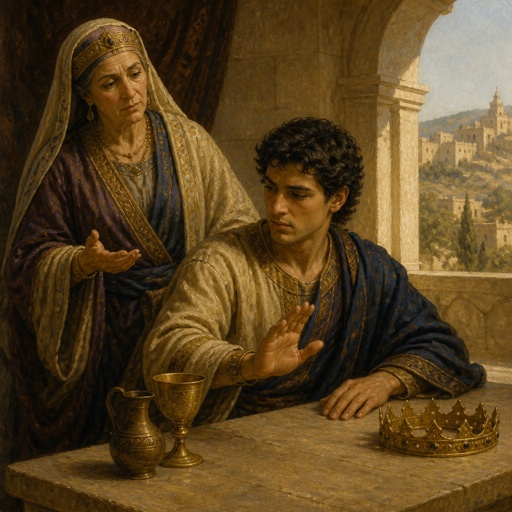
"It is not for kings, O Lemuel, it is not for kings to drink wine; nor for princes strong drink:" - Proverbs 31:4

2 Kings 4:4-5

Deuteronomy 31:4 - "And the LORD shall do unto them as he did to Sihon and to Og, kings of the Amorites, and unto the land of them, whom he destroyed."

2 Kings 9:31 - "And as Jehu entered in at the gate, she said, Had Zimri peace, who slew his master?"

1 Kings 4:31 - "For he was wiser than all men; than Ethan the Ezrahite, and Heman, and Chalcol, and Darda, the sons of Mahol: and his fame was in all nations round about."

2 Kings 19:31 - "For out of Jerusalem shall go forth a remnant, and they that escape out of mount Zion: the zeal of the LORD of hosts shall do this."

2 Kings 6:31 - "Then he said, God do so and more also to me, if the head of Elisha the son of Shaphat shall stand on him this day."

"And the rest of the acts of Pekah, and all that he did, behold, they are written in the book of the chronicles of the kings of Israel." - 2 Kings 15:31

2 Chronicles 31:4 - "Moreover he commanded the people that dwelt in Jerusalem to give the portion of the priests and the Levites, that they might be encouraged in the law of the LORD."

2 Kings 17:31 - "And the Avites made Nibhaz and Tartak, and the Sepharvites burnt their children in fire to Adrammelech and Anammelech, the gods of Sepharvaim." The image should not depict explicit or offensive content but be symbolic.

2 Kings 10:4 - "But they were exceedingly afraid, and said, Behold, two kings stood not before him: how then shall we stand?"

2 Kings 10:31 - "But Jehu took no heed to walk in the law of the LORD God of Israel with all his heart: for he departed not from the sins of Jeroboam, which made Israel to sin."

2 Kings 23:31 - "¶ Jehoahaz was twenty and three years old when he began to reign; and he reigned three months in Jerusalem. And his mother's name was Hamutal, the daughter of Jeremiah of Libnah."

2 Kings 4:11 - "And it fell on a day, that he came thither, and he turned into the chamber, and lay there."

1 Kings 4:2 - "And these were the princes which he had; Azariah the son of Zadok the priest,"

2 Kings 9:4 - "¶ So the young man, even the young man the prophet, went to Ramoth-gilead."

2 Kings 6:4 - "So he went with them. And when they came to Jordan, they cut down wood."

1 Kings 15:31 - "¶ Now the rest of the acts of Nadab, and all that he did, are they not written in the book of the chronicles of the kings of Israel?"

1 Kings 11:30-31

1 Kings 11:30-31

1 Kings 11:30-31

2 Kings 4:15 - "And he said, Call her. And when he had called her, she stood in the door."

2 Kings 16:4 - "And he sacrificed and burnt incense in the high places, and on the hills, and under every green tree."

2 Kings 4:33 - "He went in therefore, and shut the door upon them twain, and prayed unto the LORD."

2 Kings 4:32 - "And when Elisha was come into the house, behold, the child was dead, and laid upon his bed."

2 Kings 4:18 - "¶ And when the child was grown, it fell on a day, that he went out to his father to the reapers."