The Transformation of Naaman: A Soil of Faith
"And Naaman said, Shall there not then, I pray thee, be given to thy servant two mules' burden of earth? for thy servant will henceforth offer neither burnt offering nor sacrifice unto other gods, but unto the LORD." - 2 Kings 5:17
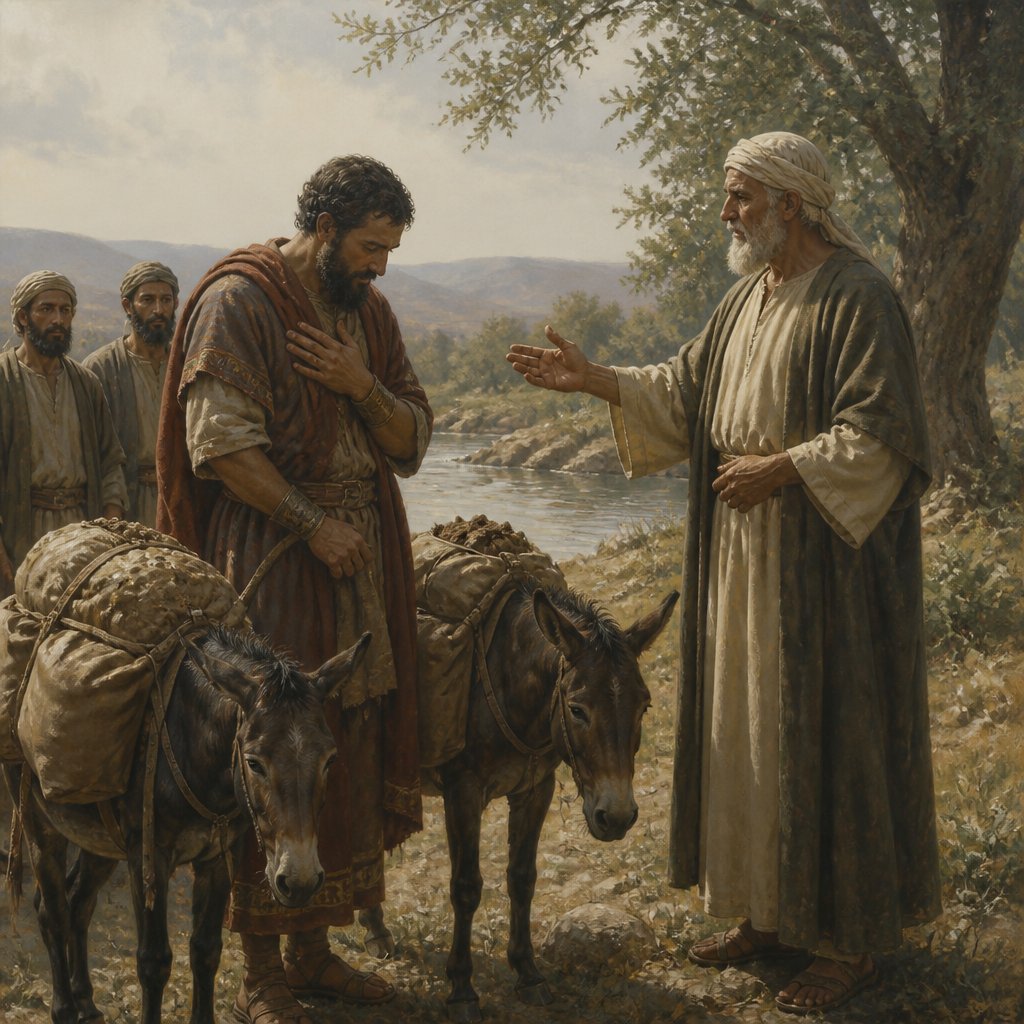
In 2 Kings 5:17, we encounter an extraordinary moment in the life of Naaman, a commander of the Syrian army who came to Israel seeking healing from his leprosy. After following the directive of the prophet Elisha, he experienced profound healing. The verse states: "And Naaman said, Shall there not then, I pray thee, be given to thy servant two mules' burden of earth? for thy servant will henceforth offer neither burnt offering nor sacrifice unto other gods, but unto the LORD." In this simple verse, we find the elements of faith, devotion, and the transformational power of God.
Naaman stood at a crossroads; he had been healed, not just of a physical ailment but of a spiritual blindness that so often accompanies pride. As a high-ranking official in a foreign land, he had led men, commanded armies, and possessed wealth and status. Yet, he was diminished by a disease that rendered him an outcast, a reality that humbled him to seek help from an enemy nation.
In his moment of transformation, Naaman requested two mules' burden of earth, signifying something far more profound than a physical need for soil. This request was symbolic of his recognition that his healing was not just physical, but that it had created a new spiritual landscape within him—one where the Lord, God of Israel, would now be honored. He wanted the soil of Israel, the land of God, to make an altar where he could offer sacrifices not to the gods of Syria but to the one true God.
This desire to possess the earth from the land of his healing shows a critical shift in Naaman's heart. So strong was this new allegiance to the Lord that he was willing to take a part of the land with him to ensure that no matter where he was, he could worship God. This is a powerful example of the necessary response to God’s grace. When we truly understand the depth of our healing—be it physical, emotional, or spiritual—we feel compelled to respond with gratitude and a commitment to worship.
Naaman reveals the essence of true worship: it is about the heart's intent rather than mere ritual or observance of law. By asking for earth, Naaman sought a way to create an altar that bespoke a new covenant of faith. Here, we witness a profound act signifying a life that is turned from the past of idolatries to a future of devoted service to the Almighty. He was taking his past—the burdens of his idols—and laying them down on the soil of God’s promises. His commitment to the Lord was not burdened by the past; it was liberated by grace.
Furthermore, Naaman's transformation encourages us to consider what we are carrying—what burdens we might need to lay down on the altar of worship. In our lives, we may not explicitly worship idols made of stone, but we often find ourselves drawn to things that take our attention away from God: personal achievements, material possessions, or even relationships that do not glorify Him. Just as Naaman had a choice, so do we every day—whom will we serve?
Naaman’s departure from polytheism to monotheism stands as a reminder of God’s ability to change hearts, even those of foreign leaders. This act demonstrates that God’s love and His invitation to worship are extended beyond any cultural or geographical boundaries. It reassures us that transformation is possible regardless of our past and that our worship can become truly transformational.
As we reflect on Naaman’s request for two mules' burden of earth, let us examine our own responses to the healing and grace we have received. Are we clinging to the dirt of our past lives, or are we laying a new foundation in faith? Naaman showed us that true healing leads to worship. Let us pray for the gravity to recognize not only our need for healing but also our new identity in Christ—the identity that calls us to leave behind the old and embrace the new life offered to us in Him. May we too express our gratitude through acts of devotion, committing our lives wholly to the one who heals and transforms.
Want to reflect more on 2 Kings 5:17?
Continue your spiritual journey with Bible Chat — an AI-powered tool for exploring God's Word through conversation. Ask questions, discover connections, and deepen your understanding.
Get Our Apps


2 Kings 5:17 Artwork

2 Kings 5:17 - "And Naaman said, Shall there not then, I pray thee, be given to thy servant two mules' burden of earth? for thy servant will henceforth offer neither burnt offering nor sacrifice unto other gods, but unto the LORD."
"And Naaman said, Shall there not then, I pray thee, be given to thy servant two mules' burden of earth? for thy servant will henceforth offer neither burnt offering nor sacrifice unto other gods, but unto the LORD." - 2 Kings 5:17

2 Kings 17:5 - "¶ Then the king of Assyria came up throughout all the land, and went up to Samaria, and besieged it three years."

1 Kings 5:17 - "And the king commanded, and they brought great stones, costly stones, and hewed stones, to lay the foundation of the house."

2 Kings 17:2 - "And he did that which was evil in the sight of the LORD, but not as the kings of Israel that were before him."

2 Kings 19:17 - "Of a truth, LORD, the kings of Assyria have destroyed the nations and their lands,"

"¶ Then the king of Assyria came up throughout all the land, and went up to Samaria, and besieged it three years." - 2 Kings 17:5

2 Corinthians 5:17

2 Corinthians 5:17

2 Corinthians 5:17

2 Corinthians 5:17

2 Corinthians 5:17

2 Corinthians 5:17

2 Corinthians 5:17

2 Corinthians 5:17

2 Corinthians 5:17

2 Corinthians 5:17

2 Corinthians 5:17

1 Kings 17:2 - "And the word of the LORD came unto him, saying,"

2 Kings 17:40 - "Howbeit they did not hearken, but they did after their former manner."

1 Kings 5:2 - "And Solomon sent to Hiram, saying,"

2 Kings 4:4-5

1 Kings 17:5 - "So he went and did according unto the word of the LORD: for he went and dwelt by the brook Cherith, that is before Jordan."

2 Kings 17:8 - "And walked in the statutes of the heathen, whom the LORD cast out from before the children of Israel, and of the kings of Israel, which they had made."

2 Kings 21:17 - "¶ Now the rest of the acts of Manasseh, and all that he did, and his sin that he sinned, are they not written in the book of the chronicles of the kings of Judah?"

2 Kings 19:5 - "So the servants of king Hezekiah came to Isaiah."

2 Kings 24:5 - "¶ Now the rest of the acts of Jehoiakim, and all that he did, are they not written in the book of the chronicles of the kings of Judah?"

2 Kings 17:17 - "And they caused their sons and their daughters to pass through the fire, and used divination and enchantments, and sold themselves to do evil in the sight of the LORD, to provoke him to anger."

"And he did that which was evil in the sight of the LORD, but not as the kings of Israel that were before him." - 2 Kings 17:2

"Of a truth, LORD, the kings of Assyria have destroyed the nations and their lands," - 2 Kings 19:17