The Power of One Voice: A Lesson from Naaman's Story
“And one went in, and told his lord, saying, Thus and thus said the maid that is of the land of Israel.” — 2 Kings 5:4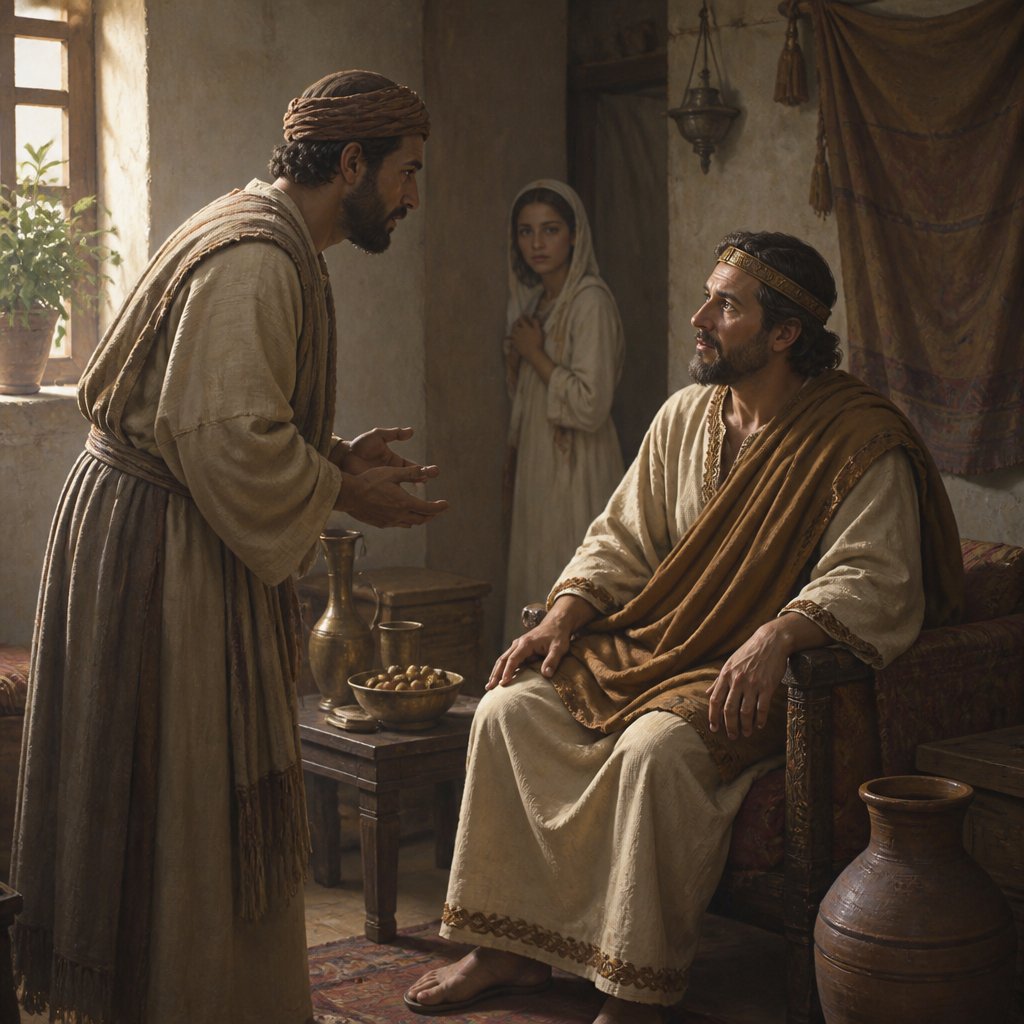
In the narrative found in 2 Kings 5:4, we encounter a timeless story of faith, humility, and the significance of one seemingly insignificant voice: "And one went in, and told his lord, saying, Thus and thus said the maid that is of the land of Israel." This verse marks a pivotal moment in the life of Naaman, a commander of the army of the king of Syria, who had fallen gravely ill with leprosy. The context surrounding this verse reveals profound truths about God's sovereignty and the subtle means through which He calls for the healing of His people.
Naaman was a great man, esteemed and admired. His victories on the battlefield suggested power, status, and influence. Yet in the shadow of his accolades lay a devastating reality—he was a leper. This affliction not only threatened his health; it also jeopardized his position in society. Leprosy in biblical times was more than a physical ailment; it was a social death sentence. Naaman’s story serves as a reminder that regardless of our status or achievements, we are all subject to the frailty of human condition.
In the midst of Naaman’s sufferings, we are introduced to a young maid—an unnamed servant girl who had been taken captive from Israel. This humble young woman, in a place where she had every reason to be bitter, instead became a vessel of hope and healing. Her simple and profound faith led her to speak to Naaman's wife about the prophet Elisha in Israel, whose ability to heal Naaman was rooted not in earthly power, but in divine authority.
As we reflect on the maid's impact, we must first acknowledge the power of one voice. In many ways, her contribution seemed small; a mere mention of a far-off prophet to a powerful commander. Yet it initiated a chain reaction that would change Naaman’s life forever. How often do we underestimate the influence of our words? In a world where people often feel voiceless, we must remember that God can use any of us—regardless of our circumstances—to speak hope and truth into the lives of others. Our voice carries weight, and in faithful obedience, it can be a catalyst for God’s work.
Furthermore, the maid’s boldness to share her faith should encourage us. She was living in a foreign land, separated from her family, yet she did not shy away from delivering a message of hope. This challenges us to examine our own responses in unfamiliar or difficult situations. Do we remain silent when we could speak life into someone’s pain? Are we willing to share our faith with those around us, regardless of potential backlash or misunderstanding? The little maid’s actions demonstrate that our faith can transcend boundaries and reach those who feel lost and hopeless.
Naaman listened to this young maid, and his actions thereafter unveiled a journey filled with setbacks, humility, and ultimately healing. When Naaman sought out Elisha, he was met with unexpected instructions: bathe in the Jordan River seven times. Naaman almost rejected this simple directive, swayed by his expectations of how healing should occur. Yet, it was through acts of surrender and obedience—echoing the maid’s faith—that he experienced restoration.
This narrative encourages us to embrace the little things. The seemingly minor words we may utter can have substantial implications. Each time we confidently share our faith or testimonies, we follow in the footsteps of that young maid. God delights in using the meek and lowly to confound the wise and mighty. As we continue in prayer, asking God to align our hearts with His purposes, may we find solace in the knowledge that every voice matters, and every act of faith is never in vain.
In conclusion, let us remember that our testimonies have the power to radiate hope in the bleakest of circumstances. Wherever we find ourselves, may we strive to be more like the maid, bringing forth messages of hope, assurance, and faith—whether in our workplace, families, or communities. As we reflect on Naaman’s healing, let us remain vigilant and willing servants, always ready to speak hope through the whispers of our hearts.
Get our apps


Artwork for 2 Kings 5:4

2 Kings 5:4 - "And one went in, and told his lord, saying, Thus and thus said the maid that is of the land of Israel."
"And one went in, and told his lord, saying, Thus and thus said the maid that is of the land of Israel." - 2 Kings 5:4

2 Kings 4:4-5

2 Kings 4:5 - "So she went from him, and shut the door upon her and upon her sons, who brought the vessels to her; and she poured out."

1 Kings 5:4 - "But now the LORD my God hath given me rest on every side, so that there is neither adversary nor evil occurrent."

1 Kings 5:2 - "And Solomon sent to Hiram, saying,"

2 Kings 19:5 - "So the servants of king Hezekiah came to Isaiah."

2 Kings 24:5 - "¶ Now the rest of the acts of Jehoiakim, and all that he did, are they not written in the book of the chronicles of the kings of Judah?"

1 Kings 4:5 - "And Azariah the son of Nathan was over the officers: and Zabud the son of Nathan was principal officer, and the king's friend:"

2 Timothy 4:5

2 Kings 10:4 - "But they were exceedingly afraid, and said, Behold, two kings stood not before him: how then shall we stand?"
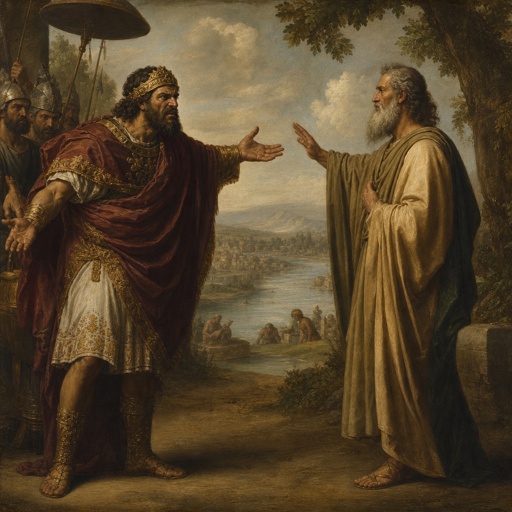
2 kings 5:11 Create Naaman being upset and frustrated at ELisha

2 Kings 5:19 - "And he said unto him, Go in peace. So he departed from him a little way."

2 Kings 3:5 - "But it came to pass, when Ahab was dead, that the king of Moab rebelled against the king of Israel."

"But now the LORD my God hath given me rest on every side, so that there is neither adversary nor evil occurrent." - 1 Kings 5:4

2 Kings 21:5 - "And he built altars for all the host of heaven in the two courts of the house of the LORD."

2 Kings 5:9 - "So Naaman came with his horses and with his chariot, and stood at the door of the house of Elisha."

2 Kings 18:5 - "He trusted in the LORD God of Israel; so that after him was none like him among all the kings of Judah, nor any that were before him."

2 Kings 4:11 - "And it fell on a day, that he came thither, and he turned into the chamber, and lay there."

1 Kings 4:2 - "And these were the princes which he had; Azariah the son of Zadok the priest,"

2 Kings 17:5 - "¶ Then the king of Assyria came up throughout all the land, and went up to Samaria, and besieged it three years."

2 kings 5:18 Create gehazi chasing after Naaman to get the unauthorized gifts from Naaman

"And Solomon sent to Hiram, saying," - 1 Kings 5:2

2 Kings 9:4 - "¶ So the young man, even the young man the prophet, went to Ramoth-gilead."

2 Kings 6:4 - "So he went with them. And when they came to Jordan, they cut down wood."

2 kings 5:3 Create a scene with a young servant girl talking earnestly with her mistress who is looking at her intently. the surroundings are rich in keeping with early biblical times of 2 kings

2 Kings 5:2 - "And the Syrians had gone out by companies, and had brought away captive out of the land of Israel a little maid; and she waited on Naaman's wife."

2 Kings 16:4 - "And he sacrificed and burnt incense in the high places, and on the hills, and under every green tree."

2 Kings 4:33 - "He went in therefore, and shut the door upon them twain, and prayed unto the LORD."

2 Kings 4:32 - "And when Elisha was come into the house, behold, the child was dead, and laid upon his bed."