The Cost of Convenience: Lessons from David and Uriah
"And David said to Uriah, Tarry here to day also, and to morrow I will let thee depart. So Uriah abode in Jerusalem that day, and the morrow." - 2 Samuel 11:12
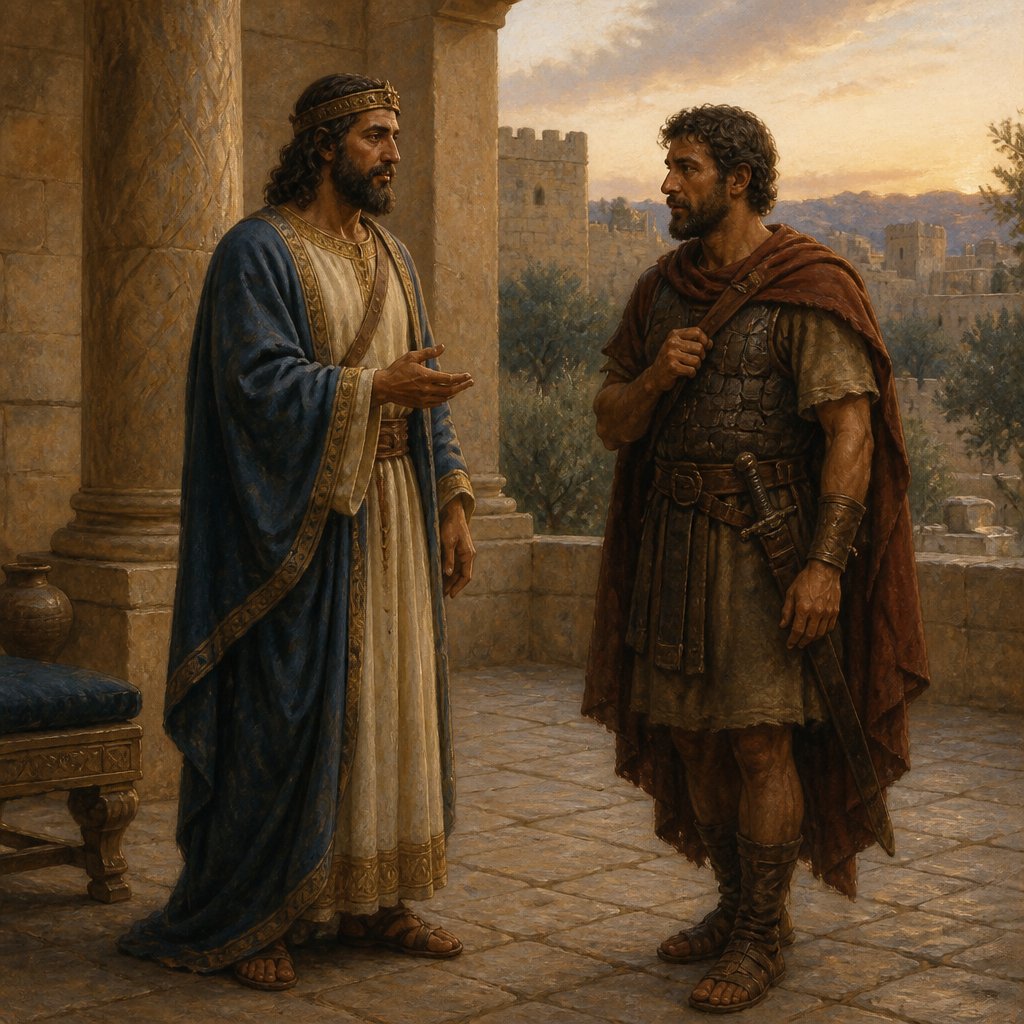
When we delve into the story found in 2 Samuel 11, we encounter one of the most tragic narratives in the Bible: the tale of King David, Uriah the Hittite, and the consequences of sin and moral failure. In verse 12, we learn, "And David said to Uriah, Tarry here to day also, and to morrow I will let thee depart. So Uriah abode in Jerusalem that day, and the morrow." At first glance, this verse may not appear deeply significant; however, it holds profound implications about our choices, integrity, and the path to redemption.
Here, David attempts to manipulate Uriah’s loyalty and sense of duty to cover up his own sin. Uriah has returned from battle, and instead of allowing him the rest and respite he deserves, David invites him to stay longer in Jerusalem. Why would the king insist that Uriah tarry? It was a strategic move cloaked in benevolence. David sought to hide his adultery with Bathsheba, Uriah’s wife, which had resulted in an unplanned pregnancy. His plans were not merely selfish; they were a direct betrayal of a loyal soldier and a man of integrity.
As we reflect on this narrative, we must recognize that David, a man after God’s own heart, can also be led astray by the allure of his own desires. David's decisions stemmed from a place of convenience, opting to use Uriah rather than face the full weight of his sins. We are taught in Scripture that sin often begins as a small compromise—something that seems harmless at first but ultimately leads us down a destructive path. In this instance, David’s desire for convenience cost him his integrity and led to catastrophic consequences for all involved.
We might ask ourselves, how often do we find ourselves making similar compromises? It could be in our workplace, relationships, or even within our own families. Perhaps it is easier to overlook a colleague's unethical behavior than to confront them, or maybe we glaze over our own shortcomings to avoid the discomfort of confession and repentance. In the moment, it can feel far easier to ‘tarry’ in a convenient situation rather than taking the difficult yet righteous path of correction.
Uriah's unwavering loyalty stands in stark contrast to David's deceitfulness. While David desired Uriah to remain in Jerusalem, Uriah had been a devoted servant, willing to risk his life for the king and his people. He embodied integrity, placing his duty above personal comfort. This prompts us to assess our commitments: Are we acting with integrity in our roles? Are we willing to stand firm even when it requires sacrifice?
The larger narrative teaches us about consequences. David’s manipulation sets off a chain reaction that results in Uriah’s death and grave repercussions for his own family. Sin seldom impacts just the sinner; it radiates outwards, harming those we least expect. This should awaken us to the reality that our choices—no matter how small—can have significant, far-reaching effects on our lives and the lives of those around us.
In the light of these truths, we must also pivot to hope. The story does not end in despair; it ultimately leads to redemption. David's path to repentance, highlighted later in the Psalms, reminds us that while we may stray, God’s grace remains abundant for those who turn back to Him. When we confess our sins—a practice wholly absent in David's initial choices—we allow God to restore what has been damaged by our decisions.
As we close our meditation on this verse, let’s commit ourselves to being individuals of integrity, willing to examine our actions against the teachings of God’s Word. Let us not settle for convenience but strive for righteousness, knowing that the pathway of integrity leads to restoration, both in our hearts and in our relationships with God and others.
Want to reflect more on 2 Samuel 11:12?
Continue your spiritual journey with Bible Chat — an AI-powered tool for exploring God's Word through conversation. Ask questions, discover connections, and deepen your understanding.
Get Our Apps


2 Samuel 11:12 Artwork

2 Samuel 11:12 - "And David said to Uriah, Tarry here to day also, and to morrow I will let thee depart. So Uriah abode in Jerusalem that day, and the morrow."
"And David said to Uriah, Tarry here to day also, and to morrow I will let thee depart. So Uriah abode in Jerusalem that day, and the morrow." - 2 Samuel 11:12

2 Samuel 11:9

2 Samuel 11

2 samuel 11

2 Samuel 11:11

1 Samuel 12:11 - "And the LORD sent Jerubbaal, and Bedan, and Jephthah, and Samuel, and delivered you out of the hand of your enemies on every side, and ye dwelled safe."

1 Samuel 11:12 - "¶ And the people said unto Samuel, Who is he that said, Shall Saul reign over us? bring the men, that we may put them to death."

2 Samuel 5:12

1 Samuel 2:12

2 Samuel 12:2 - "The rich man had exceeding many flocks and herds:"

2 Samuel 12:12 - "For thou didst it secretly: but I will do this thing before all Israel, and before the sun."

2 Samuel 2:11 - "And the time that David was king in Hebron over the house of Judah was seven years and six months."

2 Samuel 2:12 - "¶ And Abner the son of Ner, and the servants of Ish-bosheth the son of Saul, went out from Mahanaim to Gibeon."

2 Samuel 11:18 - "¶ Then Joab sent and told David all the things concerning the war;"

1 Samuel 2:12 - "¶ Now the sons of Eli were sons of Belial; they knew not the LORD."

2 Samuel 21:11 - "And it was told David what Rizpah the daughter of Aiah, the concubine of Saul, had done."

2 Samuel 11:5 - "And the woman conceived, and sent and told David, and said, I am with child."

2 Samuel 12:26 - "And Joab fought against Rabbah of the children of Ammon, and took the royal city."

2 Samuel 11:22 - "¶ So the messenger went, and came and shewed David all that Joab had sent him for."

2 Samuel 3:11 - "And he could not answer Abner a word again, because he feared him."

2 Samuel 12:29 - "And David gathered all the people together, and went to Rabbah, and fought against it, and took it."

2 Samuel 11:14 - "¶ And it came to pass in the morning, that David wrote a letter to Joab, and sent it by the hand of Uriah."

2 Samuel 22:11 - "And he rode upon a cherub, and did fly: and he was seen upon the wings of the wind."

2 Samuel 23:12 - "But he stood in the midst of the ground, and defended it, and slew the Philistines: and the LORD wrought a great victory."

2 Samuel 11:6 - "¶ And David sent to Joab, saying, Send me Uriah the Hittite. And Joab sent Uriah to David."

2 Samuel 11:26 - "¶ And when the wife of Uriah heard that Uriah her husband was dead, she mourned for her husband."

2 Samuel 8:12 - "Of Syria, and of Moab, and of the children of Ammon, and of the Philistines, and of Amalek, and of the spoil of Hadadezer, son of Rehob, king of Zobah."

2 Samuel 22:12 - "And he made darkness pavilions round about him, dark waters, and thick clouds of the skies."

2 Samuel 16:12 - "It may be that the LORD will look on mine affliction, and that the LORD will requite me good for his cursing this day."