The Pain of Silence: Lessons from Tamar's Story
"And Absalom her brother said unto her, Hath Amnon thy brother been with thee? but hold now thy peace, my sister: he is thy brother; regard not this thing. So Tamar remained desolate in her brother Absalom's house." - 2 Samuel 13:20
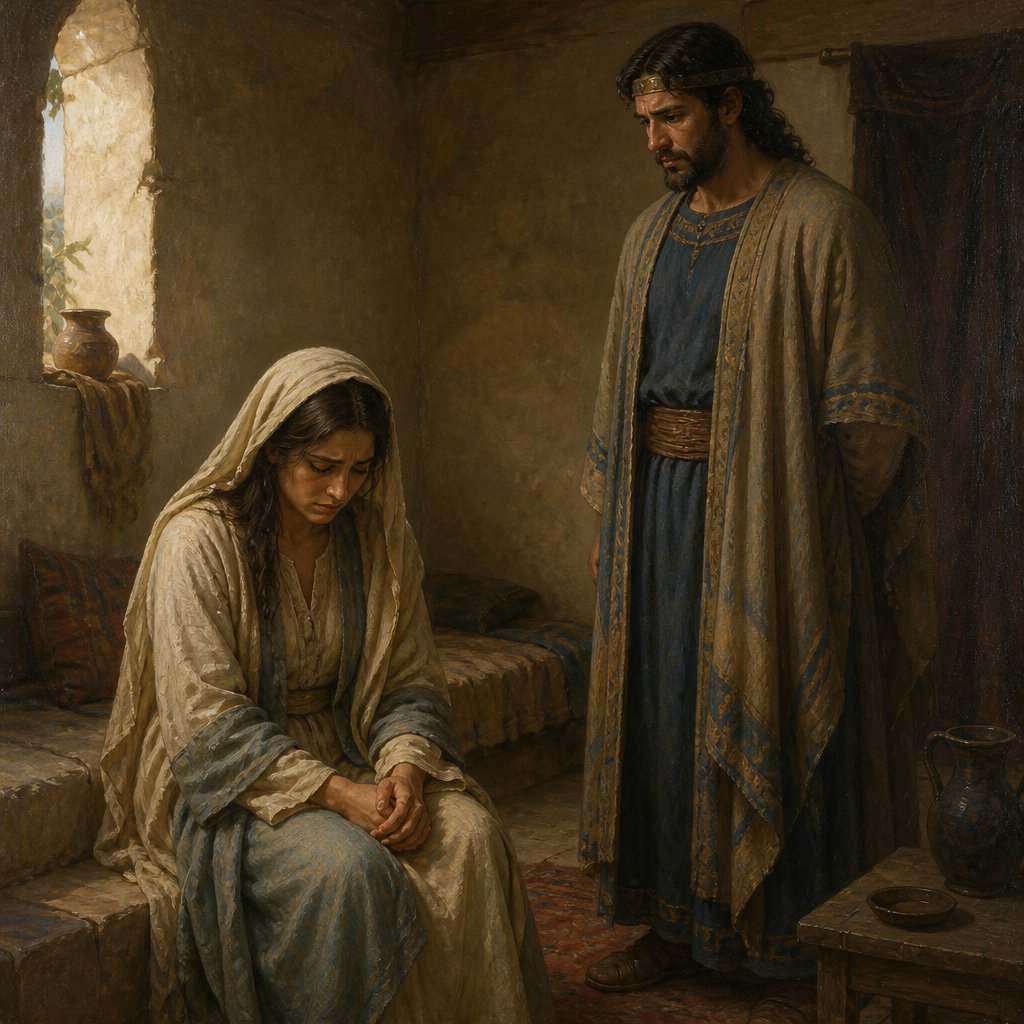
The heart-wrenching narrative of Tamar in 2 Samuel 13 contains a deep well of sorrow, betrayal, and the complexity of family dynamics. The verse reminds us of her unimaginable plight when, after being assaulted by her brother Amnon, her other brother Absalom seeks to comfort her by telling her to remain silent: "Hath Amnon thy brother been with thee? but hold now thy peace, my sister: he is thy brother; regard not this thing. So Tamar remained desolate in her brother Absalom's house" (2 Samuel 13:20, KJV).
To grasp the full weight of this passage, we must first explore the context surrounding Tamar's story. Born as the daughter of King David, Tamar was not only a princess in status but also in virtue, known for her beauty and righteousness. However, her story exemplifies how familial ties—intended to nurture and protect—can sometimes become entangled in hurt and betrayal. Tamar's initial advocacy for her own innocence and dignity following Amnon's heinous act went unheard, leaving her exposed, desolate, and trapped.
Absalom's response is particularly striking. While his intentions appear to be protective, his advice to "hold now thy peace" complicates the narrative. This silence, suggested as a means of self-preservation, ultimately leads to deeper consequences. Tamar was left to bear the weight of her trauma in isolation—a painful silence grows in the heart of anyone who has suffered injustice.
The silence commanded by Absalom reflects a societal tendency to overlook or downplay the voices of the victim, often due to shame, fear, or a desire to protect the family's honor. This aligns with many stories throughout the ages where the suffering of individuals is disregarded in an attempt to uphold the appearance of a harmonious family or community. Tamar’s silencing in the wake of her trauma exemplifies how societal norms can silence the cries of those who are hurting.
We often see in contemporary contexts how victims feel pressured to keep their pains private. This speaks to the need for a culture of open dialogue about issues surrounding sexual violence and abuse, where victims are encouraged not to remain silent but rather to seek help, healing, and justice. Tamar's desolation should not lead to resignation to fate; instead, it should inspire fervent advocacy for the voiceless in today's world. Let us remember that silence can be crippling, not only to the one who suffers but also to the relationships and communities around them.
In the psalmist’s words, "The Lord is near unto them that are of a broken heart; and saveth such as be of a contrite spirit" (Psalm 34:18, KJV). While Tamar remained in silence, her story is a reminder to seek the Lord, who understands our wounds and stands ready to heal us. In turn, as brothers and sisters in Christ, we are called to be advocates for one another, holding space for those who suffer in silence, allowing them to speak their truths, and helping to seek justice in a world that can often feel indifferent.
Much like the unresolved pain Tamar experienced, the story also foreshadows Absalom’s eventual quest for revenge, showcasing how unaddressed trauma can not only devastate the afflicted but ripple out, leading to violence and further sorrow. The need for healing is profound. God invites us to bring our wounds before Him, to seek resolution in His presence, and to engage with one another in compassionate ways.
As we reflect upon Tamar’s story, may we engage in a righteous pursuit of justice that mirrors God’s heart—acting swiftly to comfort and support those in our communities who are suffering. Let us break the silence that often surrounds trauma, ensuring that every voice is heard, valued, and respected in the creation of a just society. In this, we become channels of hope and healing, just as Christ calls us to be.
Want to reflect more on 2 Samuel 13:20?
Continue your spiritual journey with Bible Chat — an AI-powered tool for exploring God's Word through conversation. Ask questions, discover connections, and deepen your understanding.
Get Our Apps


2 Samuel 13:20 Artwork

2 Samuel 13:20 - "And Absalom her brother said unto her, Hath Amnon thy brother been with thee? but hold now thy peace, my sister: he is thy brother; regard not this thing. So Tamar remained desolate in her brother Absalom's house."
"And Absalom her brother said unto her, Hath Amnon thy brother been with thee? but hold now thy peace, my sister: he is thy brother; regard not this thing. So Tamar remained desolate in her brother Absalom's house." - 2 Samuel 13:20

2 Samuel 20:13 - "When he was removed out of the highway, all the people went on after Joab, to pursue after Sheba the son of Bichri."

2 Samuel 22:17-20

2 Samuel 20:20 - "And Joab answered and said, Far be it, far be it from me, that I should swallow up or destroy."

Acts 13:20 - "And after that he gave unto them judges about the space of four hundred and fifty years, until Samuel the prophet."

2 Samuel 20:25 - "And Sheva was scribe: and Zadok and Abiathar were the priests:"

2 Samuel 20:24 - "And Adoram was over the tribute: and Jehoshaphat the son of Ahilud was recorder:"

2 Samuel 20:26 - "And Ira also the Jairite was a chief ruler about David."

2 Samuel 2:20 - "Then Abner looked behind him, and said, Art thou Asahel? And he answered, I am."

1 Samuel 13:20 - "But all the Israelites went down to the Philistines, to sharpen every man his share, and his coulter, and his axe, and his mattock."
"When he was removed out of the highway, all the people went on after Joab, to pursue after Sheba the son of Bichri." - 2 Samuel 20:13

2 Samuel 13:38 - "So Absalom fled, and went to Geshur, and was there three years."

Joel 1:2-4, 13-20

2 Samuel 22:13 - "Through the brightness before him were coals of fire kindled."

2 Samuel 16:20 - "¶ Then said Absalom to Ahithophel, Give counsel among you what we shall do."

2 Samuel 15:13 - "¶ And there came a messenger to David, saying, The hearts of the men of Israel are after Absalom."

2 Samuel 13:21 - "¶ But when king David heard of all these things, he was very wroth."

2 Chronicles 20:13 - "And all Judah stood before the LORD, with their little ones, their wives, and their children."

2 Samuel 1:20 - "Tell it not in Gath, publish it not in the streets of Askelon; lest the daughters of the Philistines rejoice, lest the daughters of the uncircumcised triumph."

2 Samuel 20:4 - "¶ Then said the king to Amasa, Assemble me the men of Judah within three days, and be thou here present."

2 Samuel 7:20 - "And what can David say more unto thee? for thou, Lord GOD, knowest thy servant."

2 Samuel 20:23 - "¶ Now Joab was over all the host of Israel: and Benaiah the son of Jehoiada was over the Cherethites and over the Pelethites:"

2 Kings 13:20 - "¶ And Elisha died, and they buried him. And the bands of the Moabites invaded the land at the coming in of the year."

2 Samuel 13:27 - "But Absalom pressed him, that he let Amnon and all the king's sons go with him."

2 Samuel 22:20 - "He brought me forth also into a large place: he delivered me, because he delighted in me."

2 Samuel 13:35 - "And Jonadab said unto the king, Behold, the king's sons come: as thy servant said, so it is."

2 Samuel 7:13 - "He shall build an house for my name, and I will stablish the throne of his kingdom for ever."

2 Samuel 3:20 - "So Abner came to David to Hebron, and twenty men with him. And David made Abner and the men that were with him a feast."

"And Sheva was scribe: and Zadok and Abiathar were the priests:" - 2 Samuel 20:25