The Weight of Folly: Understanding the Consequences of Sin
“And she answered him, Nay, my brother, do not force me; for no such thing ought to be done in Israel: do not thou this folly.” — 2 Samuel 13:12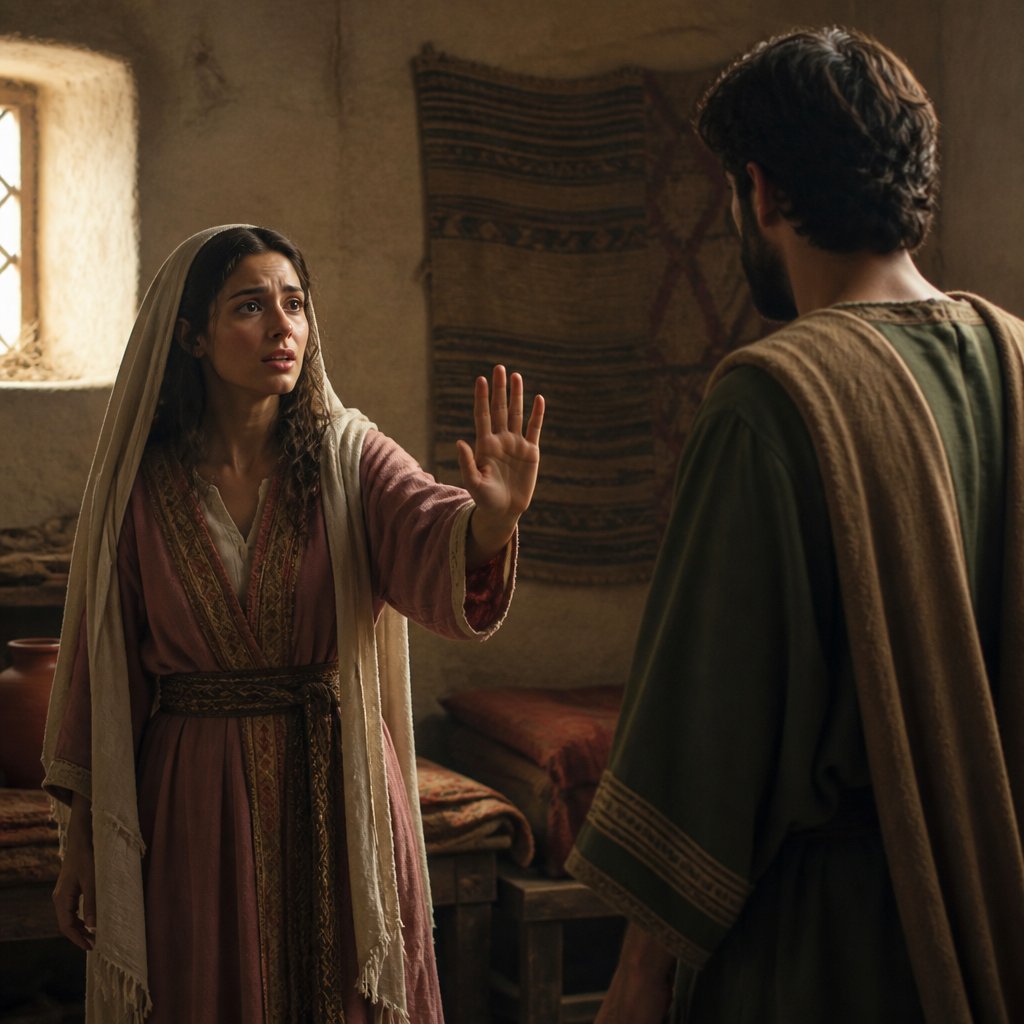
As we delve into the poignant narrative found in 2 Samuel 13:12, "And she answered him, Nay, my brother, do not force me; for no such thing ought to be done in Israel: do not thou this folly," we are confronted with the tumultuous reality of human desire, sin, and the immense harm they can inflict on relationships and communities. This account unfolds within the tragic story of Amnon and Tamar, the children of King David, and it reveals a painful truth about the consequences of unchecked lust and moral irresponsibility.
Tamar's plea, "do not force me," encapsulates a moment of desperation that transcends time. She is caught in a dangerous situation where familial love is twisted into a vehicle of manipulation and violation. Tamar not only recognizes the personal violation that forcing her would entail, but she also emphasizes that such actions are abhorrent in the eyes of their society: "for no such thing ought to be done in Israel." Here, Tamar points to God's law and the communal moral fabric that should govern their lives. Even in the old covenant, sexual immorality like that which Amnon proposes was forbidden. Her recognition of this moral law indicates her awareness of the broader implications of his actions—how they threaten to unravel the very foundations of their community.
When we reflect on this verse, we must grapple with the reality of folly. Folly is frequently portrayed in the Scriptures as a sign of disobedience and a rejection of wisdom. In Proverbs, folly leads to destruction, while wisdom leads to life (Proverbs 14:12). Amnon’s attempt to force his will upon Tamar exemplifies this folly—he disregards not only her dignity and autonomy but also the societal standards that are meant to protect them. Even in his twisted rationale fueled by lust, Amnon fails to recognize the long-lasting consequences his actions would carry, both for himself and for Tamar.
Moreover,
this narrative invites us to examine our own lives. We may not face similar temptations, but we confront instances in our daily lives where our desires threaten the well-being of others. How often do we allow our personal ambitions or appetites to overlook the wisdom found in God's Word? Are we aware of how our choices affect our families, relationships, and communities?
Tamar’s response is not just a plea for herself; it is a plea for integrity in a moment bubbling with chaos. She recognizes that what Amnon is about to do is not merely a personal sin—it is an act of folly against all that is sacred in their covenant community. As believers, we too are called to uphold the integrity of our community, to speak out against wrongdoing, and to model a life that reflects Christ's love and grace.
From a broader theological perspective, this passage highlights the ongoing battle between flesh and spirit. Paul speaks to this in Galatians 5:17, stating, "For the flesh lusteth against the Spirit, and the Spirit against the flesh: and these are contrary the one to the other." We must be vigilant in our own lives, constantly weighing the motivations behind our actions against the teachings of Scripture. Are we, like Amnon, blinded by our immediate desires, or are we sowing seeds of righteousness and love?
In conclusion, Tamar's wise counsel serves not only as a cautionary tale but as an invitation to seek God's wisdom in every situation. Let us not be like Amnon, consumed by folly, but rather strive to embody the purity and love of Christ in our interactions with one another. May we listen to the voices that call us back from the brink of folly and live in a way that honors God and upholds the dignity of every individual in our lives.
Through every challenge and temptation, may we remember that our choices matter—not only for ourselves but for the entire community we are a part of. Let us heed the call to righteousness and wisdom, forging paths that reflect the heart of God.
Get our apps


Artwork for 2 Samuel 13:12

2 Samuel 13:12 - "And she answered him, Nay, my brother, do not force me; for no such thing ought to be done in Israel: do not thou this folly."
"And she answered him, Nay, my brother, do not force me; for no such thing ought to be done in Israel: do not thou this folly." - 2 Samuel 13:12

1 Samuel 13:12 Saul's disobedience

1 Samuel 12:13

1 Samuel 12:13

1 Samuel 13:12 No face of persons

2 Samuel 12:13 - "And David said unto Nathan, I have sinned against the LORD. And Nathan said unto David, The LORD also hath put away thy sin; thou shalt not die."

2 Samuel 5:12

1 Samuel 2:12

2 Samuel 12:2 - "The rich man had exceeding many flocks and herds:"

2 Samuel 12:12 - "For thou didst it secretly: but I will do this thing before all Israel, and before the sun."

2 Samuel 13:38 - "So Absalom fled, and went to Geshur, and was there three years."

2 chronicles 13:12

2 Samuel 2:12 - "¶ And Abner the son of Ner, and the servants of Ish-bosheth the son of Saul, went out from Mahanaim to Gibeon."

2 Samuel 22:13 - "Through the brightness before him were coals of fire kindled."

1 Samuel 2:12 - "¶ Now the sons of Eli were sons of Belial; they knew not the LORD."

2 Samuel 15:13 - "¶ And there came a messenger to David, saying, The hearts of the men of Israel are after Absalom."

2 Samuel 13:21 - "¶ But when king David heard of all these things, he was very wroth."

2 Corinthians 13:12 - "Greet one another with an holy kiss."

2 Samuel 7:12-13 - "When your days are over and you rest with your ancestors, I will raise up your offspring to succeed you, your own flesh and blood, I will establish his kingdom. He is the one who will build a house for my Name, and I will establish the throne of his kingdom forever."

2 Samuel 12:26 - "And Joab fought against Rabbah of the children of Ammon, and took the royal city."

2 Samuel 12:29 - "And David gathered all the people together, and went to Rabbah, and fought against it, and took it."

1 Samuel 12:13 - "Now therefore behold the king whom ye have chosen, and whom ye have desired! and, behold, the LORD hath set a king over you."

2 Samuel 13:27 - "But Absalom pressed him, that he let Amnon and all the king's sons go with him."

2 Samuel 23:12 - "But he stood in the midst of the ground, and defended it, and slew the Philistines: and the LORD wrought a great victory."

1 Sam 31: 12-13

2 Samuel 13:35 - "And Jonadab said unto the king, Behold, the king's sons come: as thy servant said, so it is."

2 Samuel 7:13 - "He shall build an house for my name, and I will stablish the throne of his kingdom for ever."

1 Samuel 12:13 KJV (13) Now therefore behold the king whom ye have chosen, and whom ye have desired! and, behold, the LORD hath set a king over you.

1 Samuel 12:13 KJV (13) Now therefore behold the king whom ye have chosen, and whom ye have desired! and, behold, the LORD hath set a king over you.