From Grief to Grace: Finding Hope in Mourning
“And the king said unto her, What aileth thee? And she answered, I am indeed a widow woman, and mine husband is dead.” — 2 Samuel 14:5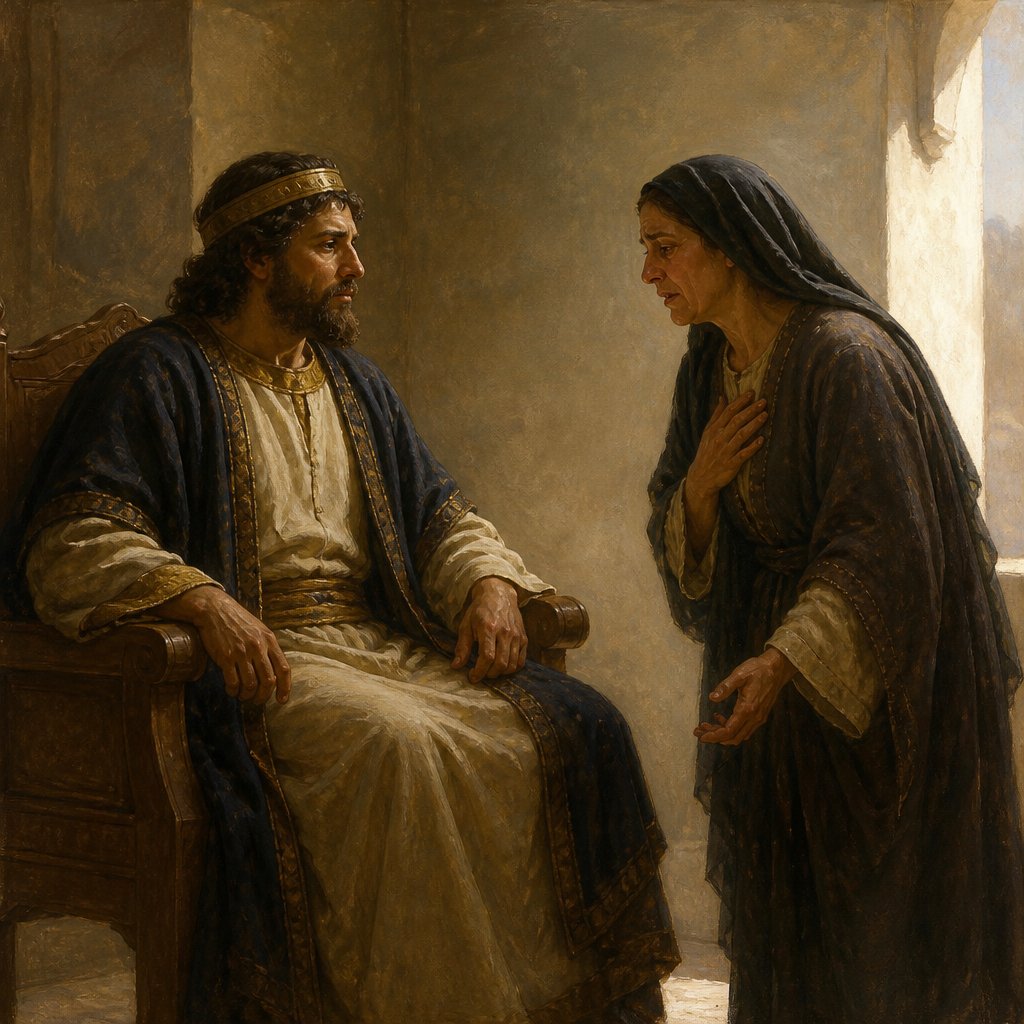
In the heart of 2 Samuel 14:5, we encounter a poignant scene. The verse reads, "And the king said unto her, What aileth thee? And she answered, I am indeed a widow woman, and mine husband is dead." In these few lines, we find the emotional weight of loss, the burden of grief, and the troubling complexity of human relationships.
At first glance, this verse may appear as a mere exchange between King David and a woman in distress. However, if we delve deeper, we uncover layers of significance that resonate with our own experiences of pain, loss, and the longing for restoration. The narrative is woven into the fabric of the lives within the kingdom, a reflection of the larger story of David’s life—a story filled with challenges, betrayals, and the relentless pursuit of reconciliation.
When the widow presents herself to David, her sorrow is palpable. She signifies not just an individual suffering from the death of her husband; she represents countless others who have faced the same fate. In biblical times, to be a widow was to embody vulnerability. Without a husband, her social safety net was stripped away, leaving her exposed to the harsh realities of life in a patriarchal society. This highlights a critical issue that Moses addressed in the Law: the protection of widows (Exodus 22:22). Her plea echoes through history, calling attention to those whom society often overlooks or neglects.
David, a man who himself experienced profound losses—his enemies, close friends, and even a son who turned against him—demonstrates empathy as he inquires about her distress. His question, "What aileth thee?" invites an honest revelation of grief. It allows the widow the space to share her heart, to expose her vulnerability to someone who might understand. This inquiry should prompt us to consider how we respond to the pain of others. Do we create safe spaces for our loved ones to express their struggles? Do we listen with compassion, offering our time and hearts to those who mourn?
The woman’s response, stark and truthful, reveals her identity. She does not embellish her circumstances; instead, she gives voice to her pain. "I am indeed a widow woman, and mine husband is dead." This is a powerful declaration of her reality, acknowledging her loss without qualifiers or excuses. In expressing her grief so plainly, she models for us the importance of being honest in our suffering. We must resist the urge to mask our emotions under the guise of strength, and instead, allow ourselves to grieve openly and authentically.
Scripture provides numerous instances of lament where raw emotions are laid bare before God—think of the cries of David in the Psalms or the weeping of Jeremiah the prophet. In acknowledging our pain, we align ourselves with the scriptural tradition that upholds honesty in human experience. When we dare to articulate our anguish, we are also taking a step toward healing.
However, this verse also beckons us to reflect on the transformative power of grace. Though she speaks of her grief, standing before the king, she is positioned to find hope. It is King David's heart that will ultimately lead her to find justice, and likewise, our encounters with God’s presence can act as the balm for our wounds. In our mourning, we must remember that God sees our tears (Psalm 56:8) and meets us in the depths of our sorrow.
As we carry our burdens, let us turn toward the One who promises comfort. Matthew 5:4 reminds us, "Blessed are they that mourn: for they shall be comforted." In our lamentation, we may find transformation. Our grief, when placed in God’s hands, can shift from despair to hope, turning our sorrow into something beautiful, intertwining with His purpose in our lives.
This passage ultimately encourages us to dwell in the tension between loss and hope. It invites us to seek God in our grief, to feel deeply and honestly, and to reach out for human connection. Like King David, may we become champions for those in pain, fostering a community that embraces the broken-hearted, allowing the light of Christ to shine through our darkest moments.
Get our apps


Artwork for 2 Samuel 14:5

2 Samuel 14:5 - "And the king said unto her, What aileth thee? And she answered, I am indeed a widow woman, and mine husband is dead."
"And the king said unto her, What aileth thee? And she answered, I am indeed a widow woman, and mine husband is dead." - 2 Samuel 14:5

2 Samuel 5:14 - "And these be the names of those that were born unto him in Jerusalem; Shammua, and Shobab, and Nathan, and Solomon,"

2 Samuel 6:14
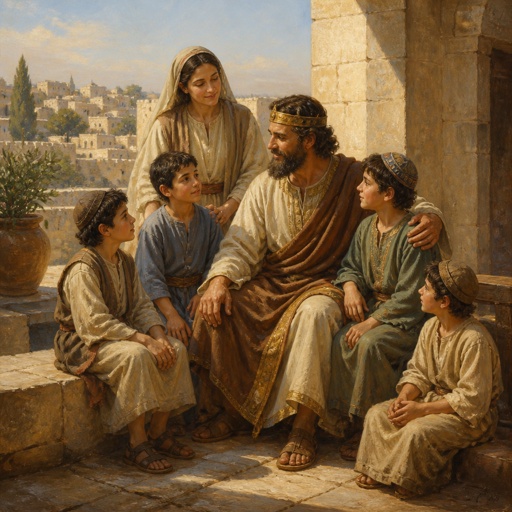
"And these be the names of those that were born unto him in Jerusalem; Shammua, and Shobab, and Nathan, and Solomon," - 2 Samuel 5:14

2 Samuel 5:12

2 Samuel 6:14–22

2 Samuel 5:16 - "And Elishama, and Eliada, and Eliphalet."

1 Samuel 14:5 - "The forefront of the one was situate northward over against Michmash, and the other southward over against Gibeah."

2 Samuel 23:14 - "And David was then in an hold, and the garrison of the Philistines was then in Beth-lehem."

2 Samuel 5:15 - "Ibhar also, and Elishua, and Nepheg, and Japhia,"

2 Samuel 14:23 - "So Joab arose and went to Geshur, and brought Absalom to Jerusalem."

2 Samuel 22:14 - "The LORD thundered from heaven, and the most High uttered his voice."

2 Samuel 16:14 - "And the king, and all the people that were with him, came weary, and refreshed themselves there."

2 Samuel 14:1 - "Now Joab the son of Zeruiah perceived that the king's heart was toward Absalom."

2 Samuel 5:18 - "The Philistines also came and spread themselves in the valley of Rephaim."

2 Samuel 5:21 - "And there they left their images, and David and his men burned them."

2 Samuel 5:7 - "Nevertheless David took the strong hold of Zion: the same is the city of David."

2 Samuel 14:28 - "¶ So Absalom dwelt two full years in Jerusalem, and saw not the king's face."

2 Samuel 11:14 - "¶ And it came to pass in the morning, that David wrote a letter to Joab, and sent it by the hand of Uriah."

2 Samuel 5:10 - "And David went on, and grew great, and the LORD God of hosts was with him."

2 Samuel 2:14 - "And Abner said to Joab, Let the young men now arise, and play before us. And Joab said, Let them arise."

2 Samuel 11:5 - "And the woman conceived, and sent and told David, and said, I am with child."

2 Samuel 5:22 - "¶ And the Philistines came up yet again, and spread themselves in the valley of Rephaim."

"And Elishama, and Eliada, and Eliphalet." - 2 Samuel 5:16

2 Samuel 6:14 - "And David danced before the LORD with all his might; and David was girded with a linen ephod."

2 Samuel 3:5 - "And the sixth, Ithream, by Eglah David's wife. These were born to David in Hebron."

1 Samuel 5:2 - "When the Philistines took the ark of God, they brought it into the house of Dagon, and set it by Dagon."

2 Samuel 14:3 - "And come to the king, and speak on this manner unto him. So Joab put the words in her mouth."

2 Samuel 14:8 - "And the king said unto the woman, Go to thine house, and I will give charge concerning thee."