In the Valley of Despair: Finding Hope in the Wilderness
"And all the country wept with a loud voice, and all the people passed over: the king also himself passed over the brook Kidron, and all the people passed over, toward the way of the wilderness." - 2 Samuel 15:23
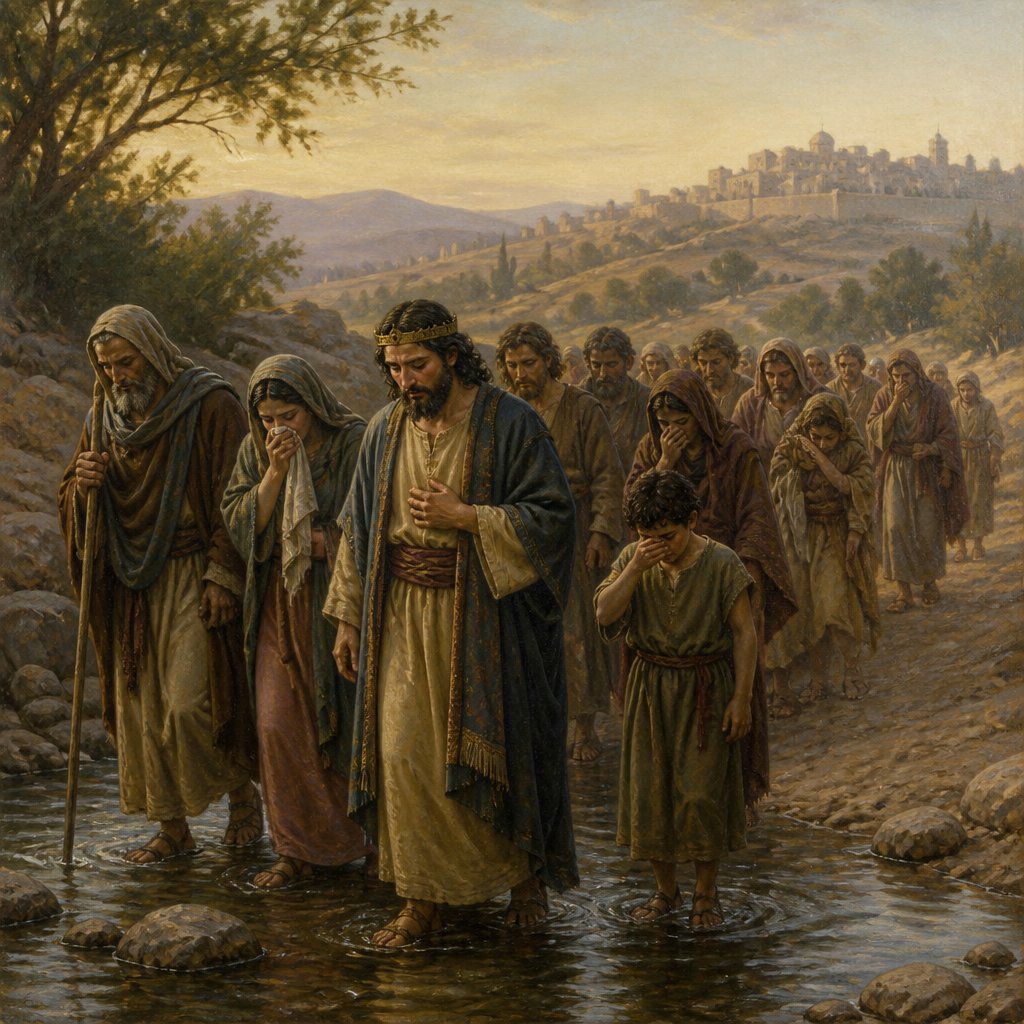
As we look at the somber scene depicted in 2 Samuel 15:23, where it is recorded, "And all the country wept with a loud voice, and all the people passed over: the king also himself passed over the brook Kidron, and all the people passed over, toward the way of the wilderness," we are drawn into a moment of profound loss and deep sorrow. This verse captures a pivotal moment in the life of King David, a man acquainted with both the heights of triumph and the depths of despair.
The context of this passage is critical. David is fleeing Jerusalem, not out of cowardice but rather as a result of his own son Absalom's rebellion. The sight of a king in exile, accompanied by weeping people, speaks volumes about the burden of leadership and the reality of human frailty. David, once the revered king, now walks in the shadows, filled with grief over losing his kingdom and, worse, his son. The brook Kidron, where he crossed, symbolizes the crossing from a place of comfort to uncertainty, a place where hope seems distant and despair looms larger.
In contemplating this passage, we find it essential to recognize our own wilderness passages in life. Each of us experiences times when we feel displaced, where our hopes are dashed, and the trials we face seem insurmountable. Like David, we may find ourselves in a place where those we care for are divided against us, where circumstances lead us into dark valleys. We weep, and the overwhelming sound of sorrow fills the air.
Yet, even in this moment of chaos, there are several profound reflections that can guide us. First, that David himself was not immune to the agony of loss and betrayal. As a leader, he reminds us that authenticity is a crucial aspect of our faith journey. We are not called to suppress our emotions or hide our wounds but rather to bring our grief before the Lord, knowing that He understands our pain. David’s crossing over the Kidron signifies humility, acceptance, and an unwillingness to cling onto earthly power that is fleeting. In our wilderness journeys, let us too acknowledge our limitations and seek God’s presence.
The act of weeping, as described in the verse, is not merely a sign of despair; it can also serve as a catharsis that leads to healing. In our moments of vulnerability, when we cry out in anguish, we open our hearts to God, allowing Him to work through our pain. This prepares us to transition from a place of mere survival to a place of restoration.
Crossing the brook Kidron also signifies a movement toward the wilderness, a landscape that, while harsh and unforgiving, can be a sacred space for growth and revelation. In the wilderness, the distractions of the kingdom fade, and we are left with our raw, unfiltered selves. God often meets us in these barren lands, as He did for His people throughout the Bible. This wilderness may be where we find His provision, His voice, and His intimate presence.
Furthermore, David’s example teaches us that even when we feel forsaken and abandoned, He is still our Shepherd, who leads us beside still waters and restores our souls (Psalm 23). As the people wept, remember, they were also moving—actively passing over toward another path. This movement toward the wilderness can represent our conscious decision to engage with our reality, to embrace change, and to trust that, while we traverse difficult landscapes, God has not forsaken us.
In conclusion, 2 Samuel 15:23 reflects a powerful yet painful moment in David's life. It invites us to recognize our own valley experiences, to weep, to reflect, and ultimately to hope. For it is often within the very wilderness we dread that God prepares us for a new beginning, one where our hearts are refined, and our faith is made stronger. May we not shy away from crossing our own 'Kidron' moments but boldly carry our burdens to Him who knows and cares deeply for us.
Want to reflect more on 2 Samuel 15:23?
Continue your spiritual journey with Bible Chat — an AI-powered tool for exploring God's Word through conversation. Ask questions, discover connections, and deepen your understanding.
Get Our Apps


2 Samuel 15:23 Artwork

2 Samuel 15:23 - "And all the country wept with a loud voice, and all the people passed over: the king also himself passed over the brook Kidron, and all the people passed over, toward the way of the wilderness."
"And all the country wept with a loud voice, and all the people passed over: the king also himself passed over the brook Kidron, and all the people passed over, toward the way of the wilderness." - 2 Samuel 15:23

2 Samuel 23:15 - "And David longed, and said, Oh that one would give me drink of the water of the well of Beth-lehem, which is by the gate!"

1 Samuel 23:15 - "And David saw that Saul was come out to seek his life: and David was in the wilderness of Ziph in a wood."

2 Samuel 23:38 - "Ira an Ithrite, Gareb an Ithrite,"

2 Samuel 23:28 - "Zalmon the Ahohite, Maharai the Netophathite,"

2 Samuel 23:35 - "Hezrai the Carmelite, Paarai the Arbite,"

2 Samuel 23:25 - "Shammah the Harodite, Elika the Harodite,"

2 Samuel 23:27 - "Abiezer the Anethothite, Mebunnai the Hushathite,"

2 Samuel 23:2 - "The Spirit of the LORD spake by me, and his word was in my tongue."

2 Samuel 23:31 - "Abi-albon the Arbathite, Azmaveth the Barhumite,"

2 Samuel 23:39 - "Uriah the Hittite: thirty and seven in all."

2 Samuel 23:30 - "Benaiah the Pirathonite, Hiddai of the brooks of Gaash,"

2 samuel 23:8-21

2 Samuel 23:32 - "Eliahba the Shaalbonite, of the sons of Jashen, Jonathan,"

2 Samuel 23:33 - "Shammah the Hararite, Ahiam the son of Sharar the Hararite,"

2 Samuel 23:14 - "And David was then in an hold, and the garrison of the Philistines was then in Beth-lehem."

2 Samuel 23:26 - "Helez the Paltite, Ira the son of Ikkesh the Tekoite,"

2 Samuel 23:36 - "Igal the son of Nathan of Zobah, Bani the Gadite,"

2 Samuel 23:23 - "He was more honourable than the thirty, but he attained not to the first three. And David set him over his guard."

2 Samuel 14:23 - "So Joab arose and went to Geshur, and brought Absalom to Jerusalem."

2 Samuel 23:37 - "Zelek the Ammonite, Naharai the Beerothite, armourbearer to Joab the son of Zeruiah,"

2 Samuel 5:15 - "Ibhar also, and Elishua, and Nepheg, and Japhia,"
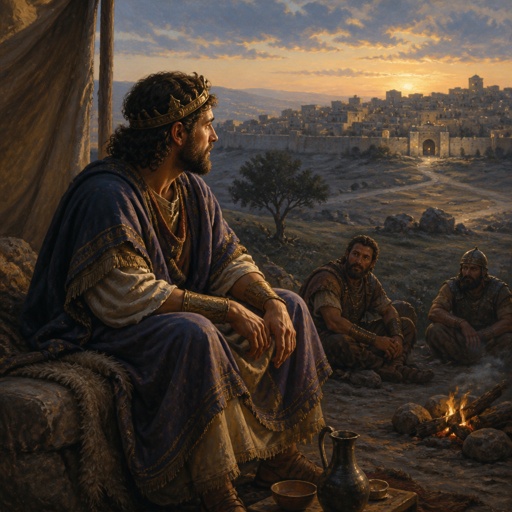
"And David longed, and said, Oh that one would give me drink of the water of the well of Beth-lehem, which is by the gate!" - 2 Samuel 23:15

2 Samuel 6:23 - "Therefore Michal the daughter of Saul had no child unto the day of her death."

2 Samuel 23:34 - "Eliphelet the son of Ahasbai, the son of the Maachathite, Eliam the son of Ahithophel the Gilonite,"

2 Samuel 23:24 - "Asahel the brother of Joab was one of the thirty; Elhanan the son of Dodo of Beth-lehem,"

1 Samuel 15:23 - "For rebellion is as the sin of witchcraft, and stubbornness is as iniquity and idolatry. Because thou hast rejected the word of the LORD, he hath also rejected thee from being king."

2 Samuel 23:12 - "But he stood in the midst of the ground, and defended it, and slew the Philistines: and the LORD wrought a great victory."

2 Samuel 23:29 - "Heleb the son of Baanah, a Netophathite, Ittai the son of Ribai out of Gibeah of the children of Benjamin,"