Loyalty Beyond Reward: A Reflection on 2 Samuel 18:12
"And the man said unto Joab, Though I should receive a thousand shekels of silver in mine hand, yet would I not put forth mine hand against the king’s son: for in our hearing the king charged thee and Abishai and Ittai, saying, Beware that none touch the young man Absalom." - 2 Samuel 18:12
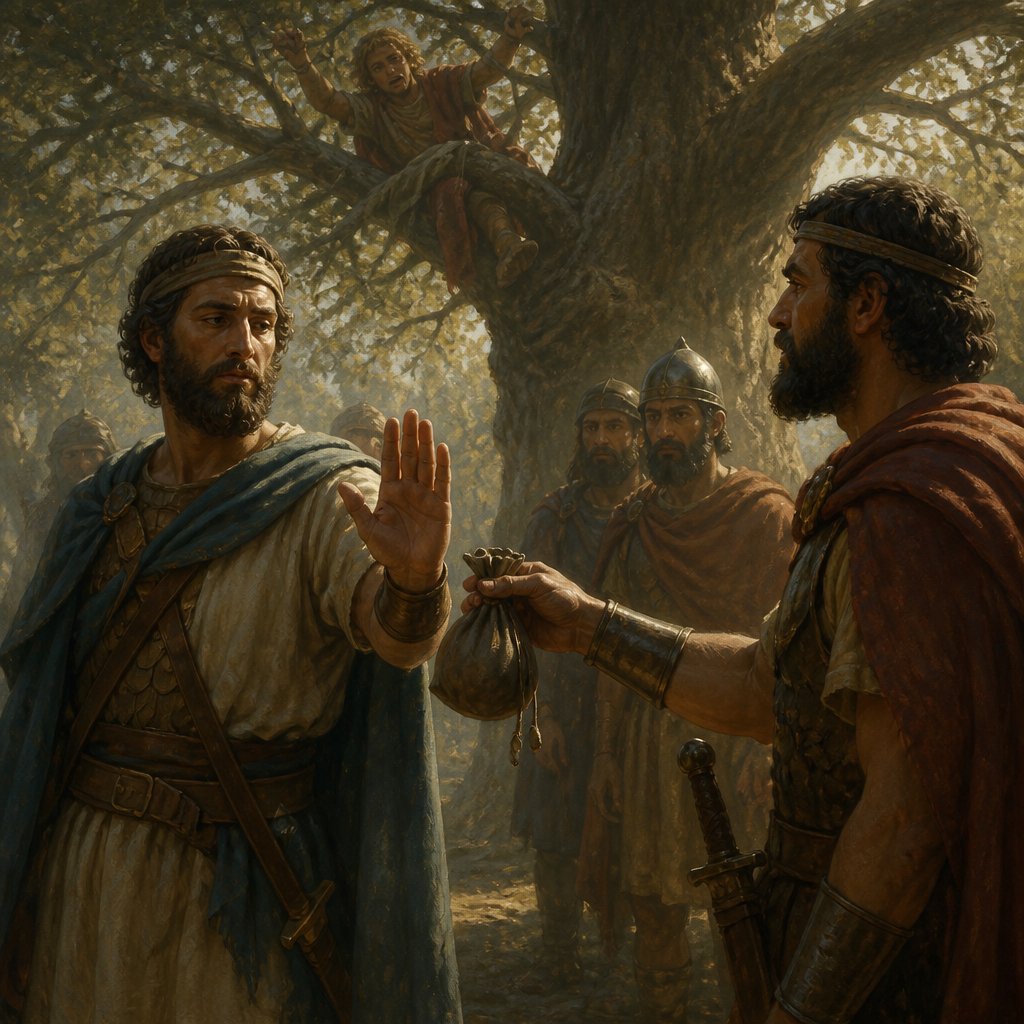
The bittersweet saga of Absalom and King David provides profound insights into the complexities of loyalty, authority, and the weight of personal conviction. In 2 Samuel 18:12, we are confronted with a striking declaration by a soldier who, despite the tempting offer of a thousand shekels of silver, unwaveringly refuses to harm Absalom, David's son: "And the man said unto Joab, Though I should receive a thousand shekels of silver in mine hand, yet would I not put forth mine hand against the king's son: for in our hearing the king charged thee and Abishai and Ittai, saying, Beware that none touch the young man Absalom." (KJV)
This verse illuminates profound themes of loyalty and obedience amidst personal peril and financial temptation. The soldier’s words echo loudly in the heart of every believer and challenge us to examine our own loyalties and the motives behind our actions. As we unpack the layers of meaning within this story, we can derive valuable lessons that resonate in our own lives.
The context of this passage is crucial. Absalom, the favored son of King David, had staged a coup against his father, leading to a conflict of loyalty within David's ranks. Joab, David’s commander, is tasked with the responsibility of ensuring the king’s enemies are neutralized. Yet, David's explicit instructions to spare Absalom paint a stark picture of a father's heart torn by familial love and the burdens of leadership. The soldier’s adherence to David’s command over financial gain reveals an unwavering dedication not only to the king but also to the principles of loyalty and honor.
His refusal to harm Absalom underscores a larger implication of loyalty that transcends monetary incentives. The soldier recognizes that a larger moral obligation exists—one rooted in respect for the king's direct wishes and a commitment to uphold divine order in a time of chaos. This moment serves as a powerful testament to the boundaries of loyalty: true loyalty is not blind obedience but a heartfelt commitment grounded in reverence for authority and ethically sound decisions.
In today's world, we find ourselves often at crossroads where our values are tested. Daily, we are presented with choices that challenge our integrity and the depth of our convictions. The soldier’s resolve highlights the importance of alignment with our beliefs even when external pressures mount. In moments when the wrong choice seems the easier path, we are called to reflect on who we are serving—the world or God’s kingdom.
Consider the weight of the soldier's decision: choosing not to harm Absalom could have dire consequences for him in the military context. Such moral stances often come with costs, and yet, this soldier prioritizes faithfulness to the king’s instruction over his own security and monetary gain. Reflecting on this, we must ask ourselves: Are we willing to stand firm for what is right, even at a personal cost? This question parallels the Christian walk, where believers are often called to stand against societal expectations in favor of spiritual convictions.
In our spiritual journey, the echo of King David’s charge— to not harm Absalom—resonates as a reminder of our responsibilities as part of a larger family. We are to bear one another’s burdens, protect the vulnerable, and extend mercy wherever possible. As we uphold our faith in our interactions—whether within families, communities, or workplaces—we honor God’s calling to love and preserve life, even those who may oppose us.
Ultimately, the soldier’s declaration before Joab is a call to each of us. It prompts reflection on our internal compass—where do we draw the line between loyalty to God and the allure of worldly rewards? May our hearts be warmed by their commitment to integrity, and may we, like this unnamed soldier, choose the path of righteousness, ever aware of our sovereign King’s heart.
Want to reflect more on 2 Samuel 18:12?
Continue your spiritual journey with Bible Chat — an AI-powered tool for exploring God's Word through conversation. Ask questions, discover connections, and deepen your understanding.
Get Our Apps


2 Samuel 18:12 Artwork
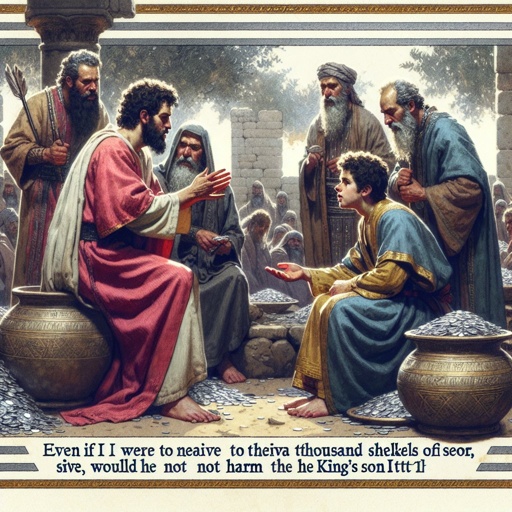
2 Samuel 18:12 - "And the man said unto Joab, Though I should receive a thousand shekels of silver in mine hand, yet would I not put forth mine hand against the king's son: for in our hearing the king charged thee and Abishai and Ittai, saying, Beware that none touch the young man Absalom."
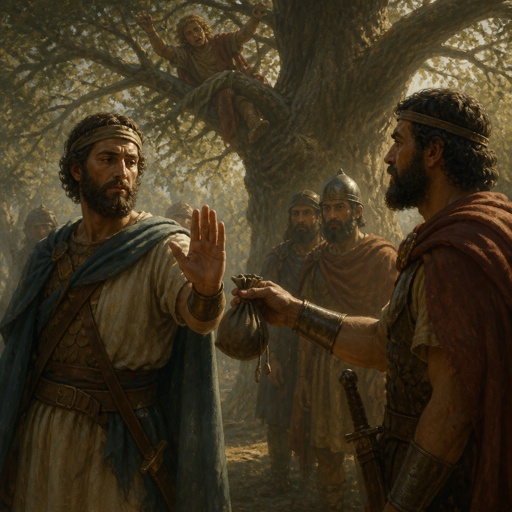
"And the man said unto Joab, Though I should receive a thousand shekels of silver in mine hand, yet would I not put forth mine hand against the king's son: for in our hearing the king charged thee and Abishai and Ittai, saying, Beware that none touch the young man Absalom." - 2 Samuel 18:12

1 Samuel 12:18 - "So Samuel called unto the LORD; and the LORD sent thunder and rain that day: and all the people greatly feared the LORD and Samuel."

1 Samuel 18:12 - "¶ And Saul was afraid of David, because the LORD was with him, and was departed from Saul."
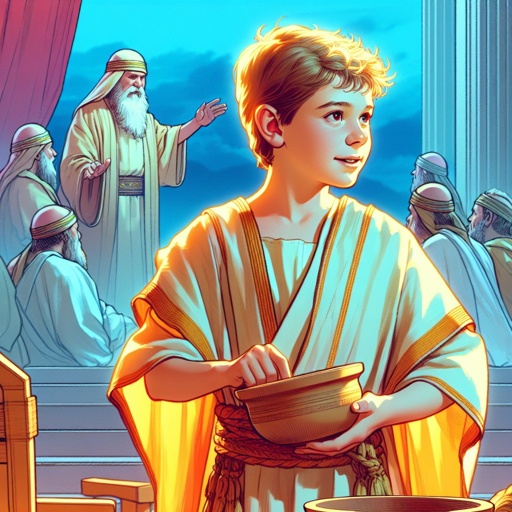
1 Samuel 2:18 - "¶ But Samuel ministered before the LORD, being a child, girded with a linen ephod."

2 Samuel 5:12

1 Samuel 2:12

2 Samuel 12:2 - "The rich man had exceeding many flocks and herds:"

2 Samuel 12:12 - "For thou didst it secretly: but I will do this thing before all Israel, and before the sun."

2 Samuel 5:18 - "The Philistines also came and spread themselves in the valley of Rephaim."

2 Samuel 2:18 - "¶ And there were three sons of Zeruiah there, Joab, and Abishai, and Asahel: and Asahel was as light of foot as a wild roe."

2 Samuel 11:18 - "¶ Then Joab sent and told David all the things concerning the war;"

2 Samuel 2:12 - "¶ And Abner the son of Ner, and the servants of Ish-bosheth the son of Saul, went out from Mahanaim to Gibeon."

2 Samuel 18:6 - "¶ So the people went out into the field against Israel: and the battle was in the wood of Ephraim;"
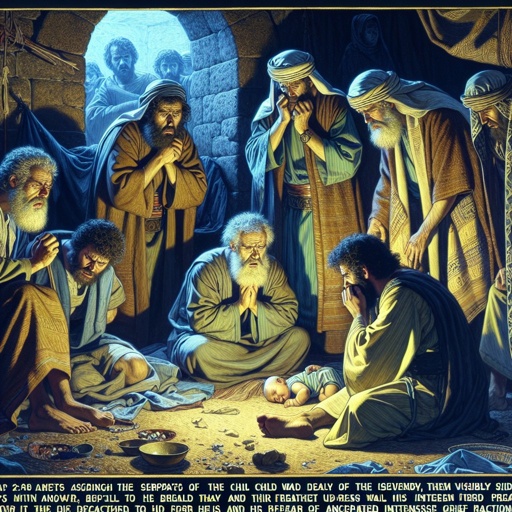
2 Samuel 12:18 - "And it came to pass on the seventh day, that the child died. And the servants of David feared to tell him that the child was dead: for they said, Behold, while the child was yet alive, we spake unto him, and he would not hearken unto our voice: how will he then vex himself, if we tell him that the child is dead?"

1 Samuel 2:12 - "¶ Now the sons of Eli were sons of Belial; they knew not the LORD."

"So Samuel called unto the LORD; and the LORD sent thunder and rain that day: and all the people greatly feared the LORD and Samuel." - 1 Samuel 12:18

1 Samuel 18:2 - "And Saul took him that day, and would let him go no more home to his father's house."

2 Samuel 12:26 - "And Joab fought against Rabbah of the children of Ammon, and took the royal city."

"¶ And Saul was afraid of David, because the LORD was with him, and was departed from Saul." - 1 Samuel 18:12

2 Samuel 18:10 - "And a certain man saw it, and told Joab, and said, Behold, I saw Absalom hanged in an oak."

2 Samuel 8:18 - "And Benaiah the son of Jehoiada was over both the Cherethites and the Pelethites; and David's sons were chief rulers."

2 Samuel 18:1 - "And David numbered the people that were with him, and set captains of thousands and captains of hundreds over them."

2 Samuel 18:15 - "And ten young men that bare Joab's armour compassed about and smote Absalom, and slew him."

2 Samuel 12:29 - "And David gathered all the people together, and went to Rabbah, and fought against it, and took it."

"¶ But Samuel ministered before the LORD, being a child, girded with a linen ephod." - 1 Samuel 2:18

2 Samuel 1:18 - "(Also he bade them teach the children of Judah the use of the bow: behold, it is written in the book of Jasher.)"

2 Samuel 18:30 - "And the king said unto him, Turn aside, and stand here. And he turned aside, and stood still."

2 Samuel 18:16 - "And Joab blew the trumpet, and the people returned from pursuing after Israel: for Joab held back the people."

2 Samuel 23:12 - "But he stood in the midst of the ground, and defended it, and slew the Philistines: and the LORD wrought a great victory."