Grace Amidst Guilt: A Reflection on 2 Samuel 19:19
"And said unto the king, Let not my lord impute iniquity unto me, neither do thou remember that which thy servant did perversely the day that my lord the king went out of Jerusalem, that the king should take it to his heart." - 2 Samuel 19:19
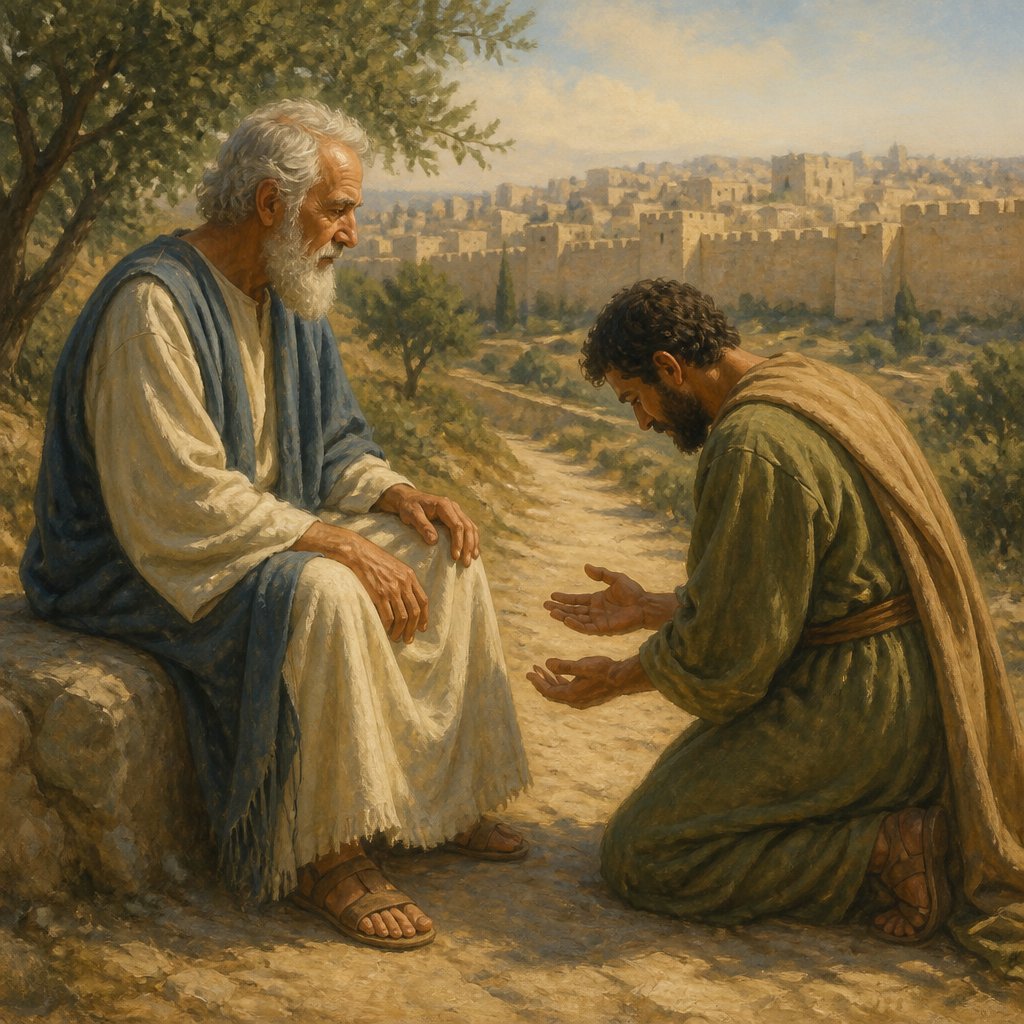
In 2 Samuel 19:19, we encounter a poignant moment of vulnerability and humility: "And said unto the king, Let not my lord impute iniquity unto me, neither do thou remember that which thy servant did perversely the day that my lord the king went out of Jerusalem, that the king should take it to his heart." This verse takes us into a deeply emotional interaction between a servant and King David during a time of turmoil in the kingdom. Considering the context surrounding this plea opens not only a window into the dynamics of power and mercy but also invites us to ponder our own lives in relation to forgiveness and grace.
The backdrop of this statement is significant. Absalom's rebellion had driven David from Jerusalem, and the kingdom was in chaos. Many who had once been loyal to David turned against him, including Shimei, who had cursed the king during his flight. However, despite the betrayal, the weight of David’s leadership pressed upon him, demands for justice swirling through the air. Upon his return, the environment was rife with tension, and the need for reconciliation was urgent.
It is amid this backdrop that we hear the words of a servant who recognizes his failings and boldly approaches the king with sincerity. His request is simple yet profound, as he calls upon David not to hold onto his past errors. This moment resonates with themes of guilt, forgiveness, and the human heart's propensity to seek reconciliation.
Interestingly, the servant in this story reflects the universal struggle with sin and failure that each person encounters. We too may find ourselves in moments when we have acted perversely, whether consciously or unconsciously. Often, we bear the heavy burden of iniquities, wondering whether we will be labeled by our mistakes. The fear of having our past continually held over our heads can paralyze us, making us reluctant to step into the light of grace.
David, as king, possesses the authority to judge and to forgive; his response to this plea illuminates his character. The acknowledgment of wrongdoing by the servant serves as a reminder that true humility entails recognizing our fault and turning towards grace. David ultimately displays a heart aligned with mercy, a potent reminder that leaders—and indeed all believers—should strive to embody compassion over condemnation.
Just as the servant sought David’s mercy, we stand before our Heavenly King with similar requests. Amidst our failures, we must remember to approach God with open hearts, admitting to our faults and seeking His forgiveness. Like the servant, our plea to God might echo, "Let not my Lord impute iniquity unto me…do not remember my missteps, do not hold my past against me.” The beautiful assurance we hold as believers is that through the work of Christ, our sins are indeed forgiven, and they are removed as far as the east is from the west (Psalm 103:12).
This verse also prompts us to consider our relationships with others: Are we quick to judge and remember the infractions against us? Or do we extend the same grace we have received? As we ruminate on our dealings, may we strive to refrain from casting stones, seeking to lift others out of their past, much like King David did.
In moments of weakness, when shame holds us back and guilt whispers in our ears, let us recall the example set by David, extending grace into our interactions and accepting mercy into our hearts. As the servant found favor in the eyes of his king, so we, through Christ, find favor in the sight of our God. Let us, therefore, take our hearts’ burdens to the foot of the cross, laying down every iniquity and embracing the freedom that comes from His unfathomable grace.
Want to reflect more on 2 Samuel 19:19?
Continue your spiritual journey with Bible Chat — an AI-powered tool for exploring God's Word through conversation. Ask questions, discover connections, and deepen your understanding.
Get Our Apps


2 Samuel 19:19 Artwork

2 Samuel 19:19 - "And said unto the king, Let not my lord impute iniquity unto me, neither do thou remember that which thy servant did perversely the day that my lord the king went out of Jerusalem, that the king should take it to his heart."
"And said unto the king, Let not my lord impute iniquity unto me, neither do thou remember that which thy servant did perversely the day that my lord the king went out of Jerusalem, that the king should take it to his heart." - 2 Samuel 19:19

2 Samuel 19:8

2 Samuel 19:8

2 Samuel 19:8

2 Samuel 19:8

2 Samuel 19:24

2 Samuel 19:1 - "And it was told Joab, Behold, the king weepeth and mourneth for Absalom."

2 Samuel 22:19 - "They prevented me in the day of my calamity: but the LORD was my stay."

2 Samuel 24:19 - "And David, according to the saying of Gad, went up as the LORD commanded."

1 Samuel 19:19 - "And it was told Saul, saying, Behold, David is at Naioth in Ramah."

2 Samuel 1:19 - "The beauty of Israel is slain upon thy high places: how are the mighty fallen!"

2 Samuel 2:19 - "And Asahel pursued after Abner; and in going he turned not to the right hand nor to the left from following Abner."

2 Samuel 19:2 - "And the victory that day was turned into mourning unto all the people: for the people heard say that day how the king was grieved for his son."

2 Samuel 19:23 - "Therefore the king said unto Shimei, Thou shalt not die. And the king sware unto him."

2 Samuel 11:19 - "And charged the messenger, saying, When thou hast made an end of telling the matters of the war unto the king,"

2 Samuel 23:19 - "Was he not most honourable of three? therefore he was their captain: howbeit he attained not unto the first three."

2 Samuel 17:19 - "And the woman took and spread a covering over the well's mouth, and spread ground corn thereon; and the thing was not known."

2 Samuel 19:33 - "And the king said unto Barzillai, Come thou over with me, and I will feed thee with me in Jerusalem."

2 Samuel 19:36 - "Thy servant will go a little way over Jordan with the king: and why should the king recompense it me with such a reward?"

2 Samuel 19:16 - "¶ And Shimei the son of Gera, a Benjamite, which was of Bahurim, hasted and came down with the men of Judah to meet king David."

2 Samuel 19:31 - "¶ And Barzillai the Gileadite came down from Rogelim, and went over Jordan with the king, to conduct him over Jordan."

2 Samuel 19:3 - "And the people gat them by stealth that day into the city, as people being ashamed steal away when they flee in battle."

2 Samuel 19:21 - "But Abishai the son of Zeruiah answered and said, Shall not Shimei be put to death for this, because he cursed the LORD'S anointed?"

2 Samuel 19:12 - "Ye are my brethren, ye are my bones and my flesh: wherefore then are ye the last to bring back the king?"

2 Samuel 19:15 - "So the king returned, and came to Jordan. And Judah came to Gilgal, to go to meet the king, to conduct the king over Jordan."

2 Samuel 19:40 - "Then the king went on to Gilgal, and Chimham went on with him: and all the people of Judah conducted the king, and also half the people of Israel."

2 Samuel 19:34 - "And Barzillai said unto the king, How long have I to live, that I should go up with the king unto Jerusalem?"

2 Samuel 19:25 - "And it came to pass, when he was come to Jerusalem to meet the king, that the king said unto him, Wherefore wentest not thou with me, Mephibosheth?"

2 Samuel 19:10 - "And Absalom, whom we anointed over us, is dead in battle. Now therefore why speak ye not a word of bringing the king back?"