The Grace of Acceptance: A Lesson from Mephibosheth
"And Mephibosheth said unto the king, Yea, let him take all, forasmuch as my lord the king is come again in peace unto his own house." - 2 Samuel 19:30
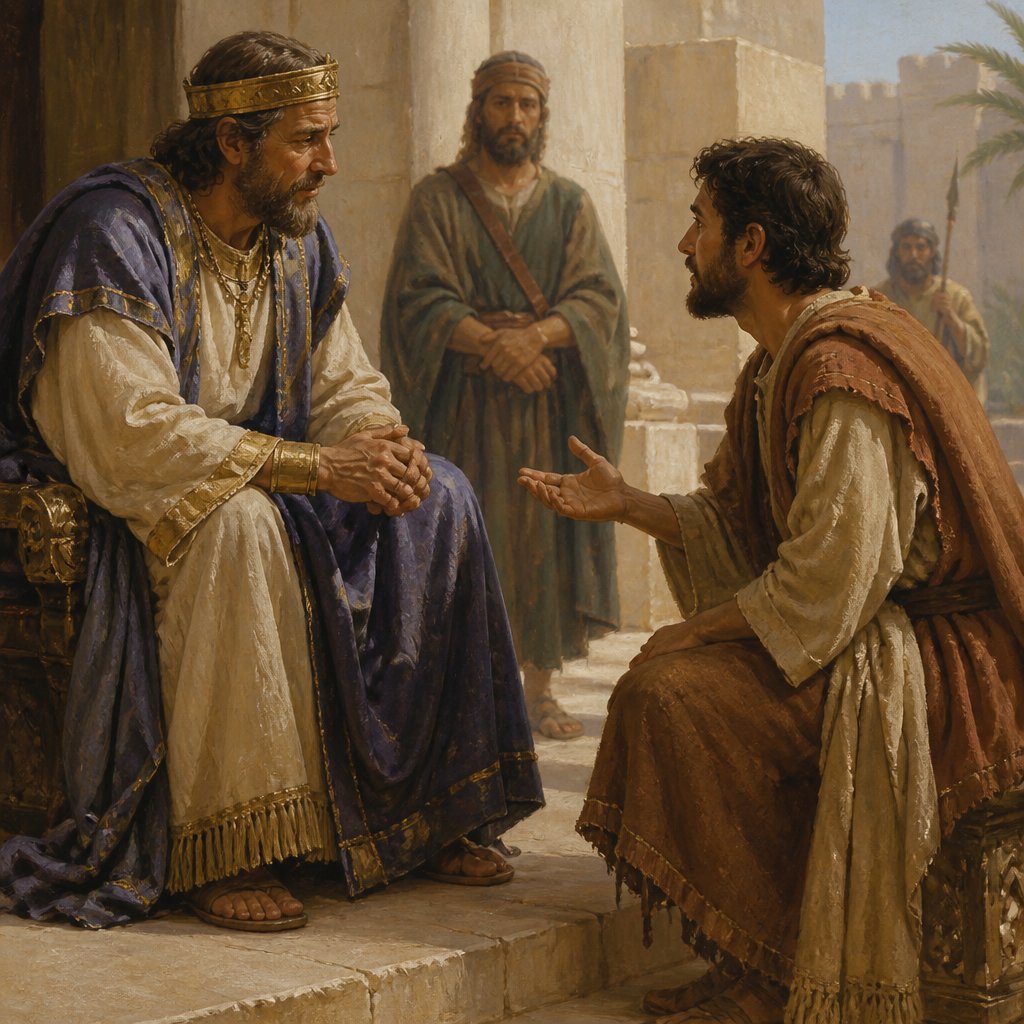
In the beautiful tapestry of the Biblical narrative, few characters shine as brightly in their humility and selflessness as Mephibosheth. His story, found in 2 Samuel, is more than just a tale of loyalty; it’s a profound lesson in grace, acceptance, and the values of a heart aligned with God’s will. The particular verse we shall reflect on is 2 Samuel 19:30: "And Mephibosheth said unto the king, Yea, let him take all, forasmuch as my lord the king is come again in peace unto his own house."
To fully grasp the significance of this verse, we must first understand Mephibosheth’s circumstances. He was the son of Jonathan, and at a young age, he became cripplingly dependent on others due to an accident that left him disabled. Despite his lineage, he lived in obscurity and isolation, a fallen prince who had every reason to resent his life given the circumstances. Yet, when David returned to rule after Absalom's rebellion, Mephibosheth demonstrated a heart of humility and gratitude, acknowledging the mercy of the king.
When David returned to his city, there was a flurry of reminders of past allegiances and conflicts. Mephibosheth, who had remained loyal to David even when it would have been easy to support the opposing side, stood before David with grace. He was given an opportunity to reclaim his lands and title, yet instead of boasting or demanding what was rightfully his, he displayed remarkable humility by saying, "let him take all."
In this simple statement, we see an embodiment of selflessness. Mephibosheth placed the joy of seeing David restored and his peace above his own personal gain. He understood that the true blessing was not in possessing wealth or status, but in the peace that comes from reconciliation and the presence of God’s servant—the king. Here lies a profound lesson for us: our own possessiveness can often distract us from praising God for His work in the lives of others.
David, who was perhaps waiting for Mephibosheth to rejoice in his restoration, was instead present with a man who recognized the overarching importance of God’s kingdom. David's kingship, after all, was about more than political power; it was about leadership based on God’s covenant.
When life takes us into valleys of despair, turmoil, or conflict—whether due to personal sin, the sins of others, or the inevitable struggles we face—do we echo Mephibosheth's sentiments? Do we seek peace, honor the work of God in our communities, and embrace the fullness of God's presence in those moments? It is difficult, but it is in those moments we are called to the most significant work—serving and glorifying our King.
This humility brings us to key reflections. Firstly, what does it mean for us to let go of the things we cling to, whether they be material possessions, pride, or even our status within our communities? Secondly, can we be generous in spirit, rejoicing in what God does for our neighbors and friends, rather than begrudging others’ successes? Our hearts should overflow with gratitude for God's grace operating in our lives and others.
Ultimately, Mephibosheth understood that his worth was not founded in his possessions or status as a prince, but in his relationship with King David, and by extension, the grace of God over his life. Similarly, we are called to invest in eternal matters: loving God and loving our neighbor. May we learn this lesson from Mephibosheth, embracing humility and focusing on the peace that comes from reconciliation, for that is the ultimate treasure we can possess.
As we meditate on this verse, let us invite God to search our hearts. Are there areas where we need to let go, acknowledge the sovereignty of God, and allow our lives to reflect His grace just as Mephibosheth did? With that, may we echo in our own lives: ‘Let it all go, for the King has come in peace again!’ And through this, we will find true joy and fulfillment.
Want to reflect more on 2 Samuel 19:30?
Continue your spiritual journey with Bible Chat — an AI-powered tool for exploring God's Word through conversation. Ask questions, discover connections, and deepen your understanding.
Get Our Apps


2 Samuel 19:30 Artwork

2 Samuel 19:30 - "And Mephibosheth said unto the king, Yea, let him take all, forasmuch as my lord the king is come again in peace unto his own house."
"And Mephibosheth said unto the king, Yea, let him take all, forasmuch as my lord the king is come again in peace unto his own house." - 2 Samuel 19:30

Philippians 2:19-30

2 Samuel 23:30 - "Benaiah the Pirathonite, Hiddai of the brooks of Gaash,"

2 Samuel 19:8

2 Samuel 19:8

2 Samuel 19:8

2 Samuel 19:8

2 Samuel 19:24

1 Samuel 30:19 - "And there was nothing lacking to them, neither small nor great, neither sons nor daughters, neither spoil, nor any thing that they had taken to them: David recovered all."

2 Samuel 19:1 - "And it was told Joab, Behold, the king weepeth and mourneth for Absalom."

2 Samuel 2:30 - "And Joab returned from following Abner: and when he had gathered all the people together, there lacked of David's servants nineteen men and Asahel."

"Benaiah the Pirathonite, Hiddai of the brooks of Gaash," - 2 Samuel 23:30

2 Samuel 18:30 - "And the king said unto him, Turn aside, and stand here. And he turned aside, and stood still."

2 Samuel 22:30 - "For by thee I have run through a troop: by my God have I leaped over a wall."

2 Samuel 22:19 - "They prevented me in the day of my calamity: but the LORD was my stay."

2 Samuel 24:19 - "And David, according to the saying of Gad, went up as the LORD commanded."

2 Kings 19:30 - "And the remnant that is escaped of the house of Judah shall yet again take root downward, and bear fruit upward."

2 Samuel 3:30 - "So Joab and Abishai his brother slew Abner, because he had slain their brother Asahel at Gibeon in the battle."

2 Samuel 2:19 - "And Asahel pursued after Abner; and in going he turned not to the right hand nor to the left from following Abner."

1 Samuel 30:2 - "And had taken the women captives, that were therein: they slew not any, either great or small, but carried them away, and went on their way."

2 Samuel 1:19 - "The beauty of Israel is slain upon thy high places: how are the mighty fallen!"

2 Chronicles 30:19 - "That prepareth his heart to seek God, the LORD God of his fathers, though he be not cleansed according to the purification of the sanctuary."

2 Samuel 19:2 - "And the victory that day was turned into mourning unto all the people: for the people heard say that day how the king was grieved for his son."

2 Samuel 13:30 - "¶ And it came to pass, while they were in the way, that tidings came to David, saying, Absalom hath slain all the king's sons, and there is not one of them left."

2 Samuel 19:23 - "Therefore the king said unto Shimei, Thou shalt not die. And the king sware unto him."

2 Samuel 11:19 - "And charged the messenger, saying, When thou hast made an end of telling the matters of the war unto the king,"

2 Samuel 23:19 - "Was he not most honourable of three? therefore he was their captain: howbeit he attained not unto the first three."

2 Samuel 17:19 - "And the woman took and spread a covering over the well's mouth, and spread ground corn thereon; and the thing was not known."

2 Samuel 19:33 - "And the king said unto Barzillai, Come thou over with me, and I will feed thee with me in Jerusalem."