Unity in Christ Amidst Division
"And the men of Israel answered the men of Judah, and said, We have ten parts in the king, and we have also more right in David than ye: why then did ye despise us, that our advice should not be first had in bringing back our king? And the words of the men of Judah were fiercer than the words of the men of Israel." - 2 Samuel 19:43
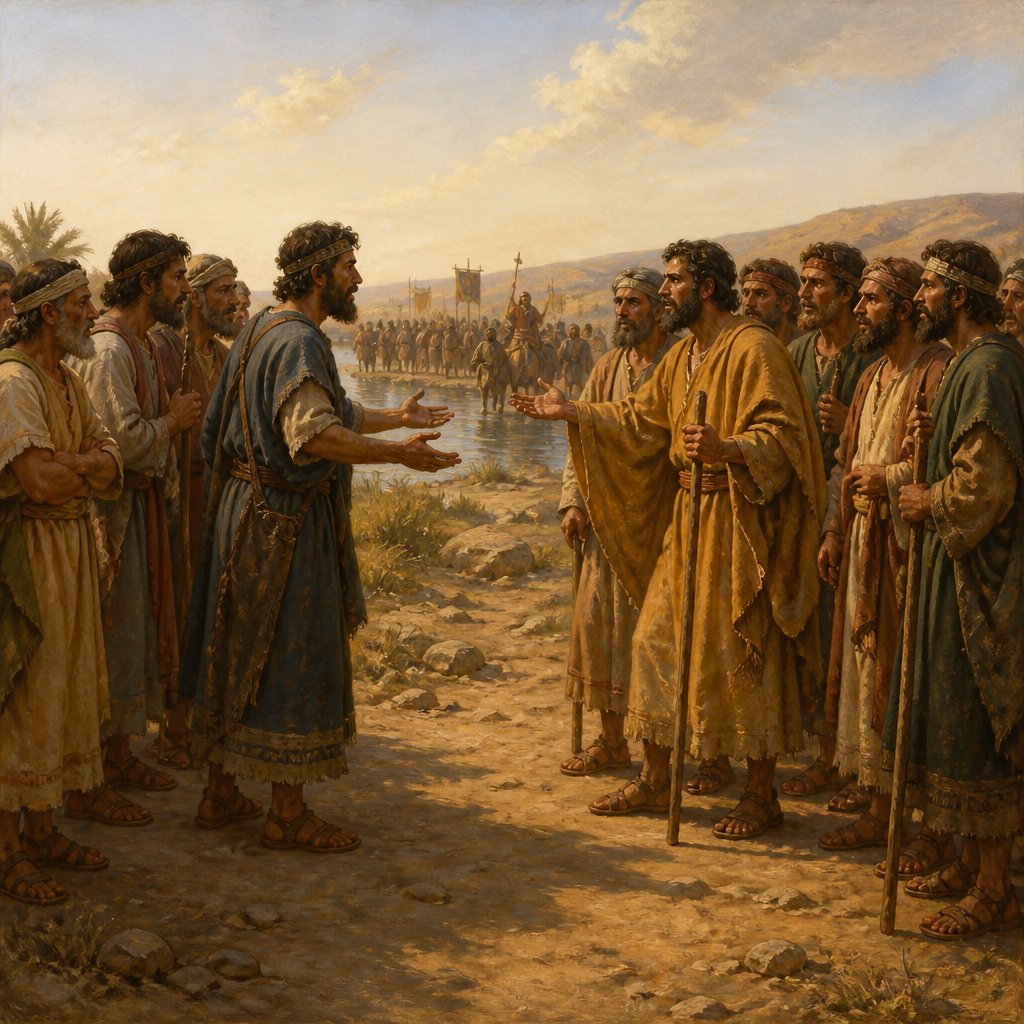
In the tapestry of human relationships, conflict often colors the threads of our interactions. This truth is poignantly illustrated in 2 Samuel 19:43, where we observe a clash between the men of Israel and the men of Judah: "And the men of Israel answered the men of Judah, and said, We have ten parts in the king, and we have also more right in David than ye: why then did ye despise us, that our advice should not be first had in bringing back our king? And the words of the men of Judah were fiercer than the words of the men of Israel."
The backdrop of this verse depicts a turbulent moment in the reign of King David, a time when the kingdom was poised between the throes of division and the yearning for unity. David, having returned from his exile after Absalom’s rebellion, found himself faced with the delicate task of reconciling not only his own family but also the tribes of Israel. The tensions between Israel and Judah encapsulate a broader theme that resonates within our own lives as we navigate relationships, communities, and even our churches.
At the heart of the conflict is the claim made by Israel: their belief that they had a greater stake in King David because they constituted a larger part of the nation—ten tribes compared to Judah’s singular voice. This fragmentation highlights a familiar battle of ego and entitlement that we all encounter. Just like the men of Israel felt disregarded, many of us have experienced moments where we felt overlooked, our opinions dismissed, or our contributions undervalued. The root of this discontent lies in a fundamental desire for recognition and esteem.
In our own context, how often do we look at the church or community and think, much like the men of Israel, that we deserve more acknowledgment or influence? This inner struggle can lead to division and discord that mirror what we see in the passage. In our quest for validation, we risk shattering the delicate fabric of unity that is so crucial to our collective journey of faith. The ensuing exchange of words between the tribes serves as a cautionary tale: when pride and self-importance simmer, it breeds contempt and fierce conversations that lead further away from the unity for which Christ prayed in John 17.
Moreover, the fierceness of the exchange underscores our human tendency to react defensively when we feel slighted. The passage reminds us to examine our hearts in the face of disagreements—what motivates our responses? Do we seek reconciliation or do we allow anger to escalate our feelings of discontent? It is essential to approach conflict with humility and a willingness to listen, embodying the virtues of gentleness and patience that are characterized in Ephesians 4:2-3, where Paul counsels us to "with all lowliness and meekness, with longsuffering, forbearing one another in love; endeavoring to keep the unity of the Spirit in the bond of peace."
In bringing this lesson home, we must ask ourselves if we occasionally elevate our own desires or ideas above the collective good of the church, or within our families and communities. Yet, our identity is not found in how much of the ‘king’ we possess, but in our position as members of one body, under Christ our King. When Christ returns to us, His body, the church must come together in unity, rather than allowing petty grievances to divide us. His grace is sufficient for our differences, and His love compels us towards forgiveness and understanding.
Take time today to reflect on areas where you might feel a sense of division or discord. Reach out in love to mend relationships, to listen more, and to speak less. Consider praying for a heart that seeks unity over personal validation. After all, we are all partakers in one kingdom, and together we can reflect the glorious image of Christ—a King who reigns in love, compassion, and everlasting grace.
Want to reflect more on 2 Samuel 19:43?
Continue your spiritual journey with Bible Chat — an AI-powered tool for exploring God's Word through conversation. Ask questions, discover connections, and deepen your understanding.
Get Our Apps


2 Samuel 19:43 Artwork

2 Samuel 19:43 - "And the men of Israel answered the men of Judah, and said, We have ten parts in the king, and we have also more right in David than ye: why then did ye despise us, that our advice should not be first had in bringing back our king? And the words of the men of Judah were fiercer than the words of the men of Israel."
"And the men of Israel answered the men of Judah, and said, We have ten parts in the king, and we have also more right in David than ye: why then did ye despise us, that our advice should not be first had in bringing back our king? And the words of the men of Judah were fiercer than the words of the men of Israel." - 2 Samuel 19:43

2 Samuel 19:8

Isaiah 43:19

2 Samuel 22:43 - "Then did I beat them as small as the dust of the earth, I did stamp them as the mire of the street, and did spread them abroad."

Isaiah 43:19

2 Samuel 19:8

2 Samuel 19:8

2 Samuel 19:8

2 Samuel 19:24

Joshua 19:43 - "And Elon, and Thimnathah, and Ekron,"

Isaiah 43:18-19

Isaiah 43:18-19

2 Samuel 19:1 - "And it was told Joab, Behold, the king weepeth and mourneth for Absalom."

2 Samuel 22:19 - "They prevented me in the day of my calamity: but the LORD was my stay."

2 Samuel 24:19 - "And David, according to the saying of Gad, went up as the LORD commanded."

"And Elon, and Thimnathah, and Ekron," - Joshua 19:43

2 Samuel 2:19 - "And Asahel pursued after Abner; and in going he turned not to the right hand nor to the left from following Abner."

2 Samuel 1:19 - "The beauty of Israel is slain upon thy high places: how are the mighty fallen!"

Genesis 43:19 - "And they came near to the steward of Joseph's house, and they communed with him at the door of the house,"

2 Samuel 19:2 - "And the victory that day was turned into mourning unto all the people: for the people heard say that day how the king was grieved for his son."

2 Samuel 19:23 - "Therefore the king said unto Shimei, Thou shalt not die. And the king sware unto him."

1 Samuel 25:43 - "David also took Ahinoam of Jezreel; and they were also both of them his wives."

2 Samuel 11:19 - "And charged the messenger, saying, When thou hast made an end of telling the matters of the war unto the king,"

2 Samuel 23:19 - "Was he not most honourable of three? therefore he was their captain: howbeit he attained not unto the first three."

2 Samuel 17:19 - "And the woman took and spread a covering over the well's mouth, and spread ground corn thereon; and the thing was not known."

2 Samuel 19:33 - "And the king said unto Barzillai, Come thou over with me, and I will feed thee with me in Jerusalem."

2 Samuel 19:36 - "Thy servant will go a little way over Jordan with the king: and why should the king recompense it me with such a reward?"

2 Samuel 19:16 - "¶ And Shimei the son of Gera, a Benjamite, which was of Bahurim, hasted and came down with the men of Judah to meet king David."

2 Samuel 19:21 - "But Abishai the son of Zeruiah answered and said, Shall not Shimei be put to death for this, because he cursed the LORD'S anointed?"