Restoring Covenant in the Face of Wrongs
"And the Gibeonites said unto him, We will have no silver nor gold of Saul, nor of his house; neither for us shalt thou kill any man in Israel. And he said, What ye shall say, that will I do for you." - 2 Samuel 21:4
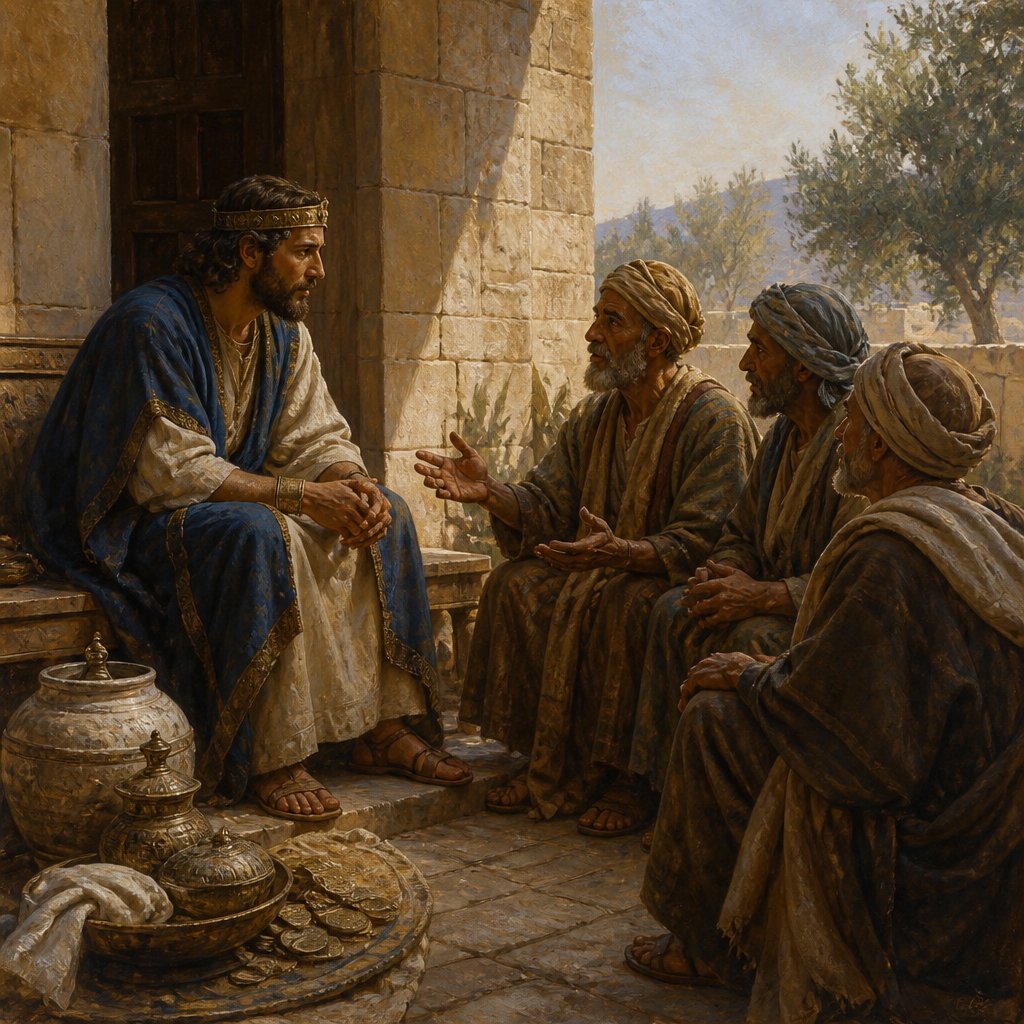
The narrative of 2 Samuel 21:4 is a poignant reminder of the consequences of broken covenants and the importance of seeking reconciliation. The verse states: "And the Gibeonites said unto him, We will have no silver nor gold of Saul, nor of his house; neither for us shalt thou kill any man in Israel. And he said, What ye shall say, that will I do for you."
Let's explore the context of this verse. The Gibeonites were a group of people who had made a covenant with Israel during the time of Joshua (Joshua 9), a covenant that had been respected for many years. However, after Saul became king, he sought to destroy the Gibeonites in what can be seen as an act of zeal for his own people. This breach of covenant was not just a political error; it carried deep spiritual ramifications.
David's reign had begun, and a famine struck the land for three years because of this covenantal violation. In seeking to rectify the situation, David approached the Gibeonites to understand how to remedy this sin against them. Their response, as recorded in the verse, highlights a critical element of our relationship with God and others: the importance of addressing wrongdoings without succumbing to the temptation of materialism or vengeance but seeking restoration instead.
The Gibeonites' refusal of silver and gold is profound. In our modern context, we often believe that compensation can rectify any wrong. However, the Gibeonites understood that what was taken from them was not a trivial loss that could be compensated with money; it was their lives, their dignity, and their safety. This reflects a vital lesson for us today: not all wounds can be healed with material provisions. Some offenses require a deeper act of repentance and restoration.
David's willingness to listen and respond with "What ye shall say, that will I do for you" shows the heart of a leader who acknowledges past failures and is committed to making things right. It emphasizes the importance of humility in leadership. Confession and repentance should not only come from the offender but also from those in positions of authority who have the power to influence outcomes. David took responsibility, and this is essential for reconciliation.
As believers, we are called to examine our actions, especially when we hold positions of authority in our families, workplaces, or churches. We must consider how our decisions affect others, particularly the most vulnerable. We are urged to seek understanding before acting, listening to the grievances of those affected by our decisions, and ensuring their voices are heard. God desires a people who do not merely uphold their rights but also deeply empathize with the suffering of others.
Furthermore, this incident invites us to reflect on the covenants we uphold in our own lives. Have we made promises to God or to others that we have failed to keep? How can we restore broken relationships, whether with family, friends, or even our communities? The story of David and the Gibeonites encourages us to take action, to listen, and to address injustices proactively.
In conclusion, the biblical narrative in 2 Samuel 21:4 teaches us that reconciliation is a divine imperative. It requires humility to admit wrongs, the courage to seek forgiveness, and a commitment to restore relationships genuinely. May we embody the spirit of the Gibeonites and David—a spirit not consumed by material gain or vengeance but one that seeks righteousness and writing wrongs. Let us be stewards of our relationships, valuing integrity, and pursuing peace as we walk with God on our spiritual journey.
Want to reflect more on 2 Samuel 21:4?
Continue your spiritual journey with Bible Chat — an AI-powered tool for exploring God's Word through conversation. Ask questions, discover connections, and deepen your understanding.
Get Our Apps


2 Samuel 21:4 Artwork
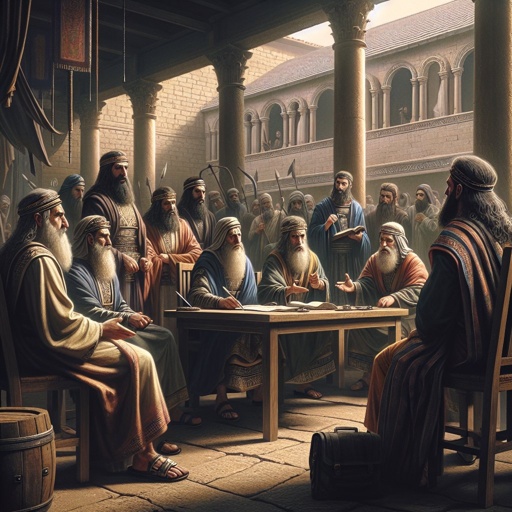
2 Samuel 21:4 - "And the Gibeonites said unto him, We will have no silver nor gold of Saul, nor of his house; neither for us shalt thou kill any man in Israel. And he said, What ye shall say, that will I do for you."
"And the Gibeonites said unto him, We will have no silver nor gold of Saul, nor of his house; neither for us shalt thou kill any man in Israel. And he said, What ye shall say, that will I do for you." - 2 Samuel 21:4

2 Samuel 21:21 - "And when he defied Israel, Jonathan the son of Shimea the brother of David slew him."

2 samuel 23:8-21

2 Samuel 5:21 - "And there they left their images, and David and his men burned them."

1 Samuel 2:21 - "And the LORD visited Hannah, so that she conceived, and bare three sons and two daughters. And the child Samuel grew before the LORD."

2 Samuel 10:4

2 Samuel 10:4

2 Samuel 21:11 - "And it was told David what Rizpah the daughter of Aiah, the concubine of Saul, had done."

2 Samuel 13:21 - "¶ But when king David heard of all these things, he was very wroth."

2 Samuel 21:22 - "These four were born to the giant in Gath, and fell by the hand of David, and by the hand of his servants."

1 Samuel 21:4 - "And the priest answered David, and said, There is no common bread under mine hand, but there is hallowed bread; if the young men have kept themselves at least from women."

2 Samuel 4:3 - "And the Beerothites fled to Gittaim, and were sojourners there until this day.)"

1 Samuel 2:4 - "The bows of the mighty men are broken, and they that stumbled are girded with strength."

2 Samuel 17:4 - "And the saying pleased Absalom well, and all the elders of Israel."

1 Samuel 4:21 - "And she named the child I-chabod, saying, The glory is departed from Israel: because the ark of God was taken, and because of her father in law and her husband."

2 Samuel 22:21 - "The LORD rewarded me according to my righteousness: according to the cleanness of my hands hath he recompensed me."

2 Samuel 19:21 - "But Abishai the son of Zeruiah answered and said, Shall not Shimei be put to death for this, because he cursed the LORD'S anointed?"

2 Samuel 21:18 - "And it came to pass after this, that there was again a battle with the Philistines at Gob: then Sibbechai the Hushathite slew Saph, which was of the sons of the giant."

2 Samuel 3:4 - "And the fourth, Adonijah the son of Haggith; and the fifth, Shephatiah the son of Abital;"

2 Samuel 21:13 - "And he brought up from thence the bones of Saul and the bones of Jonathan his son; and they gathered the bones of them that were hanged."

2 Samuel 21:7 - "But the king spared Mephibosheth, the son of Jonathan the son of Saul, because of the LORD'S oath that was between them, between David and Jonathan the son of Saul."

2 Chronicles 4:21 - "And the flowers, and the lamps, and the tongs, made he of gold, and that perfect gold;"

2 Samuel 7:4 - "¶ And it came to pass that night, that the word of the LORD came unto Nathan, saying,"

2 Samuel 21:5 - "And they answered the king, The man that consumed us, and that devised against us that we should be destroyed from remaining in any of the coasts of Israel,"

2 Samuel 18:21 - "Then said Joab to Cushi, Go tell the king what thou hast seen. And Cushi bowed himself unto Joab, and ran."

"And when he defied Israel, Jonathan the son of Shimea the brother of David slew him." - 2 Samuel 21:21

2 Samuel 14:21 - "¶ And the king said unto Joab, Behold now, I have done this thing: go therefore, bring the young man Absalom again."

2 Samuel 1:2-4 David is shocked the man is scared image in color

2 Samuel 2:4 - "And the men of Judah came, and there they anointed David king over the house of Judah. And they told David, saying, That the men of Jabesh-gilead were they that buried Saul."