Altar of Restoration: The Power of Sacrifice and Thanksgiving
“And David built there an altar unto the LORD, and offered burnt offerings and peace offerings. So the LORD was intreated for the land, and the plague was stayed from Israel.” — 2 Samuel 24:25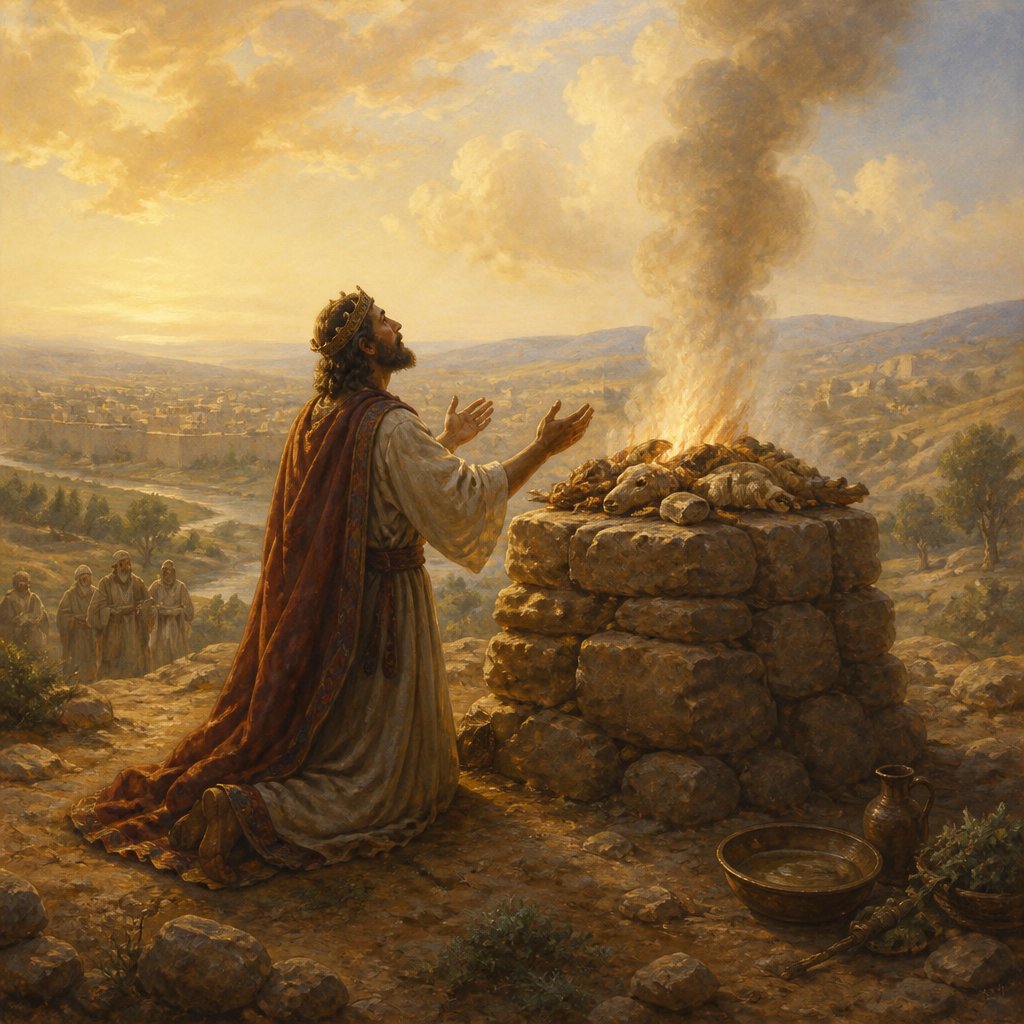
In 2 Samuel 24:25, we find a profound moment in the life of King David, marked by an act of worship that not only displayed his heart for God but also held the power to change the course of his nation’s destiny. The verse reads: "And David built there an altar unto the LORD, and offered burnt offerings and peace offerings. So the LORD was intreated for the land, and the plague was stayed from Israel." Through this single act, David offers us a glimpse into the foundational principles of worship, repentance, and divine mercy.
In this context, David has just experienced the consequences of his actions. He had taken a census of the people, an act that, despite appearing neutral or even necessary, reflected his reliance on human strength rather than God's provision and protection. Following this sin, God sent a plague upon Israel, which resulted in devastation. In the face of impending death and destruction, David was faced with an urgent need for reconciliation and restoration.
The first significant action in this narrative is David’s decision to build an altar. In ancient Israel, altars were a common site of worship and sacrifice, serving as the bridge between the divine and the human. An altar signifies recognition of God’s holiness and our need for atonement. By building an altar, David not only recognized his failure but also the character of God—a God who longs for His people to return to Him with genuine repentance. David's act symbolizes the need for a spiritual foundation where sin can be confronted, forgiveness sought, and restoration initiated.
David offers a dual sacrifice: burnt offerings and peace offerings. The burnt offering signified total devotion and surrender, as the entire animal was consumed in the fire, symbolizing the worshiper giving themselves wholly to God. This act of surrender represents the heart’s cry that says, "I am Yours, O Lord!" It reflects an understanding that despite our sinfulness, we can always come before God with our whole selves.
The peace offering, on the other hand, symbolizes fellowship and gratitude. It was a way of celebrating the relationship between God and His people, understanding that peace comes through reconciliation. David was effectively saying to God, “I acknowledge my shortcomings, and I celebrate the restored harmony between us.” In this, we see that worship is not only about sin and repentance but also about thanksgiving and communion.
As David sought the Lord with his offerings, the outcome was immediate—the plague was stayed, and mercy flowed from Heaven to Earth. This teaches us a crucial lesson about the authority of divine intercession through worship. When we come before the Lord with a genuine heart, aligned with His will, our offerings can alter circumstances, just as they did for David and Israel.
Moreover, this verse invites the believer to reflect on the present implications of David’s act. We are called to build altars in our lives—places of prayer, worship, and sacrifice. These altars need not be physical structures; they can be found in our daily acts of worship, in the authenticity of our prayers, and in our expressions of gratitude.
As we offer ourselves as living sacrifices (Romans 12:1), we remind ourselves that true worship is holistic—it requires our entire being. The Almighty desires not only our actions but also our hearts, where genuine repentance and thanksgiving dwell. In moments of crisis, when the plagues of anxiety, fear, or hopelessness abound, approach the altar of your heart and present your offerings before the Lord.
In conclusion, 2 Samuel 24:25 serves as a powerful testament of restoration through worship. David’s actions highlight the importance of elevated responses to God amidst challenging times. May we always remember that the altar is open, and it is at this altar that true peace and restoration can be found. Let us approach in humility, offering our lives as a sweet-smelling sacrifice unto the Lord.
Get our apps


Artwork for 2 Samuel 24:25

2 Samuel 24:25 - "And David built there an altar unto the LORD, and offered burnt offerings and peace offerings. So the LORD was intreated for the land, and the plague was stayed from Israel."
"And David built there an altar unto the LORD, and offered burnt offerings and peace offerings. So the LORD was intreated for the land, and the plague was stayed from Israel." - 2 Samuel 24:25

2 Samuel 24:22

2 Samuel 24:22

2 Samuel 24:22

2 Samuel 19:24

2 Samuel 23:25 - "Shammah the Harodite, Elika the Harodite,"

2 Samuel 20:25 - "And Sheva was scribe: and Zadok and Abiathar were the priests:"

2 Samuel 20:24 - "And Adoram was over the tribute: and Jehoshaphat the son of Ahilud was recorder:"

2 Samuel 2:25 - "¶ And the children of Benjamin gathered themselves together after Abner, and became one troop, and stood on the top of an hill."

2 Samuel 24:19 - "And David, according to the saying of Gad, went up as the LORD commanded."

"Shammah the Harodite, Elika the Harodite," - 2 Samuel 23:25

2 Samuel 24:6 - "Then they came to Gilead, and to the land of Tahtim-hodshi; and they came to Dan-jaan, and about to Zidon,"

2 Samuel 23:24 - "Asahel the brother of Joab was one of the thirty; Elhanan the son of Dodo of Beth-lehem,"

1 Samuel 25:24 - "And fell at his feet, and said, Upon me, my lord, upon me let this iniquity be: and let thine handmaid, I pray thee, speak in thine audience, and hear the words of thine handmaid."

2 Samuel 12:25 - "And he sent by the hand of Nathan the prophet; and he called his name Jedidiah, because of the LORD."

2 Samuel 22:24 - "I was also upright before him, and have kept myself from mine iniquity."

2 Samuel 1:25 - "How are the mighty fallen in the midst of the battle! O Jonathan, thou wast slain in thine high places."

2 Samuel 17:24 - "Then David came to Mahanaim. And Absalom passed over Jordan, he and all the men of Israel with him."

1 Samuel 2:24 - "Nay, my sons; for it is no good report that I hear: ye make the LORD'S people to transgress."

2 Samuel 22:25 - "Therefore the LORD hath recompensed me according to my righteousness; according to my cleanness in his eye sight."

2 Samuel 24:11 - "For when David was up in the morning, the word of the LORD came unto the prophet Gad, David's seer, saying,"

2 Samuel 5:25 - "And David did so, as the LORD had commanded him; and smote the Philistines from Geba until thou come to Gazer."

2 Samuel 24:5 - "¶ And they passed over Jordan, and pitched in Aroer, on the right side of the city that lieth in the midst of the river of Gad, and toward Jazer:"

2 Samuel 24:8 - "So when they had gone through all the land, they came to Jerusalem at the end of nine months and twenty days."

"And Sheva was scribe: and Zadok and Abiathar were the priests:" - 2 Samuel 20:25

2 Samuel 2:24 - "Joab also and Abishai pursued after Abner: and the sun went down when they were come to the hill of Ammah, that lieth before Giah by the way of the wilderness of Gibeon."

2 Samuel 18:25 - "And the watchman cried, and told the king. And the king said, If he be alone, there is tidings in his mouth. And he came apace, and drew near."

2 Samuel 24:7 - "And came to the strong hold of Tyre, and to all the cities of the Hivites, and of the Canaanites: and they went out to the south of Judah, even to Beer-sheba."

2 Kings 25:24 - "And Gedaliah sware to them, and to their men, and said unto them, Fear not to be the servants of the Chaldees: dwell in the land, and serve the king of Babylon; and it shall be well with you."