The Power of a Word: Unity in the Midst of Conflict
“And Joab said, As God liveth, unless thou hadst spoken, surely then in the morning the people had gone up every one from following his brother.” — 2 Samuel 2:27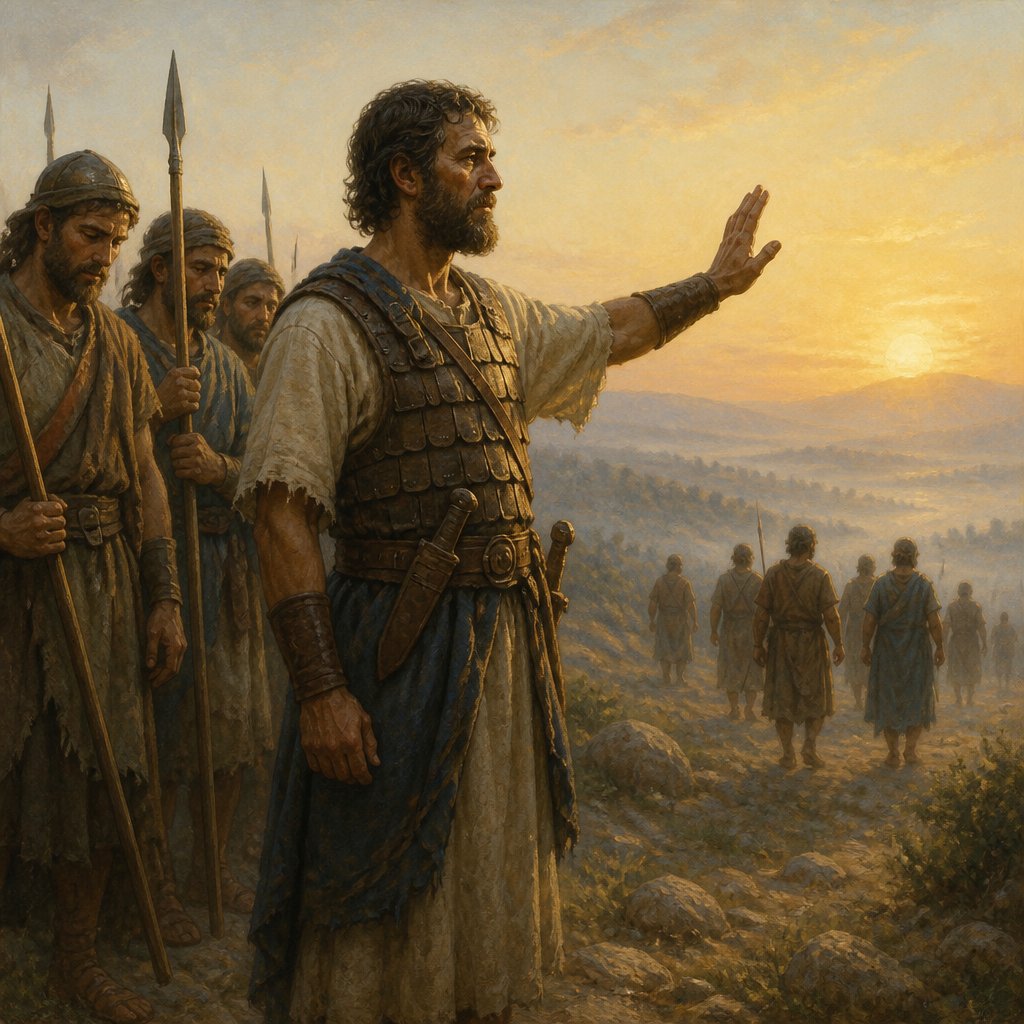
In the annals of biblical history, the intricate relationships and dynamics within the lives of God’s chosen people provide profound insights not just into their struggles, but also into the grace and providence of God. One pivotal moment occurs in 2 Samuel 2, where we find Joab, the commander of David’s army, addressing a situation fraught with tension and potential discord. The verse reads: "And Joab said, As God liveth, unless thou hadst spoken, surely then in the morning the people had gone up every one from following his brother" (2 Samuel 2:27, KJV).
In this context, Joab recognizes the immediate risk of fragmentation among the tribes of Israel following the death of Saul. As was customary, the natural inclination of the people was to follow their own kin, leading to a division in fidelity and loyalty. Joab’s response underscores a critical principle: the significant influence of our words, particularly in times of conflict.
Words possess a remarkable power. They can ignite hope, incite passion, or, conversely, they can bruise and destroy. In this moment, Joab highlights the consequences of silence, suggesting that were it not for the timely interjection of a word—a command or a reminder of unity—the tribes would have fallen into disarray at dawn. The dawn represents a new beginning, but in this case, it could have signified a new chapter of division and animosity.
Joab’s statement reflects a keen understanding of human nature and the communal bond that flourishes through connection. His emphasis on “As God liveth” invokes the solemnity and weight of divine authority on the situation. It’s as if Joab is saying, "I believe godly counsel has intervened to prevent chaos through this word you have spoken." How often do we underestimate the potency of our words? In moments of discord, our speech can either soothe frayed tempers or escalate bitterness. The need for wise communication is a timeless lesson that resonates throughout Scripture.
Moreover, Joab’s leadership shines in his response—not only does he acknowledge the potential for trouble, but he also redirects his peers towards unity and harmony. He intervenes with a purpose, steering the hearts of his men back to the essential truth that they are stronger together than apart. This tactical wisdom calls us to consider how we handle conflict in our own relationships, be it with our families, friends, at work, or within the church.
This story serves as a poignant reminder of our responsibility as followers of Christ. In moments of strife and tension, do we rise to the occasion, speaking words that foster understanding and reconciliation? Or do we find ourselves perpetuating division with careless words? The apostle Paul reminds us in Ephesians 4:29 (KJV), "Let no corrupt communication proceed out of your mouth, but that which is good to the use of edifying, that it may minister grace unto the hearers."
Reflecting on Joab’s insight leads us to more significant questions about how we can consistently choose to speak life into our situations. Each day presents us with opportunities to build bridges or, regrettably, walls. How might we more deliberately invoke Joab’s attitude by fostering unity through our words? It may involve addressing misunderstandings head-on, speaking well of others when they are not present, and uplifting those who may feel cast aside or forgotten.
As we meditate on Joab’s wisdom, let us commit to harness the power of our words to cultivate a community reflective of Christ’s love. Let unity be our anthem, and let our speech be seasoned with life-giving grace. In today’s world, where division is all around us, may we stand as beacons of hope, illustrating the strength that comes from a love that binds us together in Christ.
Get our apps


Artwork for 2 Samuel 2:27

2 Samuel 2:27 - "And Joab said, As God liveth, unless thou hadst spoken, surely then in the morning the people had gone up every one from following his brother."
"And Joab said, As God liveth, unless thou hadst spoken, surely then in the morning the people had gone up every one from following his brother." - 2 Samuel 2:27

2 Samuel 23:27 - "Abiezer the Anethothite, Mebunnai the Hushathite,"

2 Samuel 1. 17-27

2 Samuel 1:27 - "How are the mighty fallen, and the weapons of war perished!"

2 Samuel 2:7 - "Therefore now let your hands be strengthened, and be ye valiant: for your master Saul is dead, and also the house of Judah have anointed me king over them."

2 Samuel 13:27 - "But Absalom pressed him, that he let Amnon and all the king's sons go with him."

"Abiezer the Anethothite, Mebunnai the Hushathite," - 2 Samuel 23:27

2 Samuel 22:27 - "With the pure thou wilt shew thyself pure; and with the froward thou wilt shew thyself unsavoury."

2 Samuel 12:27 - "And Joab sent messengers to David, and said, I have fought against Rabbah, and have taken the city of waters."

2 Samuel 14:27 - "And unto Absalom there were born three sons, and one daughter, whose name was Tamar: she was a woman of a fair countenance."

"How are the mighty fallen, and the weapons of war perished!" - 2 Samuel 1:27

1 Samuel 27:2 - "And David arose, and he passed over with the six hundred men that were with him unto Achish, the son of Maoch, king of Gath."

2 Samuel 18:27 - "And the watchman said, Me thinketh the running of the foremost is like the running of Ahimaaz the son of Zadok. And the king said, He is a good man, and cometh with good tidings."

2 Samuel 19:27 - "And he hath slandered thy servant unto my lord the king; but my lord the king is as an angel of God: do therefore what is good in thine eyes."

2 Samuel 17:27 - "¶ And it came to pass, when David was come to Mahanaim, that Shobi the son of Nahash of Rabbah of the children of Ammon, and Machir the son of Ammiel of Lo-debar, and Barzillai the Gileadite of Rogelim,"

2 Samuel 11:27 - "And when the mourning was past, David sent and fetched her to his house, and she became his wife, and bare him a son. But the thing that David had done displeased the LORD."

2 Samuel 15:27 - "The king said also unto Zadok the priest, Art not thou a seer? return into the city in peace, and your two sons with you, Ahimaaz thy son, and Jonathan the son of Abiathar."

1 Samuel 2:7 - "The LORD maketh poor, and maketh rich: he bringeth low, and lifteth up."

2 Samuel 3:27 - "And when Abner was returned to Hebron, Joab took him aside in the gate to speak with him quietly, and smote him there under the fifth rib, that he died, for the blood of Asahel his brother."

1 Samuel 2:27 - "¶ And there came a man of God unto Eli, and said unto him, Thus saith the LORD, Did I plainly appear unto the house of thy father, when they were in Egypt in Pharaoh's house?"

"But Absalom pressed him, that he let Amnon and all the king's sons go with him." - 2 Samuel 13:27

2 Samuel 7:27 - "For thou, O LORD of hosts, God of Israel, hast revealed to thy servant, saying, I will build thee an house: therefore hath thy servant found in his heart to pray this prayer unto thee."
"Therefore now let your hands be strengthened, and be ye valiant: for your master Saul is dead, and also the house of Judah have anointed me king over them." - 2 Samuel 2:7
"With the pure thou wilt shew thyself pure; and with the froward thou wilt shew thyself unsavoury." - 2 Samuel 22:27

Psalm 27:2

Mark 2:27

NUMBERS 27:2

"The LORD maketh poor, and maketh rich: he bringeth low, and lifteth up." - 1 Samuel 2:7

2 Samuel 12:2 - "The rich man had exceeding many flocks and herds:"