The Fasting Heart of a True Leader
“And when all the people came to cause David to eat meat while it was yet day, David sware, saying, So do God to me, and more also, if I taste bread, or ought else, till the sun be down.” — 2 Samuel 3:35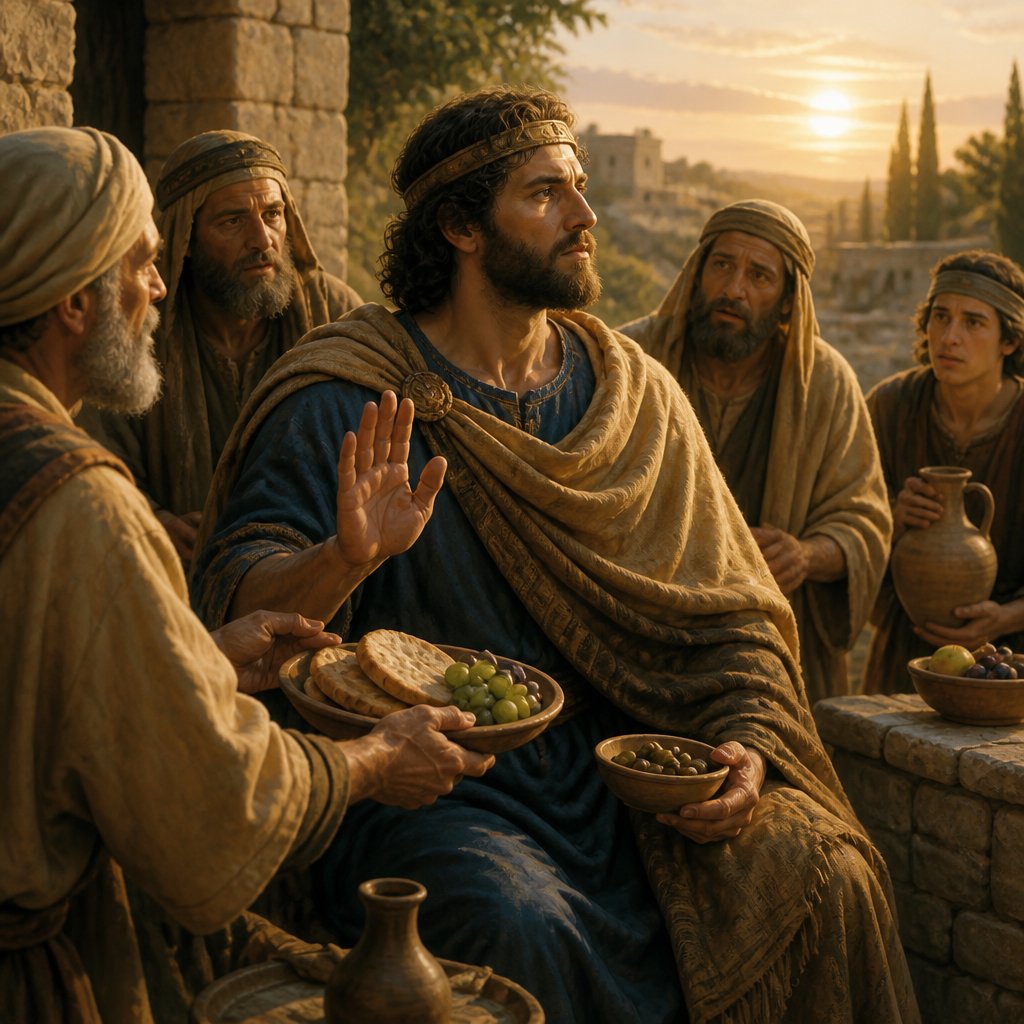
In 2 Samuel 3:35, we witness a poignant moment that illustrates King David’s deep commitment to his leadership and the weight of responsibility he felt towards his people: "And when all the people came to cause David to eat meat while it was yet day, David sware, saying, So do God to me, and more also, if I taste bread, or ought else, till the sun be down."
This passage speaks volumes about David’s character. At first glance, it may appear to be a simple account of the king refusing to eat until sundown, yet under the surface lies a rich tapestry of profound lessons for us, especially regarding the nature of leadership, sacrifice, and devotion to God's work.
**The Context of 2 Samuel 3**
Understanding the circumstances surrounding this moment is crucial. David had just been anointed as king over Judah following a tumultuous period of conflict and division after Saul's death. Abner, the commander of Saul’s army, had shifted his allegiance to David, yet political tensions loomed as civil war was still a reality. David’s refusal to eat serves as a reaction to the mourning of Abner, who had recently been killed. This action demonstrates not just a commitment to his own leadership but also an alliance with the sentiments of the people he ruled over.
**The Weight of Leadership**
David’s oath reflects the heart of a true leader – one who prioritizes the needs and feelings of his people above his own comforts. In a world where leaders often seek self-preservation, David stands out as someone who was willing to put aside his own needs, even hunger. How often do we see leaders who are quick to indulge while their people struggle? David’s choice to abstain from food highlights his understanding that a leader's actions directly affect the morale and unity of those they lead.
In our own lives, whether in workplaces, communities, or families, we are called to lead by serving. What sacrifices are we willing to make for the good of those around us? David’s example challenges us to ensure that our own desires do not eclipse our responsibilities. We must ask ourselves: are we leaders who serve, or are we just seeking to be served?
**A Covenant with God**
David's declaration, “So do God to me, and more also, if I taste bread, or ought else, till the sun be down,” reveals the seriousness of his vow. He invokes God's name, indicating that his commitment is not merely personal but spiritual; it is a covenant with God about his intentions for leadership. As Christians, we are reminded of the importance of our promises before God. When we commit to a cause, we are also making a commitment to God, who expects us to honor our vows.
Consider how this applies to our own faith: are we steadfast in our commitments, in our spiritual practices, and in our relationships? Our fasting, whether literal or metaphorical, signifies deeper devotion to God and His purposes. David chose to fast from food in solidarity with his people and in honor of a life lost. In our lives, fasting can take many forms – it could mean giving up time, comfort, or even our own desires to better serve those around us and to better serve God’s mission.
**Conclusion**
Ultimately, David’s refusal to eat until sundown embodies not only a moment of mourning but also a declaration of deeper values. It challenges us to redefine our understanding of leadership, reminding us that true leaders are those who lead with humility, sacrifice, and an unwavering commitment to their communities. As we reflect on the spirit of this verse, let us strive to embody David's heart as we lead in our own spheres of influence. May we be a people who, like David, are committed to God, to our purpose, and to each other, ready to forsake our needs for the betterment of those around us.
Get our apps


Artwork for 2 Samuel 3:35

2 Samuel 3:35 - "And when all the people came to cause David to eat meat while it was yet day, David sware, saying, So do God to me, and more also, if I taste bread, or ought else, till the sun be down."
"And when all the people came to cause David to eat meat while it was yet day, David sware, saying, So do God to me, and more also, if I taste bread, or ought else, till the sun be down." - 2 Samuel 3:35

2 Samuel 3:5 - "And the sixth, Ithream, by Eglah David's wife. These were born to David in Hebron."

"And the sixth, Ithream, by Eglah David's wife. These were born to David in Hebron." - 2 Samuel 3:5

2 Samuel 23:35 - "Hezrai the Carmelite, Paarai the Arbite,"

2 Samuel 22:35 - "He teacheth my hands to war; so that a bow of steel is broken by mine arms."

"Hezrai the Carmelite, Paarai the Arbite," - 2 Samuel 23:35

2 Samuel 13:35 - "And Jonadab said unto the king, Behold, the king's sons come: as thy servant said, so it is."

1 Samuel 17:34-35

2 Samuel 15:35 - "And hast thou not there with thee Zadok and Abiathar the priests? therefore it shall be, that what thing soever thou shalt hear out of the king's house, thou shalt tell it to Zadok and Abiathar the priests."

1 Samuel 15:35 - "And Samuel came no more to see Saul until the day of his death: nevertheless Samuel mourned for Saul: and the LORD repented that he had made Saul king over Israel."

2 Samuel 3:2 - "¶ And unto David were sons born in Hebron: and his firstborn was Amnon, of Ahinoam the Jezreelitess;"

2 Samuel 4:3 - "And the Beerothites fled to Gittaim, and were sojourners there until this day.)"

1 Samuel 2:35 - "And I will raise me up a faithful priest, that shall do according to that which is in mine heart and in my mind: and I will build him a sure house; and he shall walk before mine anointed for ever."

2 Chronicles 35:18 - "And there was no passover like to that kept in Israel from the days of Samuel the prophet; neither did all the kings of Israel keep such a passover as Josiah kept, and the priests, and the Levites, and all Judah and Israel that were present, and the inhabitants of Jerusalem."

"He teacheth my hands to war; so that a bow of steel is broken by mine arms." - 2 Samuel 22:35

2 Samuel 3:4 - "And the fourth, Adonijah the son of Haggith; and the fifth, Shephatiah the son of Abital;"

2 Samuel 3:3 - "And his second, Chileab, of Abigail the wife of Nabal the Carmelite; and the third, Absalom the son of Maacah the daughter of Talmai king of Geshur;"

2 Samuel 3:11 - "And he could not answer Abner a word again, because he feared him."

2 Samuel 3:33 - "And the king lamented over Abner, and said, Died Abner as a fool dieth?"

2 Samuel 2:3 - "And his men that were with him did David bring up, every man with his household: and they dwelt in the cities of Hebron."

1 Samuel 3:5 - "And he ran unto Eli, and said, Here am I; for thou calledst me. And he said, I called not; lie down again. And he went and lay down."

2 Samuel 7:3 - "And Nathan said to the king, Go, do all that is in thine heart; for the LORD is with thee."

"And Jonadab said unto the king, Behold, the king's sons come: as thy servant said, so it is." - 2 Samuel 13:35

1 Samuel 14:35 - "And Saul built an altar unto the LORD: the same was the first altar that he built unto the LORD."

2 Samuel 3:37 - "For all the people and all Israel understood that day that it was not of the king to slay Abner the son of Ner."

2 Samuel 3:15 - "And Ish-bosheth sent, and took her from her husband, even from Phaltiel the son of Laish."

2 Samuel 14:3 - "And come to the king, and speak on this manner unto him. So Joab put the words in her mouth."

2 Samuel 3:36 - "And all the people took notice of it, and it pleased them: as whatsoever the king did pleased all the people."

2 Samuel 3:6 - "¶ And it came to pass, while there was war between the house of Saul and the house of David, that Abner made himself strong for the house of Saul."