Unseen Blessings in Brokenness: A Reflection on 2 Samuel 4:4
"And Jonathan, Saul's son, had a son that was lame of his feet. He was five years old when the tidings came of Saul and Jonathan out of Jezreel, and his nurse took him up, and fled: and it came to pass, as she made haste to flee, that he fell, and became lame. And his name was Mephibosheth." - 2 Samuel 4:4
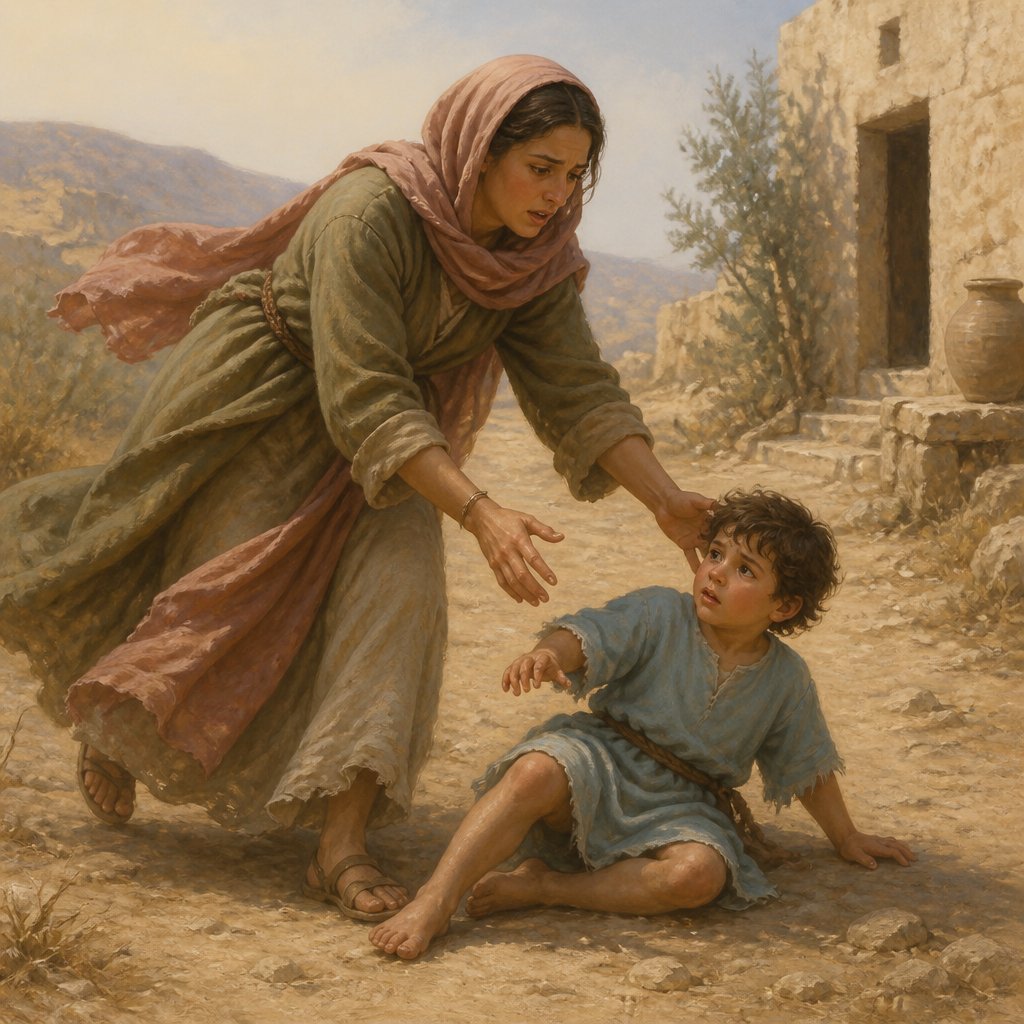
The story of Mephibosheth, as recounted in 2 Samuel 4:4, offers profound insights into the nature of grace, identity, and the divine purpose that often unfolds from our brokenness: "And Jonathan, Saul's son, had a son that was lame of his feet. He was five years old when the tidings came of Saul and Jonathan out of Jezreel, and his nurse took him up, and fled: and it came to pass, as she made haste to flee, that he fell, and became lame. And his name was Mephibosheth."
At its surface, this passage narrates a tragic event that befell a child during a time of great turmoil in Israel. The death of Saul and Jonathan meant that young Mephibosheth, the last surviving grandson of King Saul, was marked for potential violence and danger. In an effort to protect him, the panic of the moment led to an accident that changed the trajectory of his life. This moment—a hurried escape—led to a condition that would stigmatize him for years to come. He became known as "the lame one," a label that would cling to him long after the dust of that tragic day had settled.
Mephibosheth's story is foundational in understanding how we often view ourselves and how God views us. His narrative invites us to consider that while external circumstances dictate our social standings, they do not define our value in the eyes of God. From the moment he was struck with lameness, Mephibosheth was thrust into a difficult existence, one marked by shame, isolation, and perhaps even bitterness. He became a metaphor for brokenness, representing those in society who feel marginalized or unworthy of grace and acceptance.
In this unfolding of events, we are reminded that brokenness is a universal human experience. Each of us carries wounds—some visible, others not so much. It is in these moments of vulnerability and need that God often works most profoundly. Psalm 34:18 (KJV) reminds us, "The LORD is nigh unto them that are of a broken heart; and saveth such as be of a contrite spirit." This promise asserts that brokenness is not a signal of abandonment from God but rather a place where His presence can be most deeply felt.
Moreover, the name Mephibosheth itself carries significant weight. It means "the destroyer of shame." What a beautiful irony! The child who became a picture of disgrace ultimately held a name that promised redemption. This paradox speaks volumes about God’s redemptive plans. Just as the name suggests, God often takes those who feel shamed and transforms their narratives into stories of glory and restoration. Mephibosheth would later receive kindness from King David—not as an outcast, but as a beloved recipient of grace and favor.
David’s covenant with Jonathan, Mephibosheth’s father, exemplifies the steadfast love and loyalty that should characterize our relationships with others. It challenges us to look beyond appearances and see the inherent worth in everyone. When we offer grace, we are acting as conduits of divine love in a fragmented world. We, too, can help carry the burdens of the broken and usher them into places of healing.
As we reflect on 2 Samuel 4:4, let us approach God with our wounds and vulnerabilities, acknowledging that in our brokenness, He is near. Perhaps there are aspects of our lives that feel paralyzed by fear, shame, or regret. Like Mephibosheth, we may be carrying labels placed upon us by others or by our own perceptions. It is crucial, in our spiritual maturation, to redefine ourselves in terms of God’s love and promises, rather than our past failures or present fears.
In conclusion, the story of Mephibosheth in the aftermath of great tragedy teaches us about grace, redemption, and the transformative power of God. Even when we find ourselves broken, we have the opportunity to be embraced by the One who sees our true potential. May we, like David, extend kindness and recognition to those who feel lesser than they truly are. Let us all acknowledge that often, in our weakest moments, God is crafting masterpieces hidden within our brokenness.
Want to reflect more on 2 Samuel 4:4?
Continue your spiritual journey with Bible Chat — an AI-powered tool for exploring God's Word through conversation. Ask questions, discover connections, and deepen your understanding.
Get Our Apps


2 Samuel 4:4 Artwork
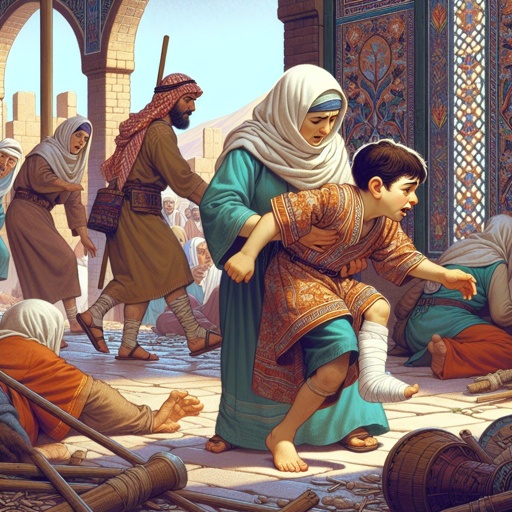
2 Samuel 4:4 - "And Jonathan, Saul's son, had a son that was lame of his feet. He was five years old when the tidings came of Saul and Jonathan out of Jezreel, and his nurse took him up, and fled: and it came to pass, as she made haste to flee, that he fell, and became lame. And his name was Mephibosheth."
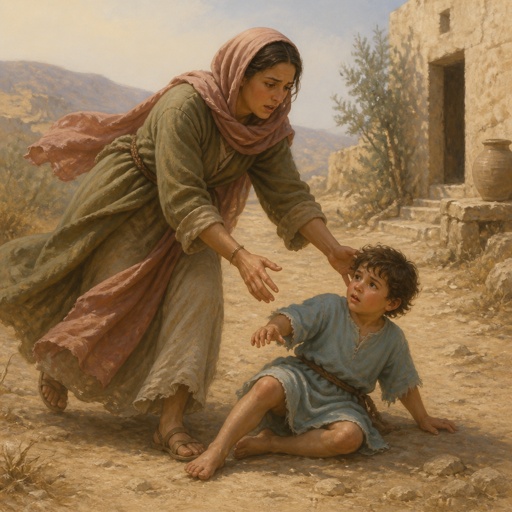
"And Jonathan, Saul's son, had a son that was lame of his feet. He was five years old when the tidings came of Saul and Jonathan out of Jezreel, and his nurse took him up, and fled: and it came to pass, as she made haste to flee, that he fell, and became lame. And his name was Mephibosheth." - 2 Samuel 4:4

2 Samuel 10:4

2 Samuel 10:4

2 Samuel 4:3 - "And the Beerothites fled to Gittaim, and were sojourners there until this day.)"

1 Samuel 2:4 - "The bows of the mighty men are broken, and they that stumbled are girded with strength."

2 Samuel 17:4 - "And the saying pleased Absalom well, and all the elders of Israel."

2 Samuel 3:4 - "And the fourth, Adonijah the son of Haggith; and the fifth, Shephatiah the son of Abital;"

2 Samuel 7:4 - "¶ And it came to pass that night, that the word of the LORD came unto Nathan, saying,"

2 Samuel 1:2-4 David is shocked the man is scared image in color

2 Samuel 5:4 - "¶ David was thirty years old when he began to reign, and he reigned forty years."

2 Samuel 2:4 - "And the men of Judah came, and there they anointed David king over the house of Judah. And they told David, saying, That the men of Jabesh-gilead were they that buried Saul."

2 Samuel 1:2-4 David is shocked the man is scared image in color

2 Samuel 6:4 - "And they brought it out of the house of Abinadab which was at Gibeah, accompanying the ark of God: and Ahio went before the ark."

2 Samuel 22:4 - "I will call on the LORD, who is worthy to be praised: so shall I be saved from mine enemies."

2 Samuel 20:4 - "¶ Then said the king to Amasa, Assemble me the men of Judah within three days, and be thou here present."

2 Samuel 1:2-4 David is shocked the man is scared image in color less details

2 Samuel 4:1 - "And when Saul's son heard that Abner was dead in Hebron, his hands were feeble, and all the Israelites were troubled."

2 Samuel 14:4 - "¶ And when the woman of Tekoah spake to the king, she fell on her face to the ground, and did obeisance, and said, Help, O king."

2 Samuel 4:5 - "And the sons of Rimmon the Beerothite, Rechab and Baanah, went, and came about the heat of the day to the house of Ish-bosheth, who lay on a bed at noon."

"And the Beerothites fled to Gittaim, and were sojourners there until this day.)" - 2 Samuel 4:3
"And the saying pleased Absalom well, and all the elders of Israel." - 2 Samuel 17:4

1 Samuel 3:4 - "That the LORD called Samuel: and he answered, Here am I."

2 Samuel 4:2 - "And Saul's son had two men that were captains of bands: the name of the one was Baanah, and the name of the other Rechab, the sons of Rimmon a Beerothite, of the children of Benjamin: (for Beeroth also was reckoned to Benjamin:"

2 Samuel 9:4 - "And the king said unto him, Where is he? And Ziba said unto the king, Behold, he is in the house of Machir, the son of Ammiel, in Lo-debar."

"The bows of the mighty men are broken, and they that stumbled are girded with strength." - 1 Samuel 2:4

2 Samuel 19:4 - "But the king covered his face, and the king cried with a loud voice, O my son Absalom, O Absalom, my son, my son!"
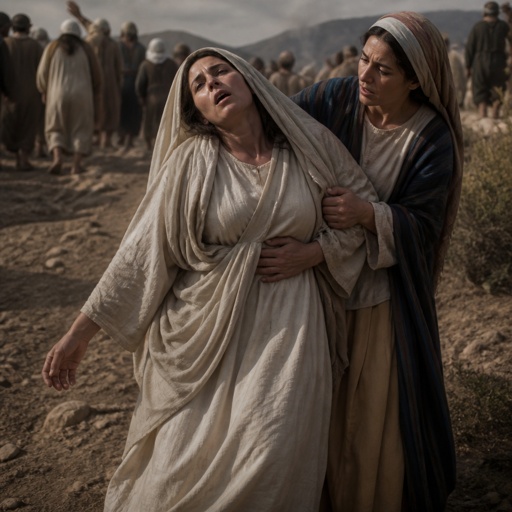
1 Samuel 4:18

1 samuel 4:1
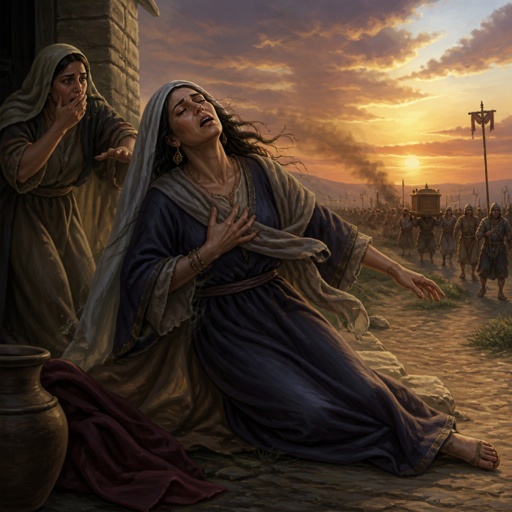
1 Samuel 4:18