A Name of Victory: Lessons from David's Conquest
“And David gat him a name when he returned from smiting of the Syrians in the valley of salt, being eighteen thousand men.” — 2 Samuel 8:13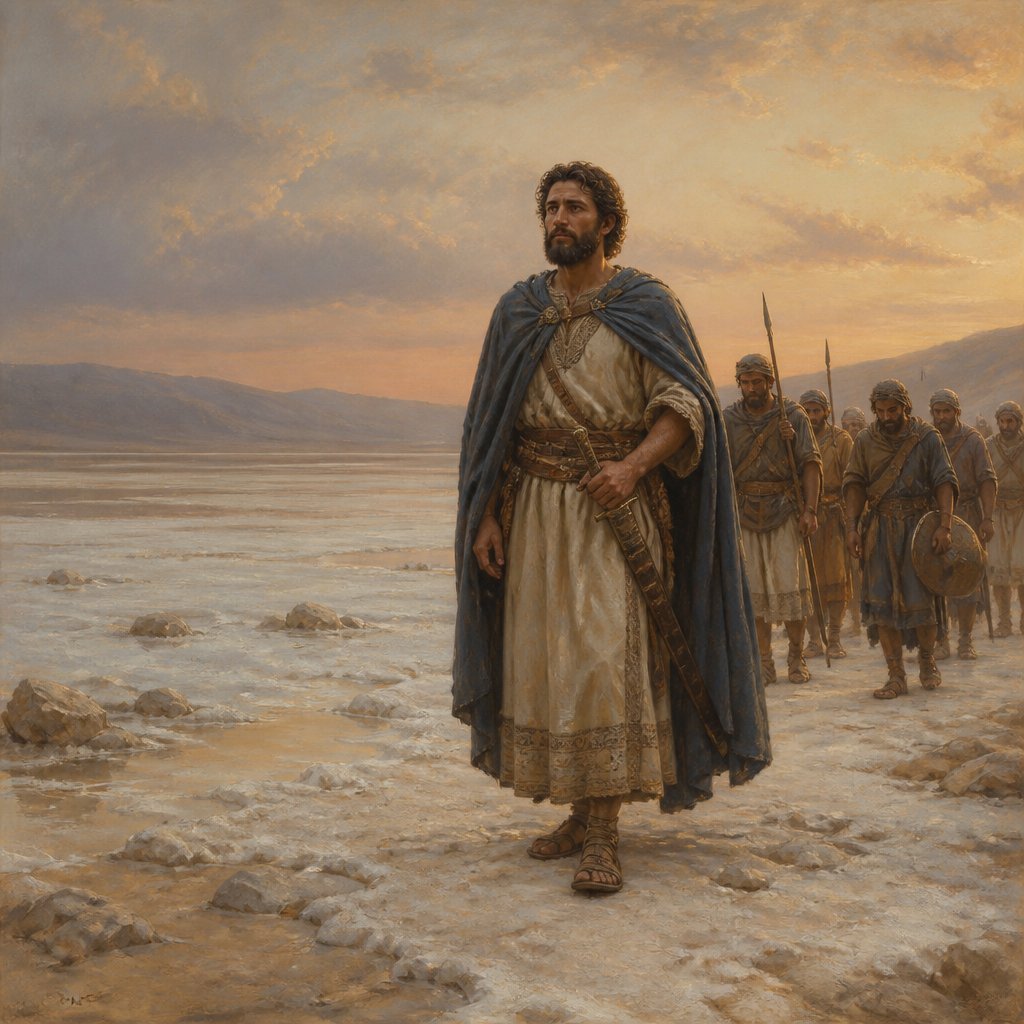
In 2 Samuel 8:13, we find a stirring account of King David’s military prowess: "And David gat him a name when he returned from smiting of the Syrians in the valley of salt, being eighteen thousand men." This verse not only highlights David's military success but also serves as a profound lesson for us about the nature of reputation, the significance of victory, and the divine favor that underlies all achievements.
When we consider David's rise to fame, it is important to remember the context. David was not always a king; he started as a humble shepherd boy, defeating the giant Goliath with nothing but a sling and a stone. His victories in battle were not merely personal achievements but were also pivotal moments for the people of Israel. They established a sense of national identity and security. David’s fame in this particular battle against the Syrians, after returning from the Valley of Salt, is emblematic of a deeper truth about how we gain our names and reputations in the course of our lives.
The phrase "gat him a name" signifies more than just gaining popularity; it speaks to the establishment of his legacy. Reputation is often built not on words or intentions but on actions and outcomes. David's name became synonymous with bravery, leadership, and divine favor. He faced giants—both literal and metaphorical—and through faith and divine assistance emerged victorious. In our own lives, how we are remembered often depends on how we respond to adversity and the integrity with which we face challenges.
The "valley of salt" in which David achieved this victory is particularly noteworthy. The valley can be interpreted as a place of difficulty and struggle, likely renowned for its dry and barren landscape. This imagery is rich in symbolism; many of us encounter our own 'valleys of salt'—periods of hardship and testing that seem devoid of life or promise. It is here in these challenging terrains, where faith is tested and perseverance is essential, that we can rise to the occasion and, like David, gather our own name through our actions. The battles we face can wear us down, but they can equally forge us into more resilient and honorable characters.
Moreover, we must reflect on who we become in these moments of trial. David’s success serves as an example of what it means to allow God to work through us in times of hardship. His conquests were not solely a result of his military strategy but stemmed from a heart that sought to honor God. Kingship in the Old Testament is often depicted as divinely appointed, and in that vein, our victories must also be framed within the context of God's purpose for our lives. David's victories were singed with divine anointing, reminding us that when we trust in God and acknowledge Him in our pursuits, every success will ultimately align with His greater plan.
As believers, we must ask ourselves, what legacy are we creating through our battles? Are we seeking only personal gain, or do we desire to bear a name that echoes the character of Christ? Each struggle bears the opportunity to witness God’s faithfulness and power. Thus, like David, may we emerge from our own valleys not just with a name of victory, but also with deeper faith and trust in the One who empowers us.
In remembrance of David’s victories, let us strive to embrace our struggles, knowing they are moments for God’s name to be glorified through ours. As we walk through our valleys, may we do so with courage, determination, and an enduring faith that God, who was with David, is likewise with us. Let us not only seek to "gat a name" but to be known as those who reflect the heart of God in every conquest.
Get our apps


Artwork for 2 Samuel 8:13

2 Samuel 8:13 - "And David gat him a name when he returned from smiting of the Syrians in the valley of salt, being eighteen thousand men."
"And David gat him a name when he returned from smiting of the Syrians in the valley of salt, being eighteen thousand men." - 2 Samuel 8:13

1 Samuel 8:13 - "And he will take your daughters to be confectionaries, and to be cooks, and to be bakers."

2 Samuel 13:8 - "So Tamar went to her brother Amnon's house; and he was laid down. And she took flour, and kneaded it, and made cakes in his sight, and did bake the cakes."

1 Samuel 13:8 - "¶ And he tarried seven days, according to the set time that Samuel had appointed: but Samuel came not to Gilgal; and the people were scattered from him."

2 Samuel 19:8

2 Samuel 19:8

2 Samuel 19:8

2 Samuel 19:8

"And he will take your daughters to be confectionaries, and to be cooks, and to be bakers." - 1 Samuel 8:13

2 samuel 23:8-21

2 Samuel 8:8 - "And from Betah, and from Berothai, cities of Hadadezer, king David took exceeding much brass."

2 Samuel 13:38 - "So Absalom fled, and went to Geshur, and was there three years."

2 Samuel 22:13 - "Through the brightness before him were coals of fire kindled."

2 Samuel 15:13 - "¶ And there came a messenger to David, saying, The hearts of the men of Israel are after Absalom."

2 Samuel 13:21 - "¶ But when king David heard of all these things, he was very wroth."

2 Samuel 2:8 - "¶ But Abner the son of Ner, captain of Saul's host, took Ish-bosheth the son of Saul, and brought him over to Mahanaim;"

2 Samuel 8:16 - "And Joab the son of Zeruiah was over the host; and Jehoshaphat the son of Ahilud was recorder;"

2 Samuel 8:9 - "¶ When Toi king of Hamath heard that David had smitten all the host of Hadadezer,"

2 Samuel 22:8 - "Then the earth shook and trembled; the foundations of heaven moved and shook, because he was wroth."

2 Samuel 13:27 - "But Absalom pressed him, that he let Amnon and all the king's sons go with him."

2 Samuel 8:15 - "And David reigned over all Israel; and David executed judgment and justice unto all his people."

2 Samuel 8:17 - "And Zadok the son of Ahitub, and Ahimelech the son of Abiathar, were the priests; and Seraiah was the scribe;"

2 Samuel 8:7 - "And David took the shields of gold that were on the servants of Hadadezer, and brought them to Jerusalem."

2 Samuel 13:35 - "And Jonadab said unto the king, Behold, the king's sons come: as thy servant said, so it is."

2 Corinthians 8:13 - "For I mean not that other men be eased, and ye burdened:"

2 Corinthians 13:8 - "For we can do nothing against the truth, but for the truth."

2 Samuel 7:13 - "He shall build an house for my name, and I will stablish the throne of his kingdom for ever."

2 Samuel 10:13 - "And Joab drew nigh, and the people that were with him, unto the battle against the Syrians: and they fled before him."

2 Samuel 8:12 - "Of Syria, and of Moab, and of the children of Ammon, and of the Philistines, and of Amalek, and of the spoil of Hadadezer, son of Rehob, king of Zobah."