Navigating the Last Days: A Call to Discernment and Devotion
“This know also, that in the last days perilous times shall come. For men shall be lovers of their own selves, covetous, boasters, proud, blasphemers, disobedient to parents, unthankful, unholy, Without natural affection, trucebreakers, false accusers, incontinent, fierce, despisers of those that are good, Traitors, heady, highminded, lovers of pleasures more than lovers of God; Having a form of godliness, but denying the power thereof: from such turn away.” — 2 Timothy 3:1-5
In the epistle of 2 Timothy, the Apostle Paul provides a profound and sobering warning regarding the times that will characterize the last days. In 2 Timothy 3:1-5 (KJV), Paul states, "This know also, that in the last days perilous times shall come. For men shall be lovers of their own selves, covetous, boasters, proud, blasphemers, disobedient to parents, unthankful, unholy, Without natural affection, trucebreakers, false accusers, incontinent, fierce, despisers of those that are good, Traitors, heady, highminded, lovers of pleasures more than lovers of God; Having a form of godliness, but denying the power thereof: from such turn away."
These words, penned nearly two millennia ago, resonate with urgent clarity in our contemporary context. Paul illuminates a troubling portrait of humanity's trajectory, unveiling a timeline where moral decay and self-centeredness abound. As we reflect on these words, it is essential to approach them with both a heart of prayer and a spirit of discernment, allowing God's truth to guide our responses amidst an increasingly confusing world.
As we begin, it is vital to grasp the significance of the very first phrase: "perilous times shall come." We cannot overlook that these are not merely predictions; they are divine revelations that pierce through the fog of modernity and speak directly to our experiences today. We are witnessing a staggering disconnection from values traditionally upheld by generations before us. As Christians, we are called to recognize this peril, not as passive witnesses but as proactive agents of change, rooted in the hope of Christ who survives all ages.
Paul lists characteristics that define an age steeped in moral ambiguity. Each trait paints a picture of a generation centered on self-interest. "Lovers of their own selves" signifies an obsession with self-image and gratification. The prevalence of social media amplifies this selfishness, encouraging validation through likes and follows, rather than through genuine interactions with others and with God.
The term "covetous" speaks to an insatiable desire for possessions and wealth, mirrored in a culture that equates worth with material success. Our hearts must consistently be attuned to the teachings of Jesus, who reminds us in Matthew 6:24 that we cannot serve both God and mammon. Amid the pressures to conform to societal norms, let us choose to glorify God in our stewardship rather than succumbing to greed.
As we move through the list, we encounter the phrase "unthankful" and "unholy," which should prompt us to examine our hearts. Gratitude is foundational to the Christian life; it fosters contentment, humility, and an awareness of God's grace. In contrast, unholiness stems from turning away from God’s standards, resulting in moral decay. Let us strive to cultivate a spirit of thankfulness in our prayers, recognizing God’s goodness in every circumstance.
Furthermore, Paul warns against those who bear "a form of godliness" but deny its power. This challenge encapsulates the risk of ritualistic faith that lacks genuine connection with Christ. It serves as a cautionary tale for us to seek not just an outward display of piety, but an authentic relationship that transforms our hearts and actions. We need to evaluate our spiritual practices: are they deeply rooted in devotion to God or are they mere traditions?
As we navigate these perilous times, the injunction to "turn away" from such individuals provides a clear directive. We are called to reject behaviors and ideologies that contradict our faith while simultaneously embodying love for those who may not yet know Christ. Our mission is to be a beacon of light amidst darkness—grounded in the truth of God's Word and empowered by His Spirit.
In conclusion, let us ground ourselves in prayer, continually asking the Lord to strengthen our discernment and commitment to holiness. May we be equipped with the power of the Holy Spirit to embody love, grace, and moral clarity in an era filled with challenges. As we position ourselves in Christ, we arm ourselves against the tide of cultural influence, encouraging one another towards love and good works, as we anticipate the glorious return of our Lord.
Get our apps


Artwork for 2 Timothy 3:1-5

2 Timothy 3:1-5 - "But understand this, that in the last days there will come times of difficulty. For people will be lovers of self, lovers of money, proud, arrogant, abusive, disobedient to their parents, ungrateful, unholy, heartless, unappeasable, slanderous, without self-control, brutal, not loving good, treacherous, reckless, swollen with conceit, lovers of pleasure rather than lovers of God, having the appearance of godliness, but denying its power. Avoid such people."
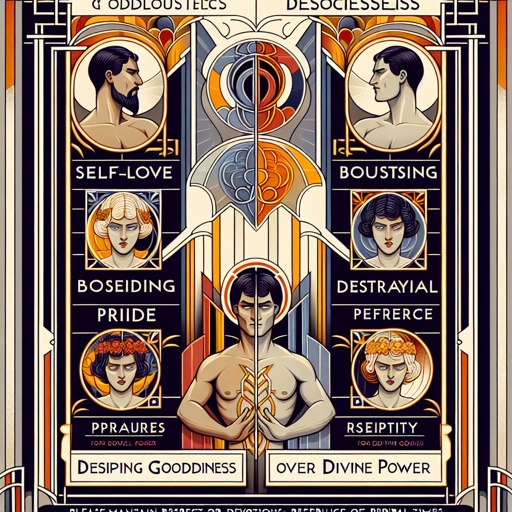
2 Timothy 3:1-5 "This know also, that in the last days perilous times shall come. For men shall be lovers of their own selves, covetous, boasters, proud, blasphemers, disobedient to parents, unthankful, unholy, Without natural affection, trucebreakers, false accusers, incontinent, fierce, despisers of those that are good, Traitors, heady, highminded, lovers of pleasures more than lovers of God; Having a form of godliness, but denying the power thereof: from such turn away."

2 Timothy 3:1-5 "This know also, that in the last days perilous times shall come. For men shall be lovers of their own selves, covetous, boasters, proud, blasphemers, disobedient to parents, unthankful, unholy, Without natural affection, trucebreakers, false accusers, incontinent, fierce, despisers of those that are good, Traitors, heady, highminded, lovers of pleasures more than lovers of God; Having a form of godliness, but denying the power thereof: from such turn away."
![Generate an image of a powerful, dynamic, dramatic, and heartfelt scene inspired by 2 Timothy 3:1-5 NKJV
But know this, that in the last days perilous times will come: [2] For men will be lovers of themselves, lovers of money, boasters, proud, blasphemers, disobedient to parents, unthankful, unholy, unloving, unforgiving, slanderers, without self-control, brutal, despisers of good, traitors, headstrong, haughty, lovers of pleasure rather than lovers of God, having a form of godliness but denying its power. And from such people turn away!](https://media.bible.art/523a95e2-52bb-4ffa-82d8-199c592afe1d-thumbnail.jpg)
Generate an image of a powerful, dynamic, dramatic, and heartfelt scene inspired by 2 Timothy 3:1-5 NKJV But know this, that in the last days perilous times will come: [2] For men will be lovers of themselves, lovers of money, boasters, proud, blasphemers, disobedient to parents, unthankful, unholy, unloving, unforgiving, slanderers, without self-control, brutal, despisers of good, traitors, headstrong, haughty, lovers of pleasure rather than lovers of God, having a form of godliness but denying its power. And from such people turn away!

"But understand this, that in the last days there will come times of difficulty. For people will be lovers of self, lovers of money, proud, arrogant, abusive, disobedient to their parents, ungrateful, unholy, heartless, unappeasable, slanderous, without self-control, brutal, not loving good, treacherous, reckless, swollen with conceit, lovers of pleasure rather than lovers of God, having the appearance of godliness, but denying its power. Avoid such people." - 2 Timothy 3:1-5

2 Timothy 3:1 - "This know also, that in the last days perilous times shall come."

1 Timothy 5:3 - "Honour widows that are widows indeed."

"This know also, that in the last days perilous times shall come." - 2 Timothy 3:1

2 Timothy 3:5 - “Having a form of godliness, but denying the power thereof: from such turn away."

2 Timothy 3:5 - "Having a form of godliness, but denying the power thereof: from such turn away."

1 Timothy 5:2 - "The elder women as mothers; the younger as sisters, with all purity."

"Honour widows that are widows indeed." - 1 Timothy 5:3

1 Timothy 2:3 - "For this is good and acceptable in the sight of God our Saviour;"

1 Timothy 3:5 - "(For if a man know not how to rule his own house, how shall he take care of the church of God?)"

1 Timothy 2:5 - "For there is one God, and one mediator between God and men, the man Christ Jesus;"

2 Timothy 3:16

1 Timothy 1:5

1 Timothy 3:2 - "A bishop then must be blameless, the husband of one wife, vigilant, sober, of good behaviour, given to hospitality, apt to teach;"

2 Timothy 4:5

"Having a form of godliness, but denying the power thereof: from such turn away." - 2 Timothy 3:5

"For this is good and acceptable in the sight of God our Saviour;" - 1 Timothy 2:3

1 Timothy 2:3-4 - "For this is good and acceptable in the sight of God our Saviour; Who will have all men to be saved, and to come unto the knowledge of the truth."

"The elder women as mothers; the younger as sisters, with all purity." - 1 Timothy 5:2

1 Timothy 3:16

1 Timothy 3:15

Hosea 3:1-5

1 Timothy 4:5 - "For it is sanctified by the word of God and prayer."

2 Timothy 2:3 - "Thou therefore endure hardness, as a good soldier of Jesus Christ."

1 Timothy 5:1-2 - "Do not rebuke an older man harshly, but exhort him as if he were your father. Treat younger men as brothers, older women as mothers, and younger women as sisters, with absolute purity."

2 Timothy 2:22