Breaking Barriers: Embracing God’s Unifying Love
“And he said unto them, Ye know how that it is an unlawful thing for a man that is a Jew to keep company, or come unto one of another nation; but God hath shewed me that I should not call any man common or unclean.” — Acts 10:28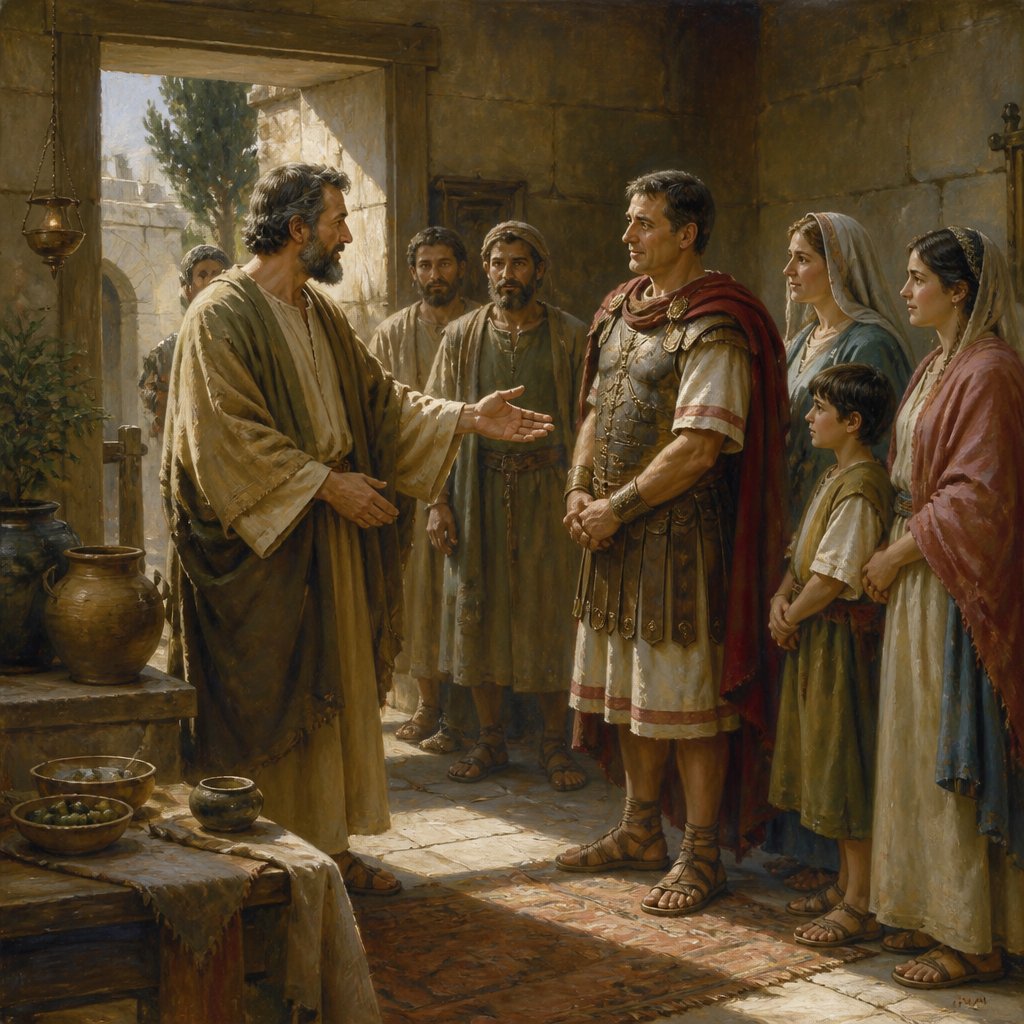
In Acts 10:28, the Apostle Peter boldly declares, "And he said unto them, Ye know how that it is an unlawful thing for a man that is a Jew to keep company, or come unto one of another nation; but God hath shewed me that I should not call any man common or unclean." This Scripture encapsulates a monumental shift in the understanding of God’s acceptance towards all people, regardless of their background or nationality.
To fully appreciate Peter’s revelation, we must understand the historical context in which he lived. For centuries, Jewish law and tradition kept the Jewish people distinct from Gentiles—those who were not part of the Jewish faith or nation. Jewish purity laws dictated not only what could be eaten and who to associate with, but also shaped interpersonal boundaries that kept them separate from others. The mindset was not simply cultural; it was entrenched in the law with religious implications.
However, in this pivotal moment, God is leading Peter to dismantle these long-held barriers. God sends him an angel in a vision—a divine intervention that cannot be ignored. This vision not only challenges Peter’s societal norms but also gives him a directive: to step beyond the limitations of his upbringing and engage with Cornelius, a Gentile. The idea that he must associate with someone considered outside the bounds of the community he belonged to was revolutionary and deeply uncomfortable.
In declaring that God had shown him not to call any man common or unclean, Peter is conveying a fundamental truth that transcends his personal struggle. God urges him to recognize the intrinsic worth and dignity of every human being. In our own lives, how many times do we reflect Peter's initial hesitations? We may have been taught to view others through the lens of prejudice, cultural stereotype, or societal expectation that we carry from our own experiences.
Peter’s lesson challenges us to examine how we view others, especially those who are different from ourselves—be it in race, religion, socioeconomic status, or lifestyle. Are there walls that we have built that prevent us from extending love and fellowship to those whom we deem different or "other"? Jesus continuously modeled boundless compassion, reaching out to the marginalized, the sinner, the outcast, and the foreigner. In doing so, He established a kingdom ethic that calls His followers to do likewise.
This passage prompts us to ask: what has God shown us? Has God placed people in our lives that we find hard to accept or love? Often, it’s easy to maintain our comfort zones while ignoring the Holy Spirit’s call to reach out beyond those boundaries. Yet, like Peter, we are equipped to break down these barriers. Each encounter, each relationship, can serve as an opportunity to witness God's love in action.
Reflecting on this verse can lead us to embrace a radical hospitality that mirrors God’s heart. God welcomes each one of us—without discrimination. He desires community, not division; inclusion, not exclusion. Peter’s acceptance of the Gentiles and subsequent baptism of Cornelius and his household was an act of obedience that reflected God’s inclusive love; it marked the expansion of the Gospel beyond cultural confines.
The implications of this verse extend to us today. For the Church, it is a clarion call to act justly, love mercy, and walk humbly with our God (Micah 6:8). We are called to reflect the reality of the Kingdom of God—where different cultures, races, and histories converge to glorify Him.
In closing, Acts 10:28 serves as both a reminder and a challenge: Our assessment of people must not be based on earthly distinctions but anchored in the truth that every person is made in the image of God and worthy of love. Let us not call any man common or unclean, for God has shown us otherwise. May we rise up as vessels of God’s love, breaking down barriers and inviting all people into the embrace of His grace.
Get our apps


Artwork for Acts 10:28

Acts 10:28 - "And he said unto them, Ye know how that it is an unlawful thing for a man that is a Jew to keep company, or come unto one of another nation; but God hath shewed me that I should not call any man common or unclean."

In the context of acts 10:28, draw a picture of the Apostle Peter sitting across the table from Cornelius, a roman centurion. The setting is a home in first-century Caesarea, a seaside village. The table has a small scroll sitting on it. Looking past the table, there is a window that looks out toward the sea.

In the context of acts 10:28, draw a picture of the Apostle Peter sitting across the table from Cornelius, a roman centurion. The setting is a home in first-century Caesarea, a seaside village. The table has a small scroll sitting on it. Looking past the table, there is a window that looks out toward the sea.

In the context of acts 10:28, draw a picture of the Apostle Peter, a 35 year old Jewish man, sitting across the table from Cornelius, a roman centurion. The setting is a home in first-century Caesarea, a seaside village. The table has a small scroll sitting on it. Looking past the table, there is a window that looks out toward the sea.
"And he said unto them, Ye know how that it is an unlawful thing for a man that is a Jew to keep company, or come unto one of another nation; but God hath shewed me that I should not call any man common or unclean." - Acts 10:28

Acts 28:10 - "Who also honoured us with many honours; and when we departed, they laded us with such things as were necessary."

Acts 28:12

Acts 28:28 - "Be it known therefore unto you, that the salvation of God is sent unto the Gentiles, and that they will hear it."

"Who also honoured us with many honours; and when we departed, they laded us with such things as were necessary." - Acts 28:10

Acts 14:28 - "And there they abode long time with the disciples."

Acts 28:12 - "And landing at Syracuse, we tarried there three days."

Acts 9:28 - "And he was with them coming in and going out at Jerusalem."

Acts 28:1 - "And when they were escaped, then they knew that the island was called Melita."

Acts 28:5 - "And he shook off the beast into the fire, and felt no harm."

Acts 8:28 - "Was returning, and sitting in his chariot read Esaias the prophet."

Acts 28:24 - "And some believed the things which were spoken, and some believed not."

Acts 7:28 - "Wilt thou kill me, as thou diddest the Egyptian yesterday?"

Acts 18:28 - "For he mightily convinced the Jews, and that publickly, shewing by the scriptures that Jesus was Christ."

Acts 26:28 - "Then Agrippa said unto Paul, Almost thou persuadest me to be a Christian."

Acts 4:28 - "For to do whatsoever thy hand and thy counsel determined before to be done."

Genesis 28:10

"And there they abode long time with the disciples." - Acts 14:28

"Be it known therefore unto you, that the salvation of God is sent unto the Gentiles, and that they will hear it." - Acts 28:28

Acts 16:28 - "But Paul cried with a loud voice, saying, Do thyself no harm: for we are all here."

Acts 13:28 - "And though they found no cause of death in him, yet desired they Pilate that he should be slain."

Genesis 10:28 - "And Obal, and Abimael, and Sheba,"

Acts 19:28 - "And when they heard these sayings, they were full of wrath, and cried out, saying, Great is Diana of the Ephesians."

Acts 28:9 - "So when this was done, others also, which had diseases in the island, came, and were healed:"

Acts 28:29 - "And when he had said these words, the Jews departed, and had great reasoning among themselves."

Acts 15:28 - "For it seemed good to the Holy Ghost, and to us, to lay upon you no greater burden than these necessary things;"