Embracing God's Acceptance: The Heart of Righteousness
“But in every nation he that feareth him, and worketh righteousness, is accepted with him.” — Acts 10:35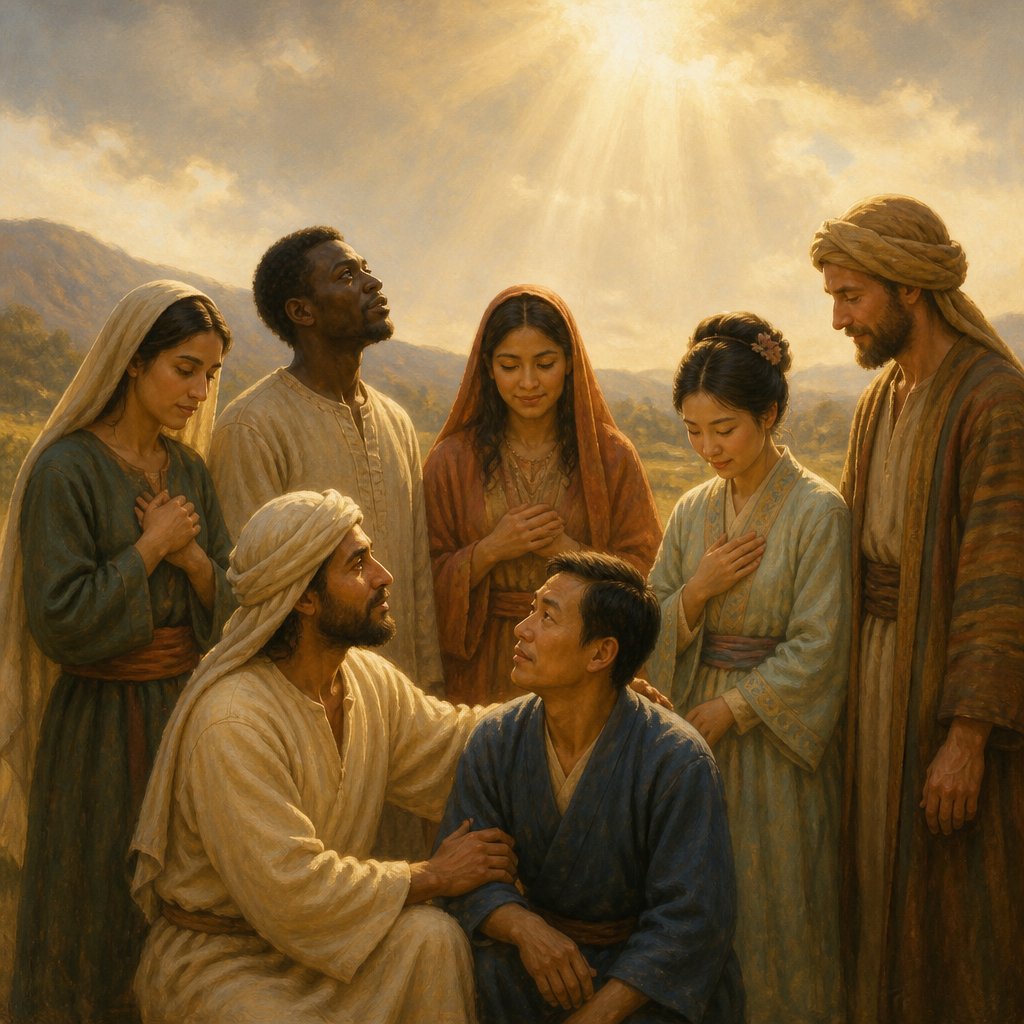
Acts 10:35 states, "But in every nation he that feareth him, and worketh righteousness, is accepted with him." This verse comes from a pivotal moment in the early Church, where the Apostle Peter realizes the far-reaching acceptance of God’s grace beyond the Jewish people. This profound revelation reshaped not only the understanding of who could be considered part of God’s family but also highlighted the universally inclusive nature of God’s love and acceptance.
In our modern context, Acts 10:35 invites us to explore the meaning of fearing God and working righteousness. The fear of God here is not one of terror but reflects a deep respect, reverence, and acknowledgement of His holiness and sovereignty. This reverent fear naturally leads to a desire to adhere to His standards of righteousness.
Righteousness can often seem like an abstract notion—something lofty and unattainable. However, in this context, working righteousness refers to how we conduct our lives in a manner that reflects God’s will. It includes our treatment of others, our integrity, honesty in our dealings, and our desire for justice. It’s about embodying the character of Christ in every little thing we do.
God calls us to live out our faith actively through our actions. Instead of sitting idly by while the world is burdened by injustice, we are urged to step up and reflect the light of Christ. The phrase "worketh righteousness" suggests a continual process—an active engagement in doing what is right and noble. It’s through this engagement that we become instruments of God’s peace and love in our communities.
Furthermore, the assurance that "he is accepted with him" infers that acceptance is accessible to anyone who truly reveres God and seeks to live according to His righteousness, regardless of their background, ethnicity, or nationality. This radical notion of inclusivity can be difficult for us to accept; we may be conditioned to view relationships with God through the lens of our own experiences, perhaps believing that some are more worthy of acceptance than others based on their behaviors or background. However, this scripture reminds us that God’s love transcends those barriers. To Him, all humanity shares equal value and dignity.
As we delve deeper into this scripture, let’s consider the implications of fearing God. It means adopting a posture of humility—recognizing that we are not sufficient on our own but are completely dependent on His grace. This humble fear compels us to surrender our lives and desires to Him, trusting that He knows what is best. Working righteousness, on the other hand, acts as a tangible response to this fear; when we know the heart of the Father, we cannot help but express that understanding through our deeds.
Let’s also reflect on how Acts 10:35 calls us to action in today’s world. With chaos, division, and strife rampant across communities and nations, the need for righteous work cannot be overstated. God is not merely asking us to be good people; He’s inviting us to actively utilize our gifts, resources, and privileges to bring hope and healing to those around us. Whether that is through acts of kindness, advocating for the marginalized, or simply sharing the Gospel, we all possess the ability to "work righteousness" in a meaningful way.
Finally, let us take heart in knowing that our acceptance by God is not about our perfection but our posture. It is our hearts that He desires—hearts that fear Him in reverence and that strive, however imperfectly, to produce the fruits of righteousness. May we continually seek to embody this acceptance, inviting others into that same space and shocking the world with God’s unconditional love. In every nation, He seeks those who fear Him and work righteousness; may we be counted among them.
Get our apps


Artwork for Acts 10:35

Acts 10:35 - "But in every nation he that feareth him, and worketh righteousness, is accepted with him."

"But in every nation he that feareth him, and worketh righteousness, is accepted with him." - Acts 10:35

Acts 10:34-35 - "Then Peter began to speak: “I now realize how true it is that God does not show favoritism but accepts from every nation the one who fears him and does what is right."

Acts 2:35 - "Until I make thy foes thy footstool."

Acts 9:35 - "And all that dwelt at Lydda and Saron saw him, and turned to the Lord."

Acts 16:35 - "And when it was day, the magistrates sent the serjeants, saying, Let those men go."

Isaiah 35:8-10

2 Chronicles 35:10

Mark 10:35-45

Mark 10:35-45

Acts 8:35 - "Then Philip opened his mouth, and began at the same scripture, and preached unto him Jesus."

Ezra 10:35 - "Benaiah, Bedeiah, Chelluh,"

Mark 10:35-45

Mark 10:35-45

Acts 21:35 - "And when he came upon the stairs, so it was, that he was borne of the soldiers for the violence of the people."

Acts 15:35 - "Paul also and Barnabas continued in Antioch, teaching and preaching the word of the Lord, with many others also."

2 Chronicles 35:26 - "Now the rest of the acts of Josiah, and his goodness, according to that which was written in the law of the LORD,"

Acts 13:35 - "Wherefore he saith also in another psalm, Thou shalt not suffer thine Holy One to see corruption."

Acts 4:35 - "And laid them down at the apostles' feet: and distribution was made unto every man according as he had need."

Acts 5:35 - "And said unto them, Ye men of Israel, take heed to yourselves what ye intend to do as touching these men."

"Until I make thy foes thy footstool." - Acts 2:35

"Benaiah, Bedeiah, Chelluh," - Ezra 10:35

In the context of acts 10:28, draw a picture of the Apostle Peter, a 35 year old Jewish man, sitting across the table from Cornelius, a roman centurion. The setting is a home in first-century Caesarea, a seaside village. The table has a small scroll sitting on it. Looking past the table, there is a window that looks out toward the sea.

Acts 23:35 - "I will hear thee, said he, when thine accusers are also come. And he commanded him to be kept in Herod's judgment hall."
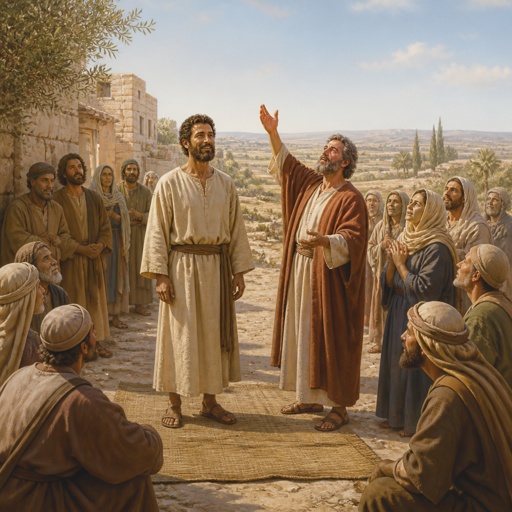
"And all that dwelt at Lydda and Saron saw him, and turned to the Lord." - Acts 9:35

Job 35:10 - "But none saith, Where is God my maker, who giveth songs in the night;"

Hebrews 10:35 - "Cast not away therefore your confidence, which hath great recompence of reward."

John 10:35 - "If he called them gods, unto whom the word of God came, and the scripture cannot be broken;"

Acts 21:35 When he reached the stairs, he had to be carried by the soldiers because of the violence of the mob.

Acts 7:35 - "This Moses whom they refused, saying, Who made thee a ruler and a judge? the same did God send to be a ruler and a deliverer by the hand of the angel which appeared to him in the bush."