Strength in Eldership: A Divine Commendation
"And when they had ordained them elders in every church, and had prayed with fasting, they commended them to the Lord, on whom they believed." - Acts 14:23
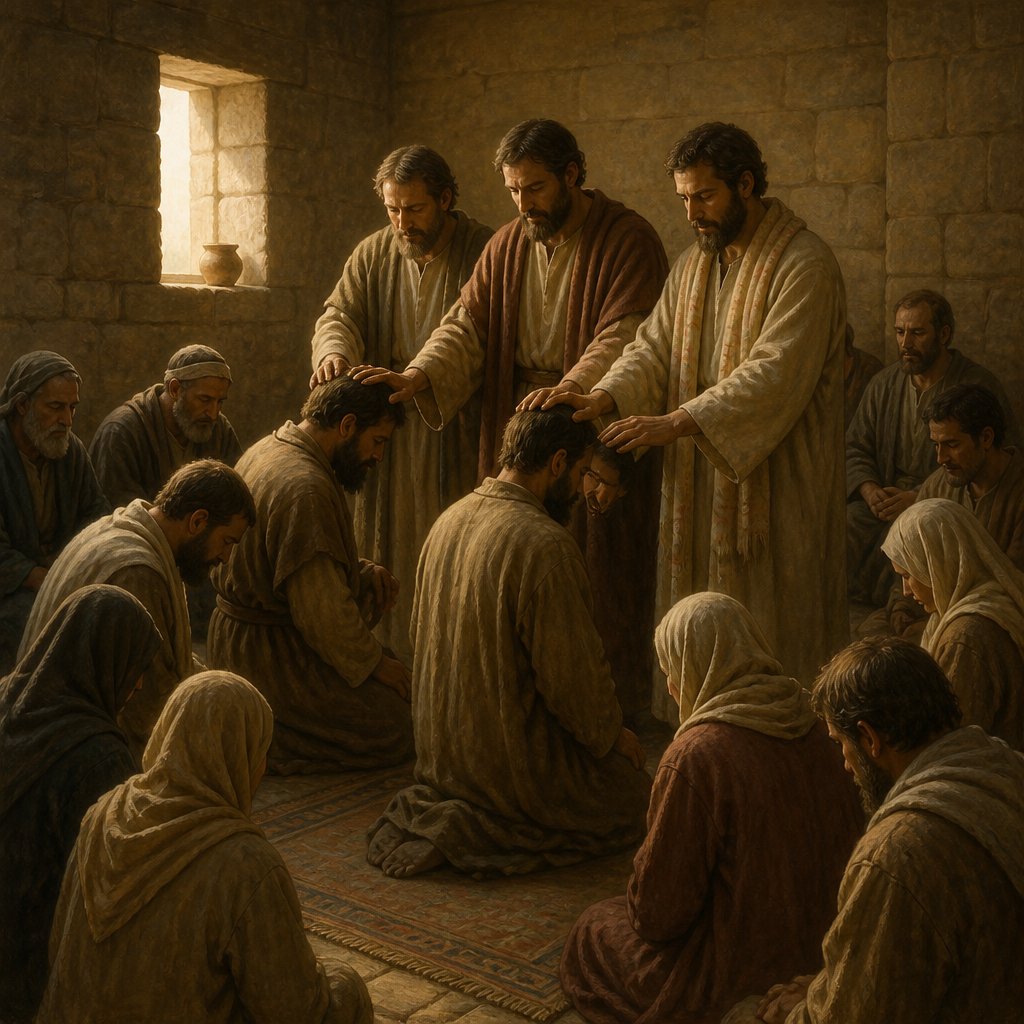
The verse from Acts 14:23 states, "And when they had ordained them elders in every church, and had prayed with fasting, they commended them to the Lord, on whom they believed." This powerful passage frames the importance of spiritual leadership within the church and the profound reliance on God when establishing such leadership.
To understand the context of this scripture, it is essential to reflect on the journey of Paul and Barnabas. After enduring persecution and challenges, they sought to establish a firm foundation for the churches they had established. Their experience reveals that effective ministry is characterized not just by the fervor of evangelism but also by the quality of governance and spiritual oversight within the church community.
**Ordaining Elders**
The act of ordaining elders in every church symbolizes a commitment to establishing authority and guidance within the community of believers. Elders are entrusted with the responsibilities of teaching, leading, and shepherding the flock. The apostles recognized that the success and health of the church require more than occasional visits or fervent preaching; it necessitates a body of leaders who are spiritually mature and known for their wisdom. Elders are to be examples of godly living, demonstrating integrity and faithfulness — characteristics that the church looks up to. As the apostle Paul later writes in Timothy (1 Timothy 3:1-7), the office of elder is a noble task, calling for individuals who possess both the character and the capability to lead.
**The Role of Prayer and Fasting**
Paul and Barnabas' dedication to prayer and fasting emphasizes that the appointment of leaders is a spiritual endeavor rather than a mere administrative formality. Their example shows us that in seeking God's will, we must devote ourselves to seeking Him earnestly. Prayer and fasting serve as a way to humble oneself before God, to suppress our own desires, and to prioritize divine guidance. In our own churches today, might we adopt a similar posture? Are we dedicated to laying our leadership decisions before God, seeking His will above all? This practice also continues the biblical principle found in James 1:5, where we are encouraged to ask God for wisdom, who gives generously to all without finding fault.
**Commending to the Lord**
The act of commending the elders to the Lord encapsulates the essence of faith in Jesus Christ. By commending them to the Lord, Paul and Barnabas acknowledge that despite their preparations, it is ultimately the Lord who sustains and empowers these leaders. They understood that human wisdom and effort could not ensure the spiritual health of the community; only dependence on the Lord could secure it. Life in ministry is often fraught with unpredictability and significant challenges. Leaders can easily feel overwhelmed or discouraged. Yet, commendation to the Lord is a reminder that the burden of the church and its direction is not solely on human shoulders. As Jesus states in Matthew 16:18, "...and the gates of hell shall not prevail against it," we can trust in God’s sovereign work in His Church.
**Faith in Action**
The concluding part of the verse, "on whom they believed," draws attention to the faith that undergirds their actions. Their faith was not merely a set of beliefs but a living engagement with the God who calls and equips. Similarly, our faith must translate into actions; it requires us to trust that God is faithful—both in our individual lives and within the collective life of the church. In moments of uncertainty, just like Paul and Barnabas, we need to place our full trust in the Lord, looking to Him for guidance through prayer, community, and scripture.
**Conclusion**
In summary, Acts 14:23 serves as a rich reminder that establishing spiritual leadership within our communities is a sacred task, requiring intentional prayer, humility, and a reliance on God. May we commit ourselves to this same practice in our churches, recognizing the value of wise leadership and the necessity of prayer, while consistently entrusting our leaders to the Lord. As we navigate the complexities of church life, let us lean into the truth that our real strength comes from the One we believe in.
Want to reflect more on Acts 14:23?
Continue your spiritual journey with Bible Chat — an AI-powered tool for exploring God's Word through conversation. Ask questions, discover connections, and deepen your understanding.
Get Our Apps


Acts 14:23 Artwork
"And when they had ordained them elders in every church, and had prayed with fasting, they commended them to the Lord, on whom they believed." - Acts 14:23
Acts 23:14 - "And they came to the chief priests and elders, and said, We have bound ourselves under a great curse, that we will eat nothing until we have slain Paul." bible verse art

Acts 1:21-23

Acts 23:25 - "And he wrote a letter after this manner:"

Acts 14:17

Acts 14:7 - "And there they preached the gospel."

Acts 19:23 - "And the same time there arose no small stir about that way."

Acts 23:4 - "And they that stood by said, Revilest thou God's high priest?"

Acts 23:32 - "On the morrow they left the horsemen to go with him, and returned to the castle:"

Acts 8:23 - "For I perceive that thou art in the gall of bitterness, and in the bond of iniquity."

Acts 23:13 - "And they were more than forty which had made this conspiracy."

Acts 14:28 - "And there they abode long time with the disciples."

Acts 22:23 - "And as they cried out, and cast off their clothes, and threw dust into the air,"

Genesis 23-14

Acts 23:26 - "Claudius Lysias unto the most excellent governor Felix sendeth greeting."

Acts 23:31 - "Then the soldiers, as it was commanded them, took Paul, and brought him by night to Antipatris."

Acts 1:23 - "And they appointed two, Joseph called Barsabas, who was surnamed Justus, and Matthias."

Acts 14:14 - "Which when the apostles, Barnabas and Paul, heard of, they rent their clothes, and ran in among the people, crying out,"

Acts 23:2 - "And the high priest Ananias commanded them that stood by him to smite him on the mouth."

Acts 9:23 - "¶ And after that many days were fulfilled, the Jews took counsel to kill him:"

"And there they preached the gospel." - Acts 14:7

John 14:23-29

John 14:23-29

Acts 23:8 - "For the Sadducees say that there is no resurrection, neither angel, nor spirit: but the Pharisees confess both."

Acts 27:23 - "For there stood by me this night the angel of God, whose I am, and whom I serve,"

John 14:23-29

Acts 23:23 - "And he called unto him two centurions, saying, Make ready two hundred soldiers to go to Caesarea, and horsemen threescore and ten, and spearmen two hundred, at the third hour of the night;"
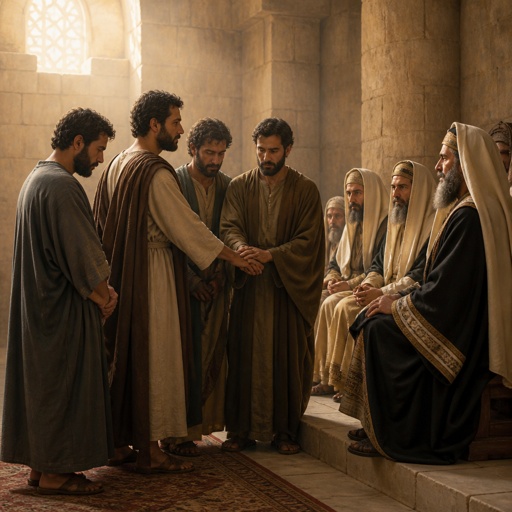
"And they came to the chief priests and elders, and said, We have bound ourselves under a great curse, that we will eat nothing until we have slain Paul." - Acts 23:14

Acts 20:23 - "Save that the Holy Ghost witnesseth in every city, saying that bonds and afflictions abide me."

Acts 14:24 - "And after they had passed throughout Pisidia, they came to Pamphylia."