Divided Loyalties: The Call to Unity in the Gospel
“But the multitude of the city was divided: and part held with the Jews, and part with the apostles.” — Acts 14:4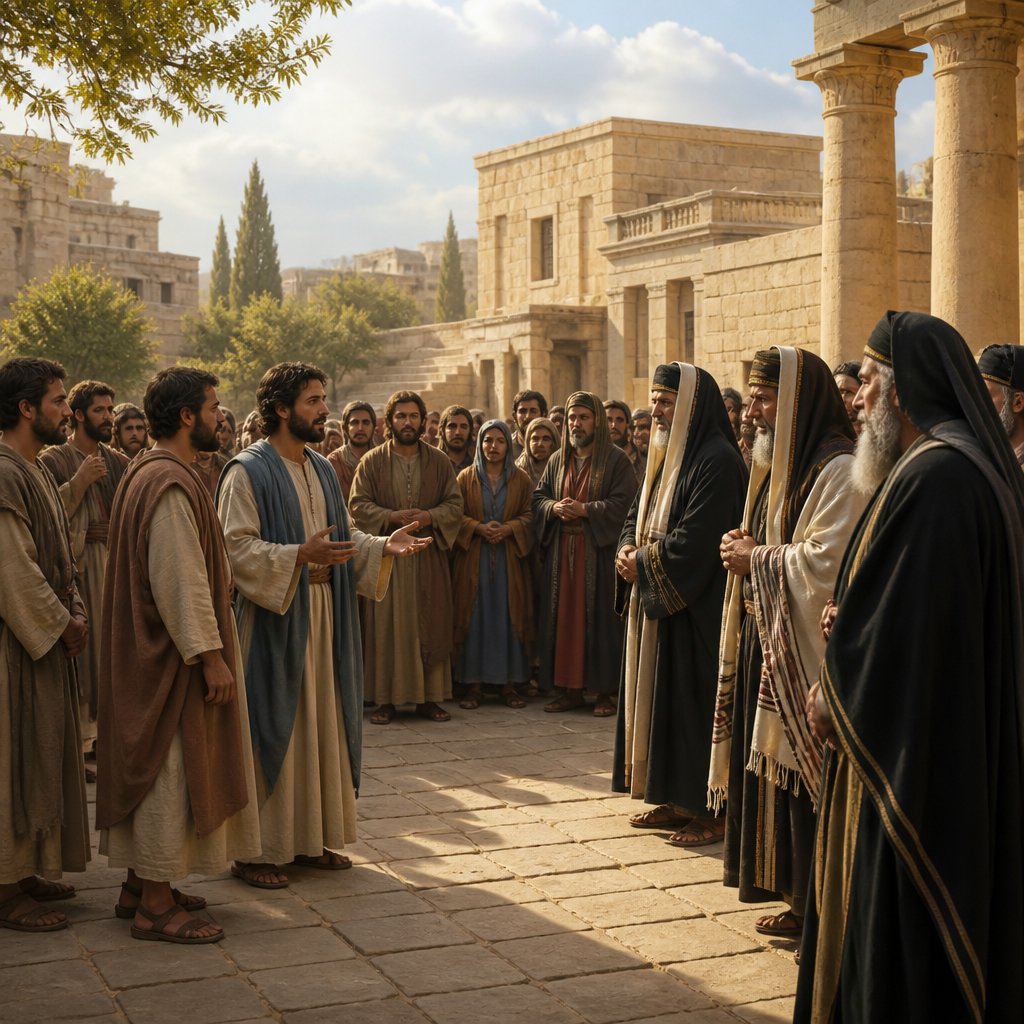
In Acts 14:4, the scripture states: "But the multitude of the city was divided: and part held with the Jews, and part with the apostles." This moment captures a profound reality within the early church and, indeed, one that continues to resonate in our modern lives. What does it mean when a city, a community, or even a church is divided? It invokes a sense of urgency for unity, understanding, and a reclamation of faith.
The context of this verse is crucial. The apostles, Paul and Barnabas, were preaching boldly the message of Jesus Christ in Iconium. Their message was radical and transformative. It challenged the existing norms and Jewish teachings that had been practiced for centuries. As they preached grace and salvation through faith in Christ, a divide began to form among the people. Some were drawn to the truth of the apostles’ message, while others clung tightly to their longstanding traditions, fearing change and the implications that faith in Christ might bring.
This division mirrors the struggles we face in our own lives and communities today. Whenever the truth of the Gospel is proclaimed, it sees both acceptance and rejection. People respond based on their backgrounds, experiences, and preconceived notions about faith. The multitude's response serves as a reminder that the message of Christ will not always bring consensus; rather, it will evoke diverse reactions. This, however, should not discourage us from sharing the Gospel, as even dissent can be a part of God's greater plan.
Paul and Barnabas could have chosen to ease the tension by softening their message, seeking to unite everyone under the guise of mediocrity or complacency. Instead, they leaned into the truth of God’s Word. They knew that the truth often causes discomfort, but it is only through the truth that we are brought closer to the heart of God. In their boldness, they embodied the spirit of Romans 1:16, wherein Paul proclaims, "For I am not ashamed of the gospel of Christ: for it is the power of God unto salvation to every one that believeth; to the Jew first, and also to the Greek."
In a divided world, the Church is called to navigate complex social landscapes filled with differing opinions, beliefs, and values. Yet, within that complexity lies an opportunity for the Church to model unity amid diversity. It's easy to associate with those who mirror our beliefs, but how often do we reach out to those who differ? It serves us well to remember that Jesus taught that even in moments of division, He came to unify us through His reconciling love. He broke down barriers that once separated us, welcoming Jew and Gentile alike into His family.
As followers of Christ today, we are called to step out of our comfort zones and engage in heartfelt discussions and interactions with those who might oppose us. This does not mean compromising our beliefs but rather establishing relationships rooted in love and understanding. We are reminded in Ephesians 4:3 to endeavor "to keep the unity of the Spirit in the bond of peace." It is a divine mandate that urges us to actively pursue opportunities for connection, to seek common ground even when our foundations are different.
Ultimately, the division in Acts 14:4 reminds us that in every encounter where the Gospel is shared, there will be both acceptance and rejection. Yet, amidst the splits and fractures, we are called not to despair but to remain steadfast in our mission as ambassadors of Christ. Every conversation we engage in, every act of love we extend, can be transformative. Therefore, let us pray for the courage to be catalysts of peace and unity, drawing others to the unwavering truth of who Christ is and all He offers. May our hearts be filled with compassion for those who disagree with us, and may we find ways to express God's love in our divisions, fostering healing and reconciliation through the Gospel.
Get our apps


Artwork for Acts 14:4

Acts 14:4 - "But the multitude of the city was divided: and part held with the Jews, and part with the apostles."
"But the multitude of the city was divided: and part held with the Jews, and part with the apostles." - Acts 14:4

Acts 4:14 - "And beholding the man which was healed standing with them, they could say nothing against it."
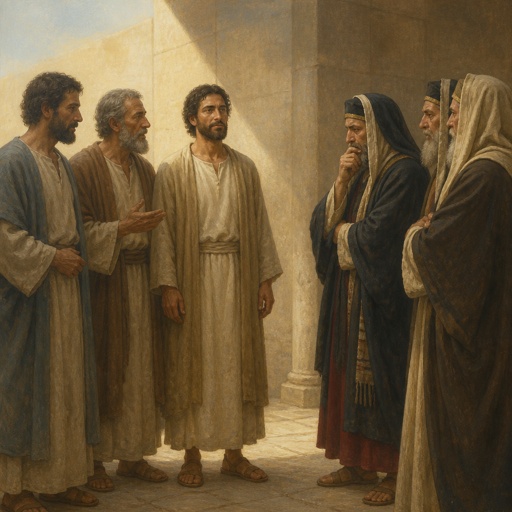
"And beholding the man which was healed standing with them, they could say nothing against it." - Acts 4:14

Acts 14:17

Acts 14:7 - "And there they preached the gospel."

Acts 4:30

Acts 4:30

Acts 4:30

Acts 2:4

Acts 4:30

Acts 14:28 - "And there they abode long time with the disciples."

Acts 1:4-5

Acts 14:14 - "Which when the apostles, Barnabas and Paul, heard of, they rent their clothes, and ran in among the people, crying out,"

Psalms 14:4 - "Have all the workers of iniquity no knowledge? who eat up my people as they eat bread, and call not upon the LORD."

"And there they preached the gospel." - Acts 14:7

Acts 2:4

Acts 2:4

Acts 14:24 - "And after they had passed throughout Pisidia, they came to Pamphylia."

Acts 4:8-12

Depict the events of Acts 19:14-17

Acts 14:25 - "And when they had preached the word in Perga, they went down into Attalia:"

Acts 27:14 - "But not long after there arose against it a tempestuous wind, called Euroclydon."

Acts 4:4 - "Howbeit many of them which heard the word believed; and the number of the men was about five thousand."

Acts 14:16 - "Who in times past suffered all nations to walk in their own ways."

Acts 14:18 - "And with these sayings scarce restrained they the people, that they had not done sacrifice unto them."

Acts 5:14 - "And believers were the more added to the Lord, multitudes both of men and women.)"

2 Kings 14:18 - "And the rest of the acts of Amaziah, are they not written in the book of the chronicles of the kings of Judah?"

Acts 14:12 - "And they called Barnabas, Jupiter; and Paul, Mercurius, because he was the chief speaker."

Acts 21:14 - "And when he would not be persuaded, we ceased, saying, The will of the Lord be done."