The Light Burden: Embracing the Divine Guidance
“For it seemed good to the Holy Ghost, and to us, to lay upon you no greater burden than these necessary things;” — Acts 15:28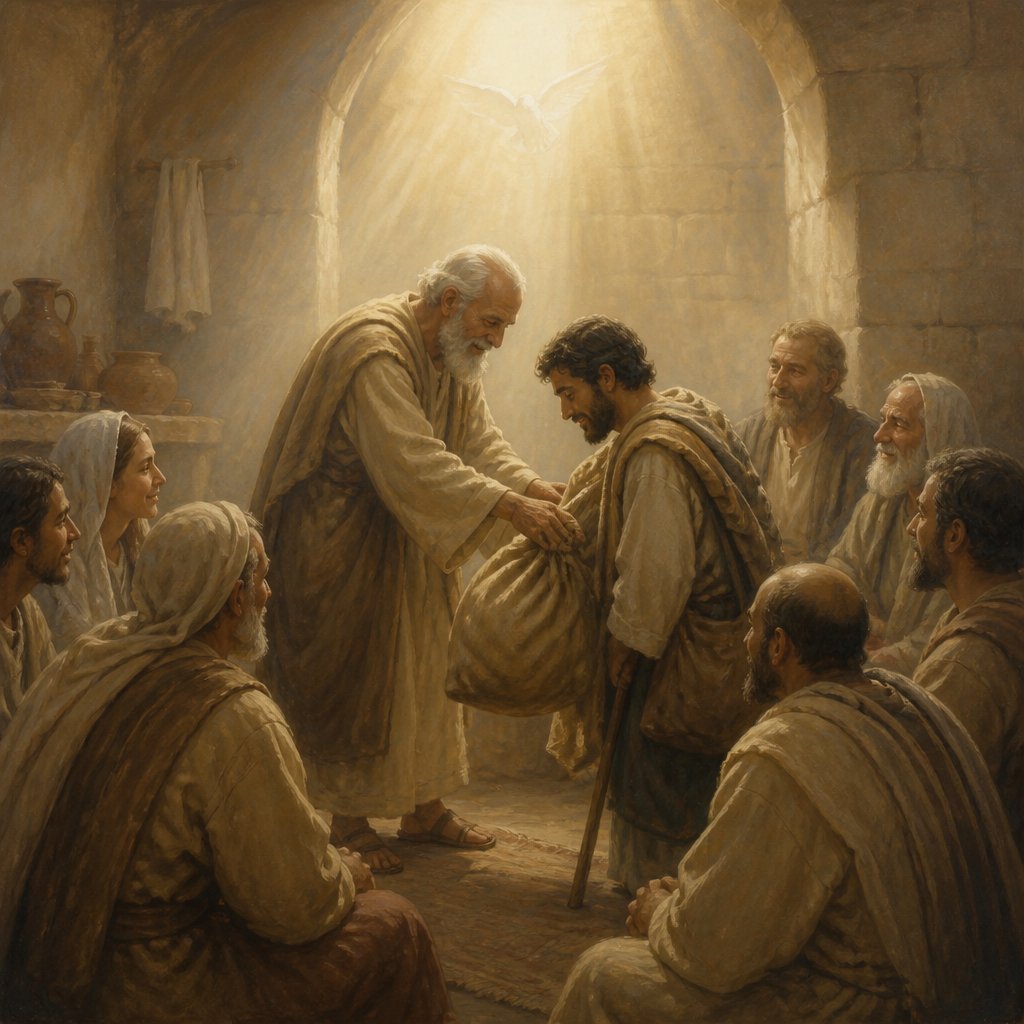
In Acts 15:28, we find a profound declaration made by the leaders of the early Church, which states, "For it seemed good to the Holy Ghost, and to us, to lay upon you no greater burden than these necessary things." This verse emerges from a crucial moment in the history of the Christian Church, where the Council of Jerusalem convened to address the rising concerns about the requirements of faith for Gentile believers. It is a key moment in understanding how the Church sought a balance between tradition and grace, between the law and the Gospel.
The decision reached at this poignant moment is significant for several reasons. First, it emphasizes the role of the Holy Spirit in guiding the decisions of the Church. The phrase "it seemed good to the Holy Ghost" is not an endpoint but a testament to the ongoing, living relationship that believers have with the Holy Spirit. The early Church acknowledged that their decisions must align with the will of God as revealed through the Spirit. This teaches us that in our own lives, before we make choices or issue burdens on others, we must seek divine guidance through prayer and scripture. We should ask ourselves: Have we listened to the Spirit? What seems good to Him?
Furthermore, the verse reflects a spirit of unity among the leaders of the Church. By stating, "and to us," the apostles indicate that they were in agreement, reinforcing the importance of community consensus in spiritual matters. This underlines the value of shared discernment and the need for collaborative leadership. In our churches and communities today, we often face similar issues where genuine dialogue and exploration of Scripture lead to discernment that honors the Holy Spirit’s guidance. We learn from Acts 15 that God’s voice emerges through both individual and collective openness to His will.
Yet, perhaps the most striking aspect of this scripture is the acknowledgment that there are "no greater burden than these necessary things." Burdens often carry a sense of weight and obligation, yet here, we see that God’s intent is not to overwhelm us with demands. Instead, the leaders choose to present the essentials of the faith – simplicity in obedience. How refreshing and liberating it is for us to know that faith in Christ does not add unnecessary burdens to our lives; rather, it offers freedom and grace.
Reflect on what might constitute "the necessary things" in your life. The early Church leaders suggested specific areas: abstaining from food sacrificed to idols, from blood, and from fornication. These requests were not exhaustive but rather focused efforts to ensure moral integrity and a communal identity that reflected Christ. As believers today, we are called to distill the complexities of faith into essential practices that foster unity and love.
In a world full of demands, distractions, and often, heavy teachings, we are reminded that God desires our relationship with Him to be a source of joy, not a burden. When we embrace the necessary things—such as love, grace, mercy, and community—we invite others into the same light burden that we experience. For Jesus Himself said in Matthew 11:30, "For my yoke is easy, and my burden is light."
As you meditate on Acts 15:28, reflect on how you can simplify your spiritual journey. What unnecessary burdens are you carrying that aren’t rooted in the Holy Spirit’s guidance? Are you expecting others to bear metrics of faith that the Holy Spirit has not laid upon them?
Invite the Holy Spirit to illuminate your path today and remove the weight of performance from your heart. Instead, focus on the grace-filled essentials of your faith, and just as the early Church leaders did, ensure that your decisions reflect a posture of love, unity, and simplicity. May your walk with Christ today be characterized by His light burden, and may you find freedom in the necessary things.
Get our apps


Artwork for Acts 15:28

Acts 15:28 - "For it seemed good to the Holy Ghost, and to us, to lay upon you no greater burden than these necessary things;"
"For it seemed good to the Holy Ghost, and to us, to lay upon you no greater burden than these necessary things;" - Acts 15:28

Acts 28:15 - "And from thence, when the brethren heard of us, they came to meet us as far as Appii forum, and The three taverns: whom when Paul saw, he thanked God, and took courage."

Acts 28:12

Acts 28:28 - "Be it known therefore unto you, that the salvation of God is sent unto the Gentiles, and that they will hear it."

Acts 14:28 - "And there they abode long time with the disciples."

each symbolic act the rotten belt the jars of wine the 28:08 purchase of the field and the Yoke communicated different aspects of God's message the rotten belt Illustrated 28:15 judah's spiritual corruption the jars of wine foretold the chaos and destruction 28:20 to come the purchase of the field during a Siege was a sign of Future Hope and 28:26 the Yoke represented the necessary submission to Babylonian rule as part of God's divine plan through these actions 28:33 Jeremiah not only proclaimed the word of God but embodied it in powerful and often painful ways he became a living 28:40 sign for his people his life a parable in action of God's love judgment and faithfulness

Acts 15:15 - "And to this agree the words of the prophets; as it is written,"

each symbolic act the rotten belt the jars of wine the 28:08 purchase of the field and the Yoke communicated different aspects of God's message the rotten belt Illustrated 28:15 judah's spiritual corruption the jars of wine foretold the chaos and destruction 28:20 to come the purchase of the field during a Siege was a sign of Future Hope and 28:26 the Yoke represented the necessary submission to Babylonian rule as part of God's divine plan through these actions 28:33 Jeremiah not only proclaimed the word of God but embodied it in powerful and often painful ways he became a living 28:40 sign for his people his life a parable in action of God's love judgment and faithfulness

Acts 28:12 - "And landing at Syracuse, we tarried there three days."

acts 15

Acts 9:28 - "And he was with them coming in and going out at Jerusalem."

Acts 28:1 - "And when they were escaped, then they knew that the island was called Melita."

Genesis 28-15

Acts 28:5 - "And he shook off the beast into the fire, and felt no harm."

Acts 8:28 - "Was returning, and sitting in his chariot read Esaias the prophet."

Acts 28:24 - "And some believed the things which were spoken, and some believed not."

Acts 7:28 - "Wilt thou kill me, as thou diddest the Egyptian yesterday?"

Acts 17:15

Acts 18:28 - "For he mightily convinced the Jews, and that publickly, shewing by the scriptures that Jesus was Christ."

Acts 26:28 - "Then Agrippa said unto Paul, Almost thou persuadest me to be a Christian."

Acts 4:28 - "For to do whatsoever thy hand and thy counsel determined before to be done."

1 Samuel 28:15

Exodus 28:15-30

"And there they abode long time with the disciples." - Acts 14:28

"And to this agree the words of the prophets; as it is written," - Acts 15:15

"Be it known therefore unto you, that the salvation of God is sent unto the Gentiles, and that they will hear it." - Acts 28:28

Acts 16:28 - "But Paul cried with a loud voice, saying, Do thyself no harm: for we are all here."

Acts 13:28 - "And though they found no cause of death in him, yet desired they Pilate that he should be slain."

Joshua 15:28 - "And Hazar-shual, and Beer-sheba, and Bizjothjah,"