Confronting the Superstition of Our Hearts
"¶ Then Paul stood in the midst of Mars' hill, and said, Ye men of Athens, I perceive that in all things ye are too superstitious." - Acts 17:22
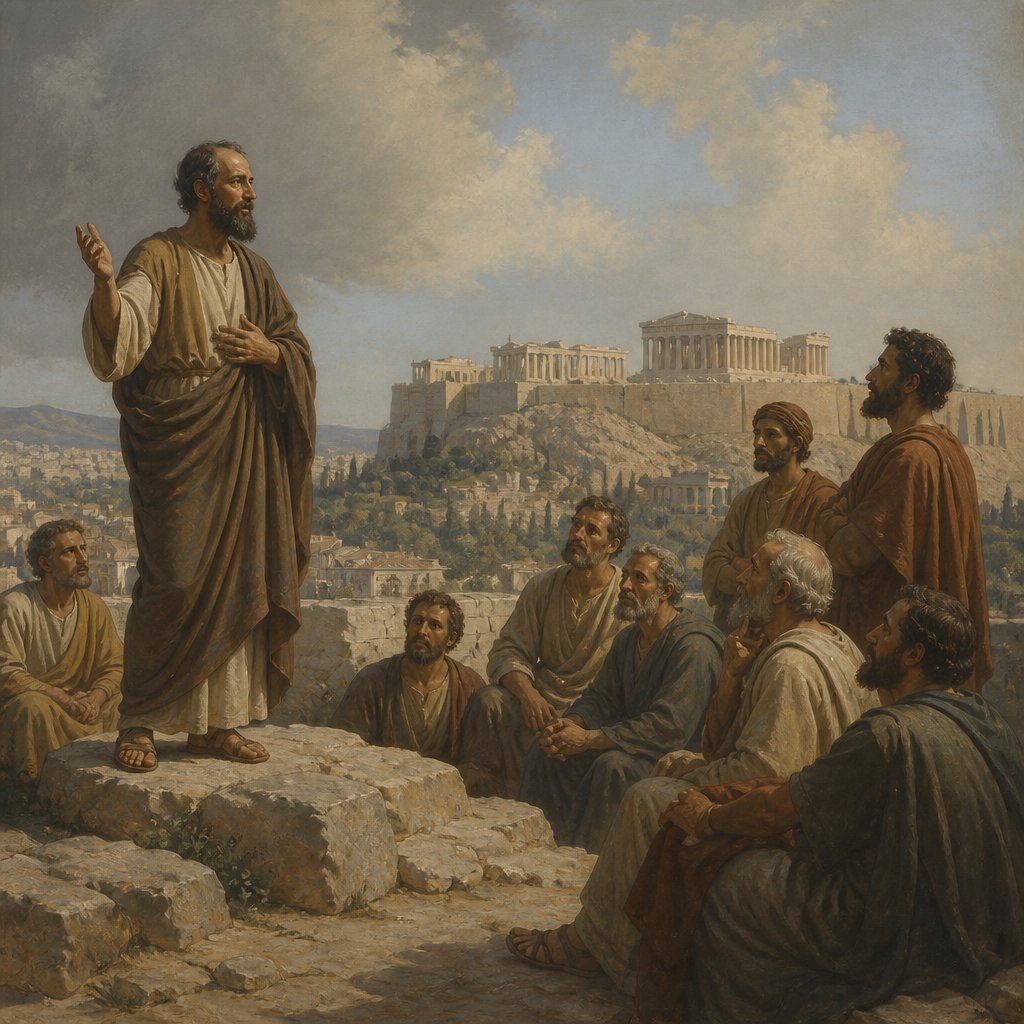
In Acts 17:22, we find Paul standing amidst the philosophical elite of Athens, a city clamoring for knowledge and enlightenment but steeped in the shadows of superstition: "Then Paul stood in the midst of Mars' hill, and said, Ye men of Athens, I perceive that in all things ye are too superstitious." Here, Paul addresses the deep-seated beliefs of the Athenians, a people who sought meaning in everything around them, yet often missed the genuine truth that lay before them.
To unpack this verse, we must understand the context of Paul’s message. Athens was a hub of intellectualism, where great thinkers like Socrates, Plato, and Aristotle once roamed. Yet despite this rich heritage, the city was rife with idolatry and a preoccupation with the divine that was more about appeasing various gods than about true spirituality. When Paul observes their superstitions, he is not merely criticizing their beliefs; he is noticing a profound hunger for truth that is misdirected.
In our contemporary world, the Athenian struggle remains ever-present. People still possess an intrinsic longing for a higher meaning and purpose, yet time and again, they turn to façades of fulfillment that leave the soul yearning. Society is saturated with distractions — new-age philosophies, materialism, and the perpetual guidance of social media, often leading to a form of modern-day superstition. We place our trust in luck, fate, and the ideas of man, while neglecting the profound truth that comes from relationship with God.
Paul’s assertion that the Athenians were "too superstitious" invites us to reflect upon our own lives. What are the areas where we might be putting our faith in superficial ideas or rituals rather than in the living God? Are we guilty of practicing our faith in ways that become mere rituals, devoid of genuine connection and spiritual vitality? Paul highlights the reality of misplaced worship within the Athenians' pantheon of gods. In our own lives, do we inadvertently create idols, worshipping things that promise security, happiness, or identity but ultimately cannot fulfill those promises?
Paul did not condemn the Athenians for their thirst for the divine; instead, he engaged them in dialogue, aiming to direct their desires toward the true God. In Acts 17:23, he declares, "For as I passed by, and beheld your devotions, I found an altar with this inscription, TO THE UNKNOWN GOD. Whom therefore ye ignorantly worship, him declare I unto you." This entire episode teaches us an important lesson: it shows that God is already in the midst of those who seek Him, even if they do not yet know Him. There is grace in our ignorance; what matters is our willingness to recognize it and pursue truth.
As we contemplate Paul’s interaction with the Athenians, we must ask ourselves a challenging question: Are we open to the possibility that there is more to discover about God beyond our present understanding? Are we willing to confront our superstitions, the beliefs that keep our faith immature and stagnant?
This passage encourages us to explore God’s word boldly, seeking to understand Him not just in tradition but in spirit and truth. As believers, we must continually challenge ourselves to strip away superstitions that dilute the power of the Gospel. Like Paul, we can engage those around us with compassion and conviction, showing them that the unknown God is not a distant deity embodying superstitions but a personal, loving Savior who desires to be known.
In closing, let us dedicate ourselves to knowing God deeper, shedding our blind spots, and helping others do the same. May our faith be anchored, not in ritualistic behaviors or superstitions, but in the heartfelt relationship with the Creator of the universe, who invites us to know Him intimately. Just as Paul pointed the Athenians toward the truth, may we also be bold messengers of the Gospel, transforming superstition into faith.
Want to reflect more on Acts 17:22?
Continue your spiritual journey with Bible Chat — an AI-powered tool for exploring God's Word through conversation. Ask questions, discover connections, and deepen your understanding.
Get Our Apps


Acts 17:22 Artwork

Acts 17:22 - "¶ Then Paul stood in the midst of Mars' hill, and said, Ye men of Athens, I perceive that in all things ye are too superstitious."
"¶ Then Paul stood in the midst of Mars' hill, and said, Ye men of Athens, I perceive that in all things ye are too superstitious." - Acts 17:22

Acts 22:17 - "And it came to pass, that, when I was come again to Jerusalem, even while I prayed in the temple, I was in a trance;"

Acts 2:17

Acts 2:17
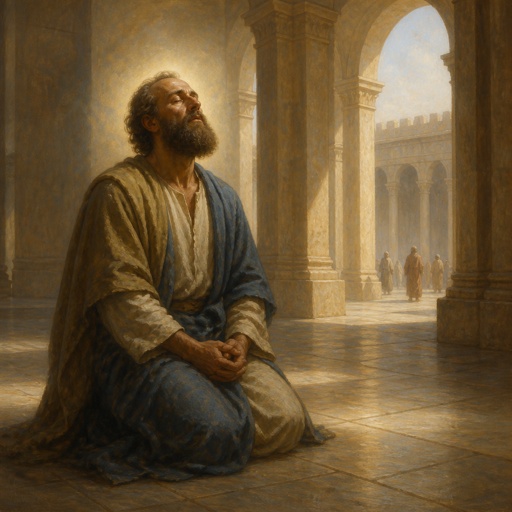
"And it came to pass, that, when I was come again to Jerusalem, even while I prayed in the temple, I was in a trance;" - Acts 22:17

Acts 2:17

Acts 16:17

Acts 17:15

Acts 14:17

Acts 17:27

Acts 1:21-22

Acts 1:21-22

Acts 17:17 - "Therefore disputed he in the synagogue with the Jews, and with the devout persons, and in the market daily with them that met with him."

Genesis 17-22

Genesis 22-17

Acts 17:33 - "So Paul departed from among them."

Acts 22:22 - "And they gave him audience unto this word, and then lifted up their voices, and said, Away with such a fellow from the earth: for it is not fit that he should live."

Acts 12:22 - "And the people gave a shout, saying, It is the voice of a god, and not of a man."

Acts 8:17 - "Then laid they their hands on them, and they received the Holy Ghost."

Acts 17:8 - "And they troubled the people and the rulers of the city, when they heard these things."

Acts 1:17 - "For he was numbered with us, and had obtained part of this ministry."

Acts 5:22 - "But when the officers came, and found them not in the prison, they returned, and told,"

Acts 22:23 - "And as they cried out, and cast off their clothes, and threw dust into the air,"

Acts 7:22 - "And Moses was learned in all the wisdom of the Egyptians, and was mighty in words and in deeds."

Leviticus 23:17-22

James 1:17-22

create an image to show Acts 2:17

Depict the events of Acts 19:14-17

Acts 20:17 - "¶ And from Miletus he sent to Ephesus, and called the elders of the church."