Believing Beyond Barriers: The Transformative Power of the Gospel
“Therefore many of them believed; also of honourable women which were Greeks, and of men, not a few.” — Acts 17:12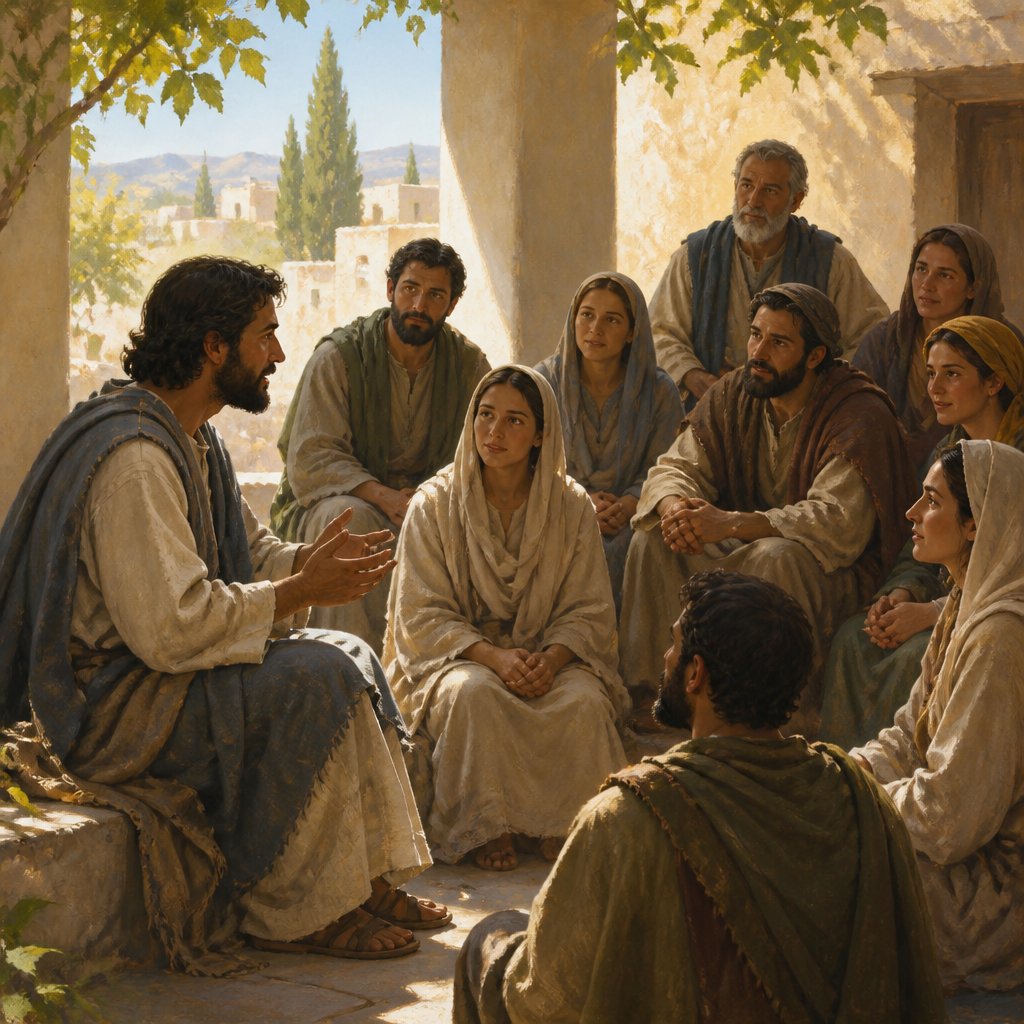
In Acts 17:12, we read, "Therefore many of them believed; also of honourable women which were Greeks, and of men, not a few." This verse succinctly captures a pivotal moment in the early Church's expansion beyond Jewish boundaries, signifying not just an increase in numbers of believers, but a profound shift in societal acceptance and spiritual awakening. It encapsulates both the extraordinary outreach of the Apostles and the inclusive nature of the Gospel.
The context of this Scripture is critical. Paul and Silas are in Berea, having just endured great challenges in Thessalonica where they faced opposition and persecution. Nevertheless, they pressed on, encouraged by their mission to share the Good News of Jesus Christ. While in Berea, they engaged diligently with the local Jewish community and, notably, with Gentiles—specifically the honorably regarded women and men. Their conversion signifies a breaking of societal barriers, illustrating that the Gospel message transcends cultural and gender distinctions.
Consider the phrase "honourable women which were Greeks." In the first century, Greek women often faced societal limitations, particularly within Jewish contexts where patriarchal structures prevailed. Yet, the Gospel—in its radical nature—called forth a different kind of community, one where women could be both heard and valued. The mention of these Greek women indicates that the Kingdom of God neither differentiates nor discriminates based on gender or ethnicity. God’s call extends to everyone, and access to His grace is available just the same for all.
This truth resonates deeply in our current context where we frequently witness divides in society along lines of race, gender, and social class. The early believers in Berea serve as a reminder that faith can find root anywhere and among anyone. It signals a loving and welcoming God who desires all to join in His family.
Moreover, when it states, "and of men, not a few," it indicates an equal sharing in conversion among men too. The Gospel message had power not just among the commoners but also among the influential. The mention of many men and honourable women emphasizes inclusivity, inviting us to ponder the remnant of society that is often overlooked or undervalued. God’s work often flourishes in places where we least expect it, amongst those marginalized or excluded.
This dynamic produces a vibrant and diverse church community, reflective of heaven’s tapestry where every soul is woven into the fabric of God’s Kingdom. When Paul and Silas preached the Gospel, they did not merely present a set of doctrines; they imparted hope, identity, and new life to all who would listen. And because of the Spirit’s transformative work, many believed.
Additionally, the Bereans are often noted for more than their belief; they are lauded for their eagerness to receive the word and to search the Scriptures daily to see whether those things were true (Acts 17:11). This underscores a vital aspect of faith: it is not static but is meant to be dynamic, seeking, and actively engaging with God’s Word. Their faith was not blind—it was informed and transformative. They exemplified how we, too, should approach our faith with curiosity and rigor, never settling for surface-level understanding.
Finally, Acts 17:12 serves as an encouragement that even amidst trials and tribulations, God’s Word will not return void. It invites us to reflect on our own communities—who are those who have yet to hear the Good News, and who might we overlook? It calls us to engage wholeheartedly in our discipleship, ensuring that we reflect God’s love through action, inviting everyone to experience the life-transforming grace of Christ.
As we contemplate the inclusiveness of the Gospel as demonstrated in Acts 17:12, let us not only remember the Bereans’ initial belief but also aspire to embody the same eagerness to seek truth and extend that truth to all we meet—regardless of societal norms. May we be instruments of His grace, proclaiming boldly that the Good News is for everyone, everywhere, leading to a greater faith and a mighty movement of love in a world so desperately in need of hope.
Get our apps


Artwork for Acts 17:12

Acts 17:12 - "Therefore many of them believed; also of honourable women which were Greeks, and of men, not a few."
"Therefore many of them believed; also of honourable women which were Greeks, and of men, not a few." - Acts 17:12

Acts 2:17

Acts 2:17

Acts 2:17

Acts 12:17 - "But he, beckoning unto them with the hand to hold their peace, declared unto them how the Lord had brought him out of the prison. And he said, Go shew these things unto James, and to the brethren. And he departed, and went into another place."

Acts 16:17

Acts 14:17

Acts 17:15

Acts 17:27

Acts 17:17 - "Therefore disputed he in the synagogue with the Jews, and with the devout persons, and in the market daily with them that met with him."

Acts 18:12

Acts 28:12

Acts 18:12

Acts 17:33 - "So Paul departed from among them."

Acts 8:17 - "Then laid they their hands on them, and they received the Holy Ghost."

Acts 4:8-12

acts 20:7-12

Acts 17:8 - "And they troubled the people and the rulers of the city, when they heard these things."

Acts 1:17 - "For he was numbered with us, and had obtained part of this ministry."

Acts 12:24 - "¶ But the word of God grew and multiplied."

create an image to show Acts 2:17

Depict the events of Acts 19:14-17

Acts 20:17 - "¶ And from Miletus he sent to Ephesus, and called the elders of the church."

Acts 17:9 - "And when they had taken security of Jason, and of the other, they let them go."

Genesis 17-12

Acts 12:2 - "And he killed James the brother of John with the sword."

Acts 21:17 - "And when we were come to Jerusalem, the brethren received us gladly."

Acts 28:12 - "And landing at Syracuse, we tarried there three days."

Acts 12:22 - "And the people gave a shout, saying, It is the voice of a god, and not of a man."