Faith in the Storm: When Two Seas Collide
“And falling into a place where two seas met, they ran the ship aground; and the forepart stuck fast, and remained unmoveable, but the hinder part was broken with the violence of the waves.” — Acts 27:41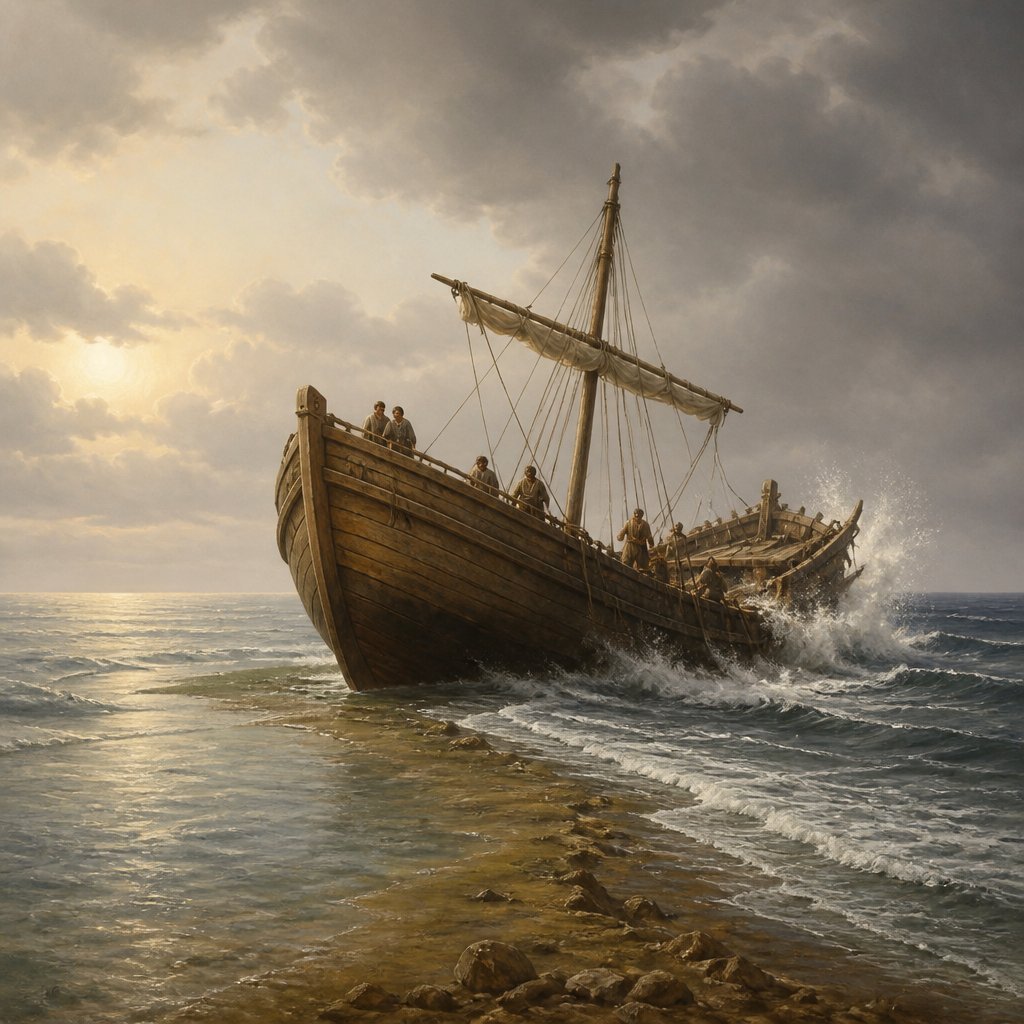
The journey of life often takes us through tumultuous waters, and the account of Paul’s shipwreck in Acts 27:41 serves as a powerful reminder of God’s presence even in our most challenging times. The verse states, "And falling into a place where two seas met, they ran the ship aground; and the forepart stuck fast, and remained unmoveable, but the hinder part was broken with the violence of the waves" (KJV). At first glance, this describes a chaotic scene where a ship, caught at the confluence of two seas, is left vulnerable to the raging storm. However, this passage reveals profound truths about faith, resilience, and divine purpose.
As we delve deeper into the context, it’s essential to reconstruct the setting where Paul, having been imprisoned for his outspoken faith, is being transported to Rome to stand trial. The journey is fraught with peril; the ship encounters fierce winds, and the crew's helplessness becomes increasingly evident. This precarious moment serves as a metaphor for our lives when the seas of our circumstances seem to clash, leaving us feeling trapped between our faith and our fears.
The phrase "where two seas met" symbolizes the tumult of conflicting emotions, decisions, or external circumstances. It resonates with each of us when we find ourselves in situations where our faith in God confronts the harsh realities of life. At times, we feel anchored like the ship's forepart, steadfast in our belief yet struggling as the world’s pressures break against us, much like the "hinder part" being battered by the waves. It’s a vivid image of resilience amid chaos, a reminder that while we are called to be "unmoveable" in our faith, the battles we face are real and often violent.
In this scenario, we learn that being unmoveable doesn’t mean we are immune to adversity. The forepart of the ship remains steadfast, reflecting our need to keep our eyes fixed on Jesus Christ, the anchor of our souls. The scripture teaches us that there will be times when our faith will be tested by storms that threaten to overwhelm us. Like Paul, we may find ourselves in a precarious position, but it’s crucial to remember that God is with us in the storm.
Moreover, in this account, we see the pivotal role of faith. The earlier verses show how Paul urges the crew to remain hopeful, declaring, "For there stood by me this night the angel of God, whose I am, and whom I serve" (Acts 27:23, KJV). His faith becomes a beacon in the dark, which encourages others to cling to hope. As followers of Christ, we are called not only to endure our storms but also to be vessels of encouragement and strength to others who are caught in similar tempests. Our testimonies can be the lifebuoys that save those around us from despair.
The violent waves that break against the ship can also be seen as life's uncertainty and trials. Although they cause damage, the ship endures a transformation that isn’t solely rooted in loss but also in survival. When the waves crash, they remind us of our reliance on God. Every struggle we face can ultimately lead us closer to God's purpose for our lives if we allow Him to steer our course.
In conclusion, Acts 27:41 teaches us that while we may find ourselves caught between two formidable forces—faith and fear, hope and despair—our steadfastness in Christ allows us to endure the storms without losing heart. During times of tumult and uncertainty, we can approach God with confidence, knowing that He is present in our struggles. Let us be encouraged to remain reliable in our faith while allowing God to shape our journey through the tumultuous seas of life.
As we face our own storms, remember the promise that we are not alone. God is continually at work, and the reassurance of His presence is our greatest source of strength. So, let us fix our eyes on Him, trust Him, and maintain our faith, for there is purpose in the journey—even when the waves grow rough.
Get our apps


Artwork for Acts 27:41

Acts 27:41 - "And falling into a place where two seas met, they ran the ship aground; and the forepart stuck fast, and remained unmoveable, but the hinder part was broken with the violence of the waves."
"And falling into a place where two seas met, they ran the ship aground; and the forepart stuck fast, and remained unmoveable, but the hinder part was broken with the violence of the waves." - Acts 27:41

Acts 2:41

Acts 2:41-42

Acts 2:41-42

Acts 2:41-42

Acts 2:41-42

Acts 2:41-42

Acts 2:41-42

Acts 2:41-42

Acts 2:41-42

Acts 2:41-42

Acts 2:41-42

Acts 2:41-42

Acts 2:41-42

Acts 2:41-42

Acts 2:41-42

Acts 2:41-42

Acts 2:41-42

Acts 2:41-42

Acts 2:41-42

Acts 2:41-42

Acts 2:41-42

Acts 2:41-42

Acts 2:41-42

Acts 2:38-41

1 Kings 11:41 - "¶ And the rest of the acts of Solomon, and all that he did, and his wisdom, are they not written in the book of the acts of Solomon?"

Acts 15:41 - "And he went through Syria and Cilicia, confirming the churches."

Job 41:27 - "He esteemeth iron as straw, and brass as rotten wood."

Acts 19:41 - "And when he had thus spoken, he dismissed the assembly."