The Threat of Silence: Boldness in the Face of Adversity
“But that it spread no further among the people, let us straitly threaten them, that they speak henceforth to no man in this name.” — Acts 4:17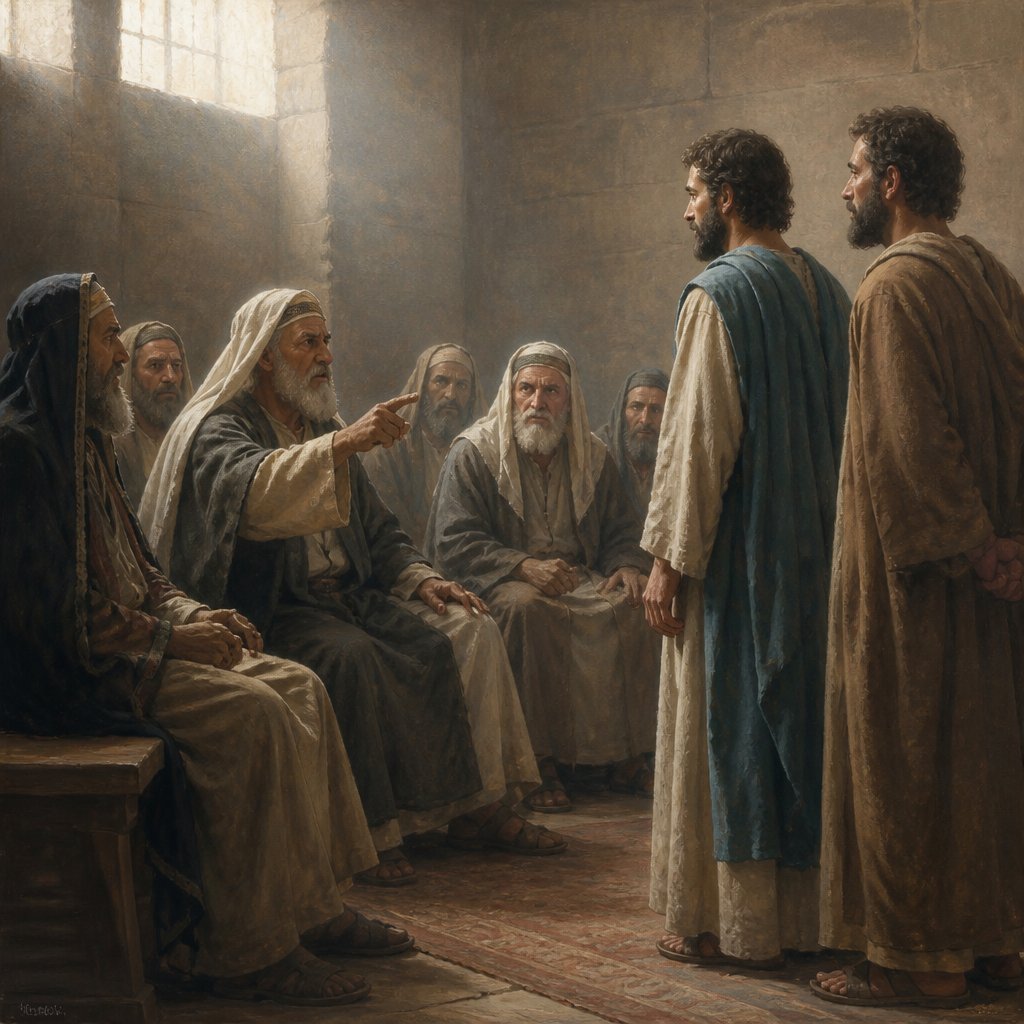
In Acts 4:17, we find a striking moment in the early church's struggle against the opposition it faced for proclaiming the name of Jesus Christ. The verse reads, "But that it spread no further among the people, let us straitly threaten them, that they speak henceforth to no man in this name." This declaration from the religious leaders reveals a profound tension between the power of the gospel and the attempts to suppress it.
To understand the weight of this verse, we must look at the context. The apostles, having just healed a lame man and drawn crowds with their message about Jesus, faced scrutiny from the authorities. These leaders, threatened by the rapid spread of the gospel and its implications for their power, sought to silence the apostles. Their fear was not simply about the loss of authority but also about the potential awakening within the populace—an awakening that could lead to radical change.
In many ways, this episode exemplifies a universal theme throughout history: the struggle for truth against the forces of silence and intimidation. The religious leaders wanted the message of the gospel to be contained, limiting its reach to maintain their influence and to protect their status quo. Their command to threaten the apostles serves as a potent reminder of how fear and power often try to extinguish the light of truth.
But the question we must confront is this: What happens when the truth of the gospel faces such threats? Acts 4 beautifully narrates how the apostles responded with unwavering courage. Instead of recoiling from the threats, Peter and John boldly declared, "Whether it be right in the sight of God to hearken unto you more than unto God, judge ye” (Acts 4:19). Their commitment to proclaiming Christ and obeying God rather than man took precedence over their safety.
When we consider our own lives, we may not face physical threats for our faith, but we encounter numerous societal pressures that urge us to keep quiet about our beliefs. It may be family or friends who disregard our faith, workplace environments that discourage discussion of spiritual matters, or even cultural narratives that promote tolerance of all ideas except for the truth of the gospel. Like the apostles, we too are often confronted with the challenge of speaking boldly in a world that fosters silence.
The response of Peter and John is a call for us to evaluate our own stances of faith. Are we willing to speak the name of Jesus, even when it's uncomfortable? Are we prepared to face the consequences of our faith? The apostles believed that proclaiming the name of Jesus was non-negotiable, a commitment that came from personal experience and conviction.
Furthermore, Acts 4:17 serves as a reminder of the spiritual battle we engage in daily. The enemy wishes to stifle our witness, to intimidate us into silence. However, we must remember that we are not alone in this battle. Ephesians 6:10-11 encourages us to be strong in the Lord and in the power of His might, putting on the whole armor of God. This equips us against the schemes and inhibitions that seek to silence our testimony.
As we navigate our own valleys of trials and intimidation, let us turn to prayer, gathering courage from Our Lord who faced the ultimate threat—crucifixion—yet did not relent in sharing His love and truth. In the face of opposition, we can bolster ourselves with the knowledge that the gospel, when spoken, has the power to transform hearts and minds.
This week, let us ask ourselves: How can we be bold in speaking the name of Jesus, even when it’s met with resistance? It could start with small acts, a conversation with a neighbor, speaking kindly about our faith in a gathering, or sharing our testimonies on social media. As we embrace these opportunities, we demonstrate that the threat of silence will not deter us from our mission.
May we carry the spirit of the apostles with us—a spirit of boldness, hope, and unwavering faith. Let us not allow fear of intimidation to silence the good news we carry, but rather may our voices rise above the clamor, proclaiming the name of Jesus wherever we go.
Get our apps


Artwork for Acts 4:17

Acts 4:17 - "But that it spread no further among the people, let us straitly threaten them, that they speak henceforth to no man in this name."
"But that it spread no further among the people, let us straitly threaten them, that they speak henceforth to no man in this name." - Acts 4:17

Acts 17:4 - "And some of them believed, and consorted with Paul and Silas; and of the devout Greeks a great multitude, and of the chief women not a few."

Acts 2:17

Acts 2:17

Acts 2:17

Acts 16:17

Acts 14:17

Acts 17:15

Acts 17:27

"And some of them believed, and consorted with Paul and Silas; and of the devout Greeks a great multitude, and of the chief women not a few." - Acts 17:4

Acts 17:17 - "Therefore disputed he in the synagogue with the Jews, and with the devout persons, and in the market daily with them that met with him."

Acts 4:30

Acts 4:30

Acts 4:30

Acts 2:4

Acts 4:30

Acts 17:33 - "So Paul departed from among them."

Acts 1:4-5

Acts 8:17 - "Then laid they their hands on them, and they received the Holy Ghost."

Acts 17:8 - "And they troubled the people and the rulers of the city, when they heard these things."

Acts 1:17 - "For he was numbered with us, and had obtained part of this ministry."

create an image to show Acts 2:17

Depict the events of Acts 19:14-17

Acts 20:17 - "¶ And from Miletus he sent to Ephesus, and called the elders of the church."

Acts 2:4

Acts 2:4

Acts 17:9 - "And when they had taken security of Jason, and of the other, they let them go."

Acts 21:17 - "And when we were come to Jerusalem, the brethren received us gladly."

Acts 4:8-12