Vision and Obedience: The Call of Ananias
"And hath seen in a vision a man named Ananias coming in, and putting his hand on him, that he might receive his sight." - Acts 9:12
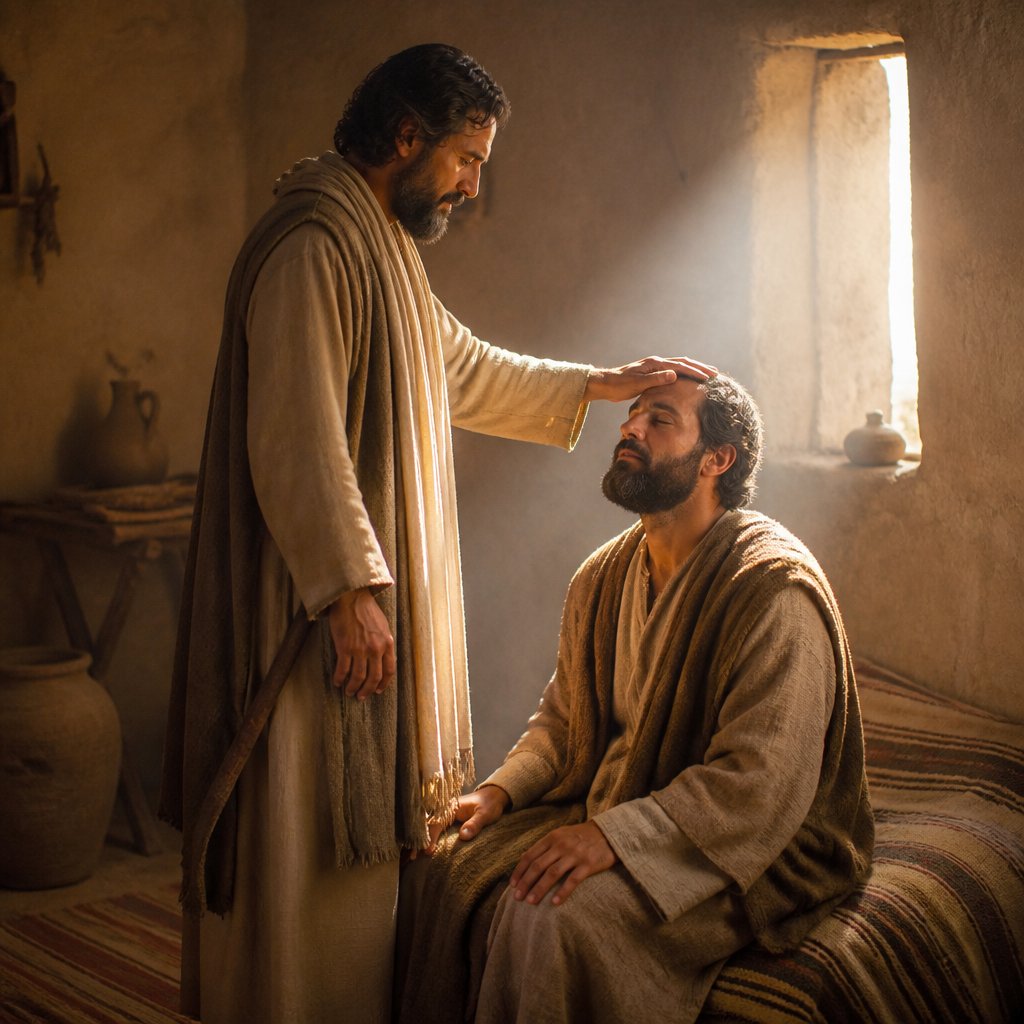
In Acts 9:12, we find a scripture that bridges the miraculous with the obedient: "And hath seen in a vision a man named Ananias coming in, and putting his hand on him, that he might receive his sight." This single verse encapsulates the profound themes of divine guidance and human participation in God's work. It reminds us that God communicates His plans through visions, and He expects His people to respond in obedience.
This verse is set within a pivotal moment in the early Church. Saul of Tarsus, later known as Paul, had just encountered the risen Christ on the road to Damascus. Struck blind by the glory of the Lord, he was led to the city where he would await further instructions. Meanwhile, God chose Ananias—a disciple in Damascus—to be the bearer of both healing and divine revelation to Saul. Ananias is not an apostle; he is a common believer who lives in obedience to God, which makes his story all the more remarkable. It illustrates that God can use anyone willing to listen and respond.
First, let us consider the significance of the vision that Saul experienced. Visions in scripture are often used by God to prepare individuals for significant encounters or tasks. In Saul’s case, his vision prepared him for the transformation he would undergo. This was not merely a vision for the sake of sight; it was a divine appointment revealing that God does not forsake anyone, even those who seem irredeemable. Saul was the very embodiment of someone who rejected Christ and persecuted His followers, yet God foresaw a day that he would be a champion for the Gospel.
For Ananias, the experience of receiving instructions through a vision was not without its challenges. The text shows that he hesitated, wrestling with fear and doubt. He questioned the Lord's choice because of Saul’s notorious reputation. This interaction highlights a crucial aspect of faith: obedience often comes at the cost of our comfort. In moments of divine prompting, it is easy to cling to our understanding or our fears, but God calls us to step beyond what we see and trust Him.
Ananias’s example teaches us about the power of obedience. When the Lord reassures Ananias, telling him that Saul is a chosen vessel for Him, Ananias's resolve strengthens. His willingness to step into the unknown reflects a deep trust in God’s plan. As we navigate our own feelings of inadequacy or fear regarding God’s calling, it is vital to remember that we don’t have to understand everything to obey. God equips those whom He calls.
Moreover, the act of laying his hands on Saul was an emblematic gesture of healing and impartation. In biblical times, the act of laying on hands was associated with blessings and receiving the Holy Spirit. It held great spiritual significance as it symbolized the transfer of divine authority and the coming together of the community of believers. Ananias, by obeying, not only participates in Saul’s physical healing but also becomes part of an extraordinary moment in salvation history. Through his obedience, Saul is restored both physically and spiritually, setting the stage for his mission to spread the Gospel to the nations.
As we reflect on Acts 9:12, let us be inspired by Ananias's willingness to act despite fear. God still speaks to us today, guiding us in our lives and asking us to help bring healing to others. Will we respond to the visions and promptings in our hearts? Will we act even when we are uncomfortable? The call to heal, bless, and minister is upon each believer; through our obedience, we become conduits of God’s incredible grace and love.
Let us pray for the eyes to see the visions God gives us and the courage to respond as Ananias did. May we not shy away from God's call, but embrace our roles in His unfolding story. As we lay our hands on the lives around us—through prayer, kindness, and service—may we see the blind receive sight, both physically and spiritually, transforming our communities as the early Church did.
Want to reflect more on Acts 9:12?
Continue your spiritual journey with Bible Chat — an AI-powered tool for exploring God's Word through conversation. Ask questions, discover connections, and deepen your understanding.
Get Our Apps


Acts 9:12 Artwork

Acts 9:12 - "And hath seen in a vision a man named Ananias coming in, and putting his hand on him, that he might receive his sight."
"And hath seen in a vision a man named Ananias coming in, and putting his hand on him, that he might receive his sight." - Acts 9:12

Acts 12:9 - "And he went out, and followed him; and wist not that it was true which was done by the angel; but thought he saw a vision."

Acts 18:12

Acts 28:12

Acts 18:12
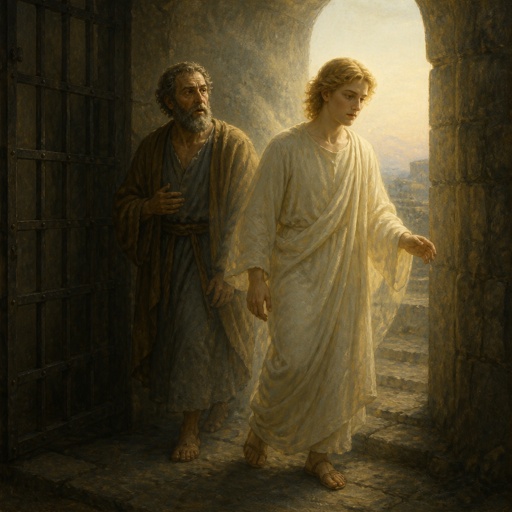
"And he went out, and followed him; and wist not that it was true which was done by the angel; but thought he saw a vision." - Acts 12:9

Acts 9:9 - "And he was three days without sight, and neither did eat nor drink."

Acts 4:8-12

acts 20:7-12

Acts 9:1-20

Acts 9:1-20

Acts 12:24 - "¶ But the word of God grew and multiplied."

Acts 12:2 - "And he killed James the brother of John with the sword."

Acts 28:12 - "And landing at Syracuse, we tarried there three days."

Acts 9:28 - "And he was with them coming in and going out at Jerusalem."

Acts 12:22 - "And the people gave a shout, saying, It is the voice of a god, and not of a man."

Acts 20:12 - "And they brought the young man alive, and were not a little comforted."

Acts 3:9 - "And all the people saw him walking and praising God:"

Acts 24:9 - "And the Jews also assented, saying that these things were so."

Acts 9:42 - "And it was known throughout all Joppa; and many believed in the Lord."

Acts 9:35 - "And all that dwelt at Lydda and Saron saw him, and turned to the Lord."

Acts 15:9 - "And put no difference between us and them, purifying their hearts by faith."

Acts 9:20 - "And straightway he preached Christ in the synagogues, that he is the Son of God."

Acts 7:9 - "And the patriarchs, moved with envy, sold Joseph into Egypt: but God was with him,"

Acts 12:13 - "And as Peter knocked at the door of the gate, a damsel came to hearken, named Rhoda."

Acts 14:12 - "And they called Barnabas, Jupiter; and Paul, Mercurius, because he was the chief speaker."

Acts 26:12 - "Whereupon as I went to Damascus with authority and commission from the chief priests,"

Acts 21:9 - "And the same man had four daughters, virgins, which did prophesy."

Acts 17:9 - "And when they had taken security of Jason, and of the other, they let them go."